Attribution
The trail ends at the form
Analytics knows a lead came from Google Ads. Your CRM knows the deal closed. Nothing connects the two.
Ads and visibility: customers who are looking for your service now or don’t know about it yet.
01 Google AdsEnquiries from people searching for your service right nowfrom $750/mo 02 Social media adsMeta, TikTok, LinkedIn: customers who are not searching yetfrom $700/mo 03 SEOHigher in Google and Maps without paying per clickfrom $1,000/mo 04 Visibility in ChatGPT and AIYour business in AI assistant answerspart of SEO 05 Amazon and marketplacesSell where customers already buywith a partnerThe place where a visit turns into an enquiry, and a system that doesn’t lose that enquiry.
01 Web designA website that turns visits into enquirieslanding from $1,300 02 Online storesCart, payments and shipping, ready for adsfrom $4,800 03 CRMNo enquiry gets lost in a phonesetup $3,400 04 Chatbots and AIThey answer customers, at night too$2,500 05 Email and SMSCustomers come back instead of forgetting youquoted individuallyPlan and tracking first, budget second. You know what works before you spend more.
01 Strategy and auditKnow where to spend the budget before you spend it$2,400 02 AnalyticsSee which ad brings in money$650 03 ConsultationsA call about your specific problem$70/h 04 Free auditA quick review and 3–5 priorities to start$0How your business looks and sounds before anyone calls you.
01 Social media managementProfiles that look like a real businesswith a partner 02 Creative and videoGraphics and videos that stop the thumbquoted individually 03 BrandingA logo and style that sets you apartwith a partner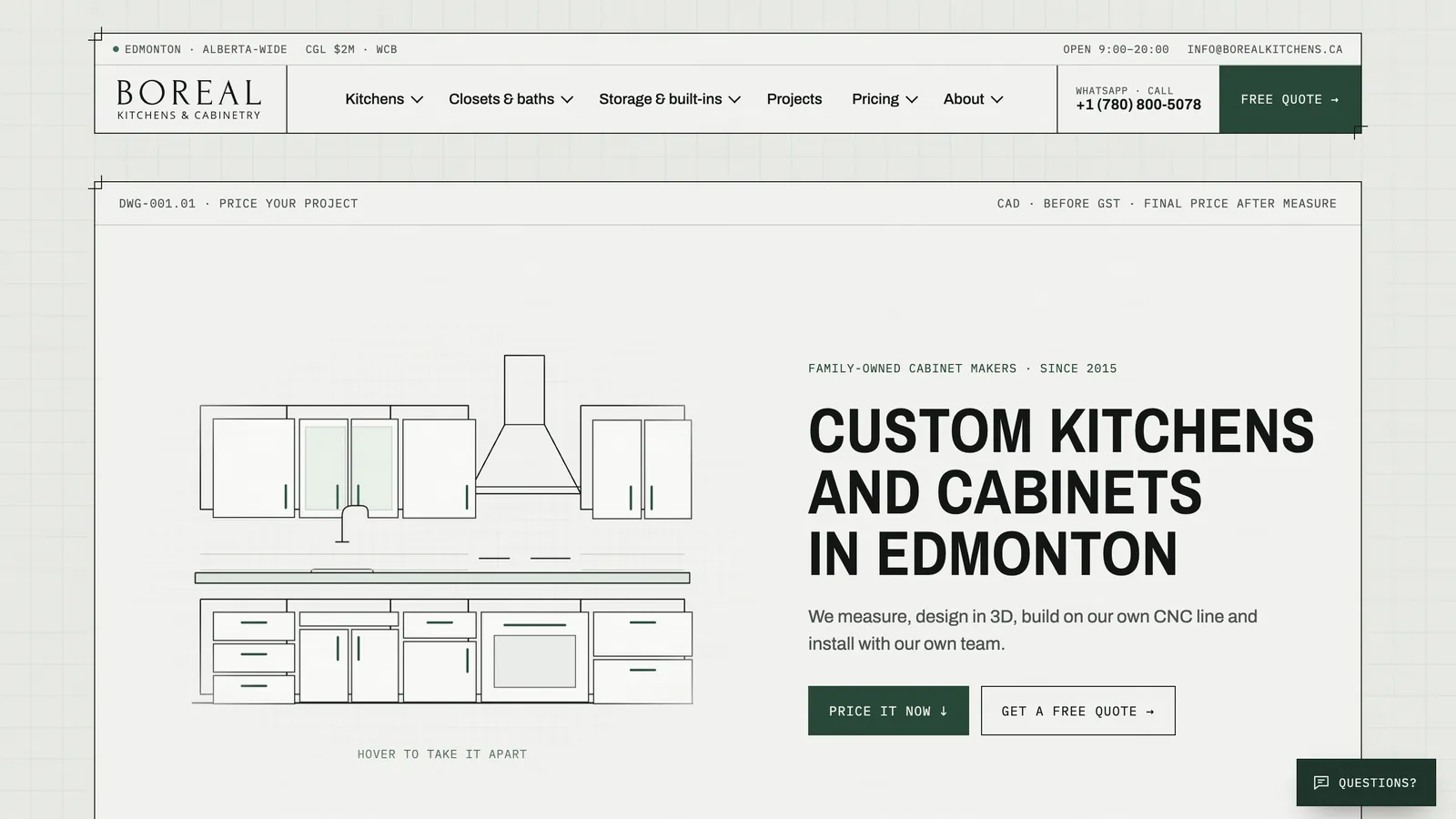 Edmonton, Canada
200 keywords on page one of Google
Boreal Kitchens
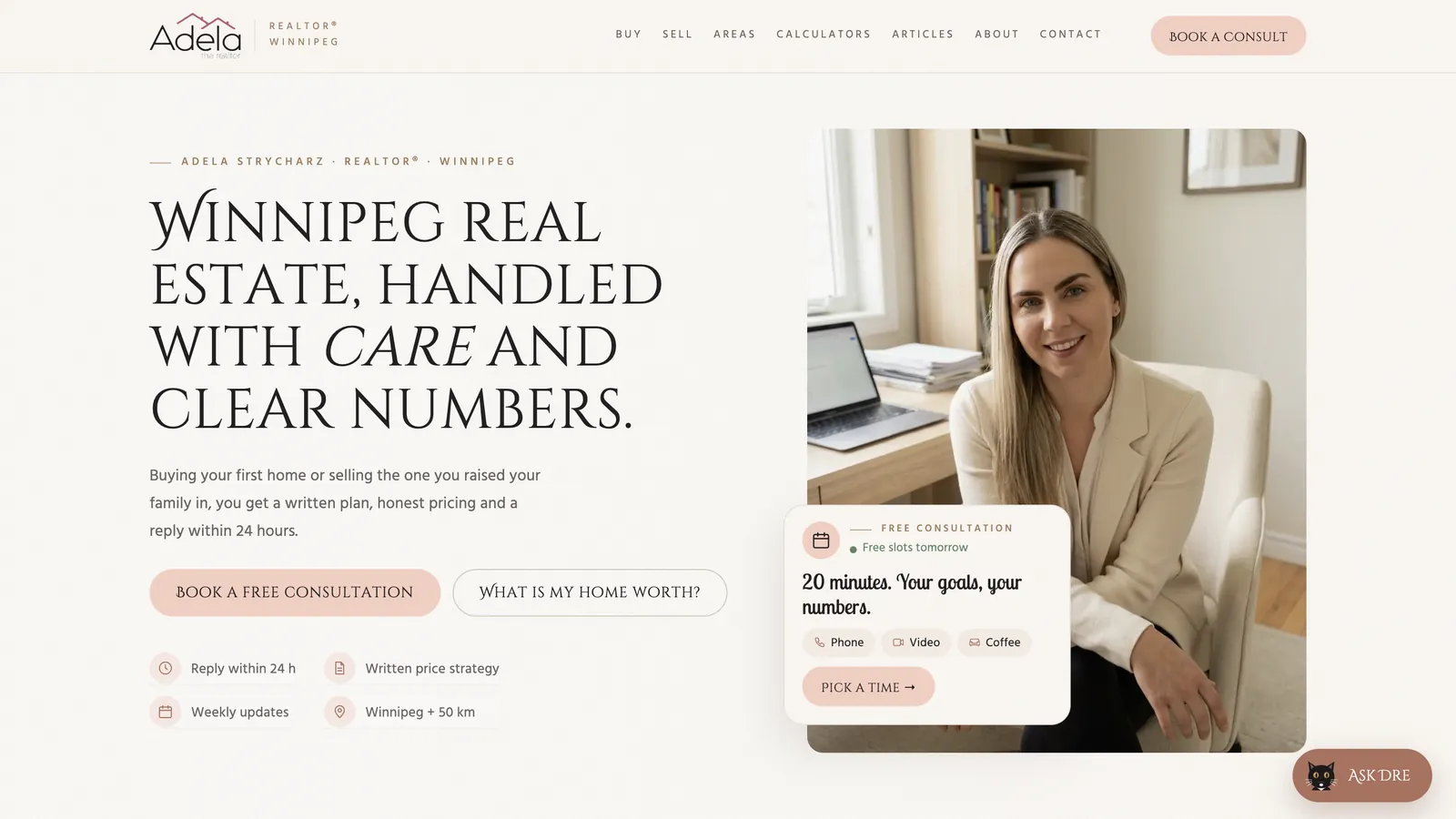 Winnipeg, Canada
up to 5 enquiries/mo from Google without ads
Adela Realtor
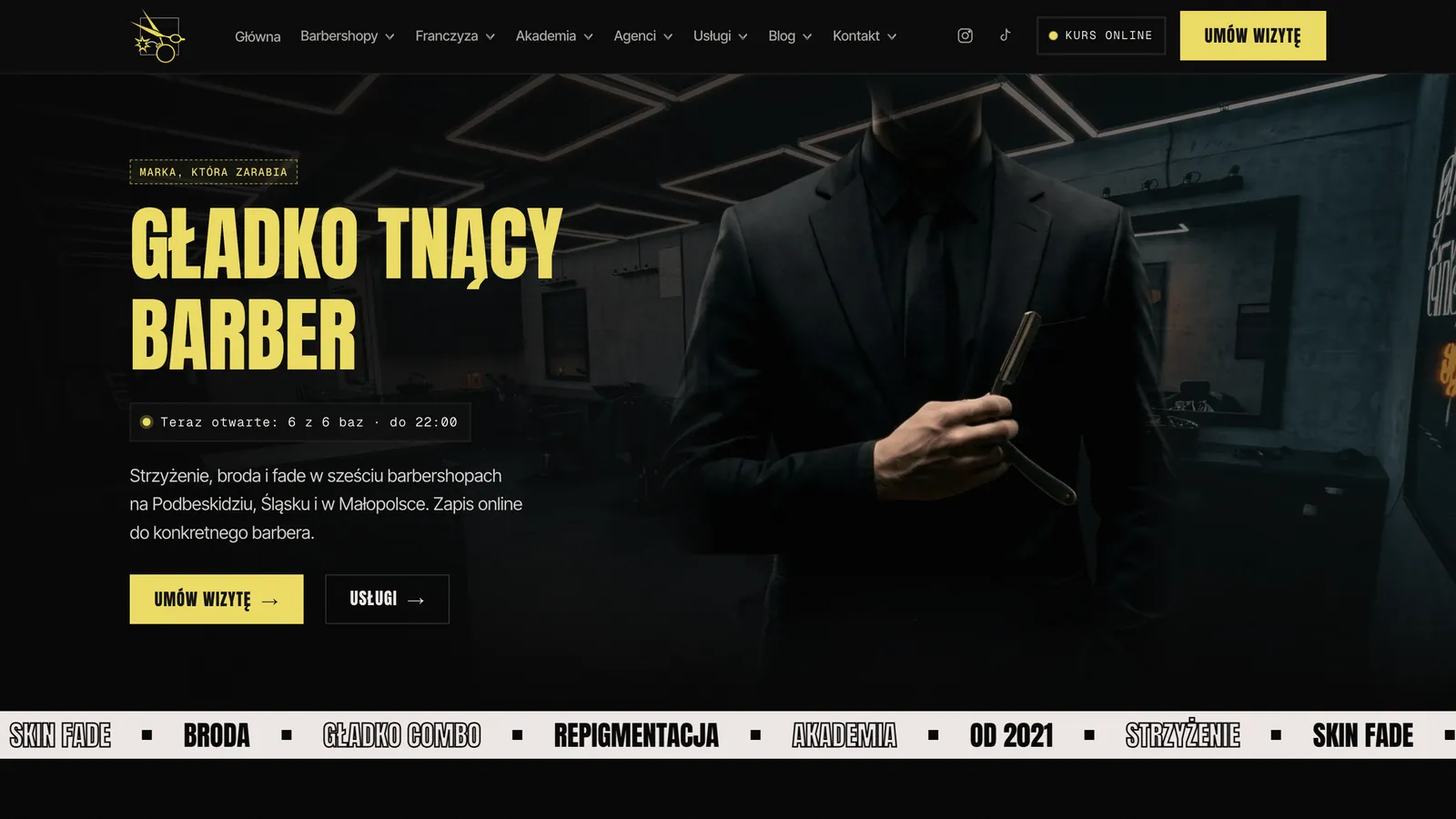 Żywiec, Poland
from 3 to 9 locations in two years
Gładko Tnący Barber
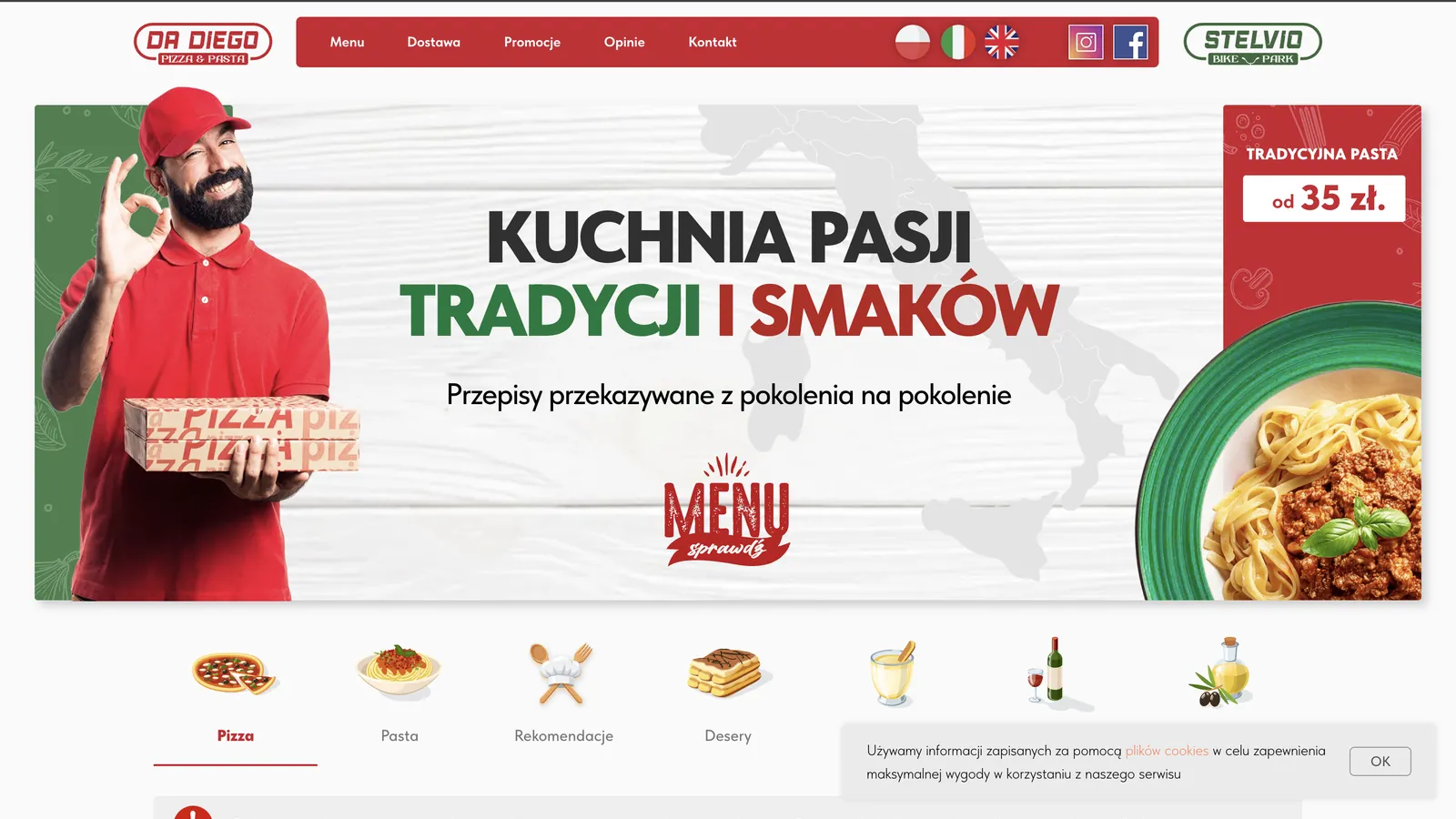 Żywiec, Poland
PLN 15 000 +/mo in delivery orders
Da Diego
End-to-end analytics follows a customer from the first ad click to the paid invoice. I connect your ads, website, phone calls and CRM so every lead carries its source all the way to the sale. Then you can see which campaign brought signed contracts and which one only brought tire-kickers.
Free: a 30-minute call, an action plan and a price range in writing.
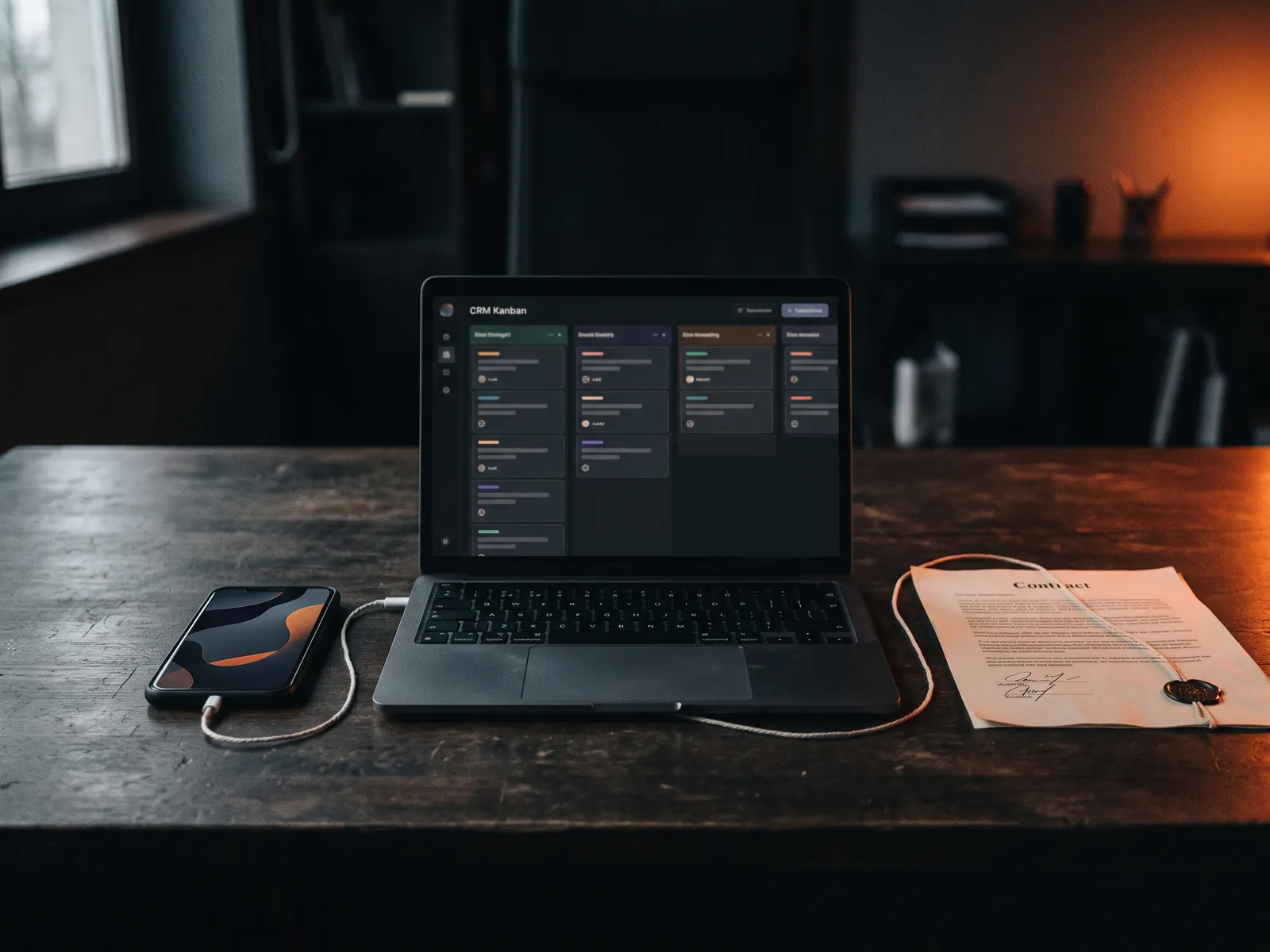
Analytics knows a lead came from Google Ads. Your CRM knows the deal closed. Nothing connects the two.
Platforms optimize for form fills, so they find people who fill in forms, not people who buy.
A channel with expensive leads but high close rates looks like the worst performer and gets cut.
UTMs and click IDs on every ad, email and social link.
Forms, calls and chats pass the source into the lead record.
Each lead moves through stages: contacted, quoted, won, with a value.
Won deals sent to Google Ads and Meta as offline conversions.
Spend, leads, customers and revenue by channel on one page.
Ads, chatbots, CRM and website working as one system, mostly office contracts.
See the case study →Website, course platform, ads, bots and CRM; courses sold for over PLN 100,000, about C$37,000.
See the case study →Final prices in Canadian dollars. The analytics integration is quoted after a short call; the CRM, if you need one, has a fixed price.
Source capture, CRM fields, offline conversions and a revenue dashboard.
HubSpot, Pipedrive or Zoho set up with lead sources from day one.
A CRM built for your process, with analytics built in.
Standard analytics stops at the lead. It can tell you that Google Ads produced 50 form submissions last month and Meta produced 70. What it can't tell you is that 12 of the Google leads became customers worth $38,000, while the 70 Meta leads produced 3 small jobs. Those are illustrative numbers, but the pattern is common: the channel with more leads isn't always the one that makes money.
End-to-end analytics closes that gap. It links each lead's source to what happened next in your sales process, and ultimately to revenue. With that link in place, you can calculate the cost per customer and the return on ad spend for every channel, campaign and sometimes keyword.
1. Tagging traffic. Every paid link carries identifiers: Google's click ID, Meta's click ID and UTM parameters for everything else. Without them, the source is lost the moment someone lands on the site.
2. Capturing the source with the lead. When a visitor submits a form, starts a chat or calls, the source travels with the lead. Hidden form fields, chat integrations and call tracking make this happen.
3. Recording outcomes in the CRM. The lead lands in your CRM with its source attached. As your team works it, the deal moves through stages such as contacted, quote sent, won or lost, with a value when won.
4. Feeding outcomes back to ad platforms. Won deals, and sometimes qualified leads, are sent back to Google Ads and Meta as offline conversions, linked to the original click. The platforms then optimize for people who become customers, not just people who fill in forms.
5. Reporting. A dashboard combines ad spend, leads, customers and revenue by channel. This is the report that tells you where to put next month's budget; see Looker Studio reporting.
The CRM is the heart of the system, because it's where leads turn into customers. I've done more than 20 CRM implementations, both ready-made systems like HubSpot, Pipedrive and Zoho and custom CRMs built for a specific business. When I set up a CRM, lead source fields and pipeline stages are planned with analytics in mind from day one. If you already have a CRM, I check what it can capture and send before quoting. More on the options in CRM for small business.
Google Ads and Meta are very good at finding more of whatever you tell them is a conversion. If a conversion is any form submission, they find people who submit forms, including those who never buy. When you start sending back which leads became customers, their algorithms gradually shift toward people who resemble your real buyers. For businesses with a sales step after the enquiry, such as renovations, B2B services, courses or real estate, this is often the biggest single improvement available in paid advertising.
Linking ad clicks to customer records involves personal information. Under PIPEDA and Quebec's Law 25, you need appropriate consent and a privacy policy that explains what you collect and share. Data sent to ad platforms for offline conversions is typically hashed. I build the technical side to respect consent choices; your policy and consent wording should be reviewed with legal advice.
No system attributes every sale perfectly. People switch devices, hear about you from a friend, or call from a number that wasn't tracked. The goal isn't perfection; it's knowing, with reasonable confidence, which channels pay for themselves. Even an imperfect chain from click to revenue beats judging campaigns by cost per form fill. For a simpler starting point, read how to tell if your marketing is paying off.
You need somewhere that records what happened to each lead. A CRM is the usual place. A well-kept spreadsheet can work for low volumes, but it relies on discipline and makes automation harder. If you don't have a CRM yet, setting one up with source tracking from day one is the cleanest start.
Most popular ones with an API or form integrations, including HubSpot, Pipedrive and Zoho, which I also set up from scratch. On custom CRMs I build, the source fields and reporting are part of the design. For other systems, I check what's possible before quoting.
Results that happen after the website: a quote accepted by phone, a contract signed, an invoice paid. Sending them back to Google Ads and Meta, linked to the original click, lets the platforms learn which clicks become customers. It usually improves targeting for businesses with a sales process after the lead.
Setup takes a few weeks depending on the systems. The data becomes meaningful once enough leads have moved through your sales cycle, which for some businesses is a month and for others a quarter. Long B2B cycles need more patience.
Not if you spend real money on ads and have a sales step after the enquiry, such as a quote, a consultation or a site visit. If customers buy instantly online, store analytics with purchase values may be enough. I'll tell you which on the first call.
Tell me what ads you run, how leads reach you and where you track them. I'll reply within one business day with the simplest way to connect it.