Money goes out, nobody knows what came back
Ads, a website retainer, a directory listing, a sponsored post. Each bill looks small, the total doesn't, and none of it is tracked to a sale.
SpendingAds and visibility: customers who are looking for your service now or don’t know about it yet.
01 Google AdsEnquiries from people searching for your service right nowfrom $750/mo 02 Social media adsMeta, TikTok, LinkedIn: customers who are not searching yetfrom $700/mo 03 SEOHigher in Google and Maps without paying per clickfrom $1,000/mo 04 Visibility in ChatGPT and AIYour business in AI assistant answerspart of SEO 05 Amazon and marketplacesSell where customers already buywith a partnerThe place where a visit turns into an enquiry, and a system that doesn’t lose that enquiry.
01 Web designA website that turns visits into enquirieslanding from $1,300 02 Online storesCart, payments and shipping, ready for adsfrom $4,800 03 CRMNo enquiry gets lost in a phonesetup $3,400 04 Chatbots and AIThey answer customers, at night too$2,500 05 Email and SMSCustomers come back instead of forgetting youquoted individuallyPlan and tracking first, budget second. You know what works before you spend more.
01 Strategy and auditKnow where to spend the budget before you spend it$2,400 02 AnalyticsSee which ad brings in money$650 03 ConsultationsA call about your specific problem$70/h 04 Free auditA quick review and 3–5 priorities to start$0How your business looks and sounds before anyone calls you.
01 Social media managementProfiles that look like a real businesswith a partner 02 Creative and videoGraphics and videos that stop the thumbquoted individually 03 BrandingA logo and style that sets you apartwith a partner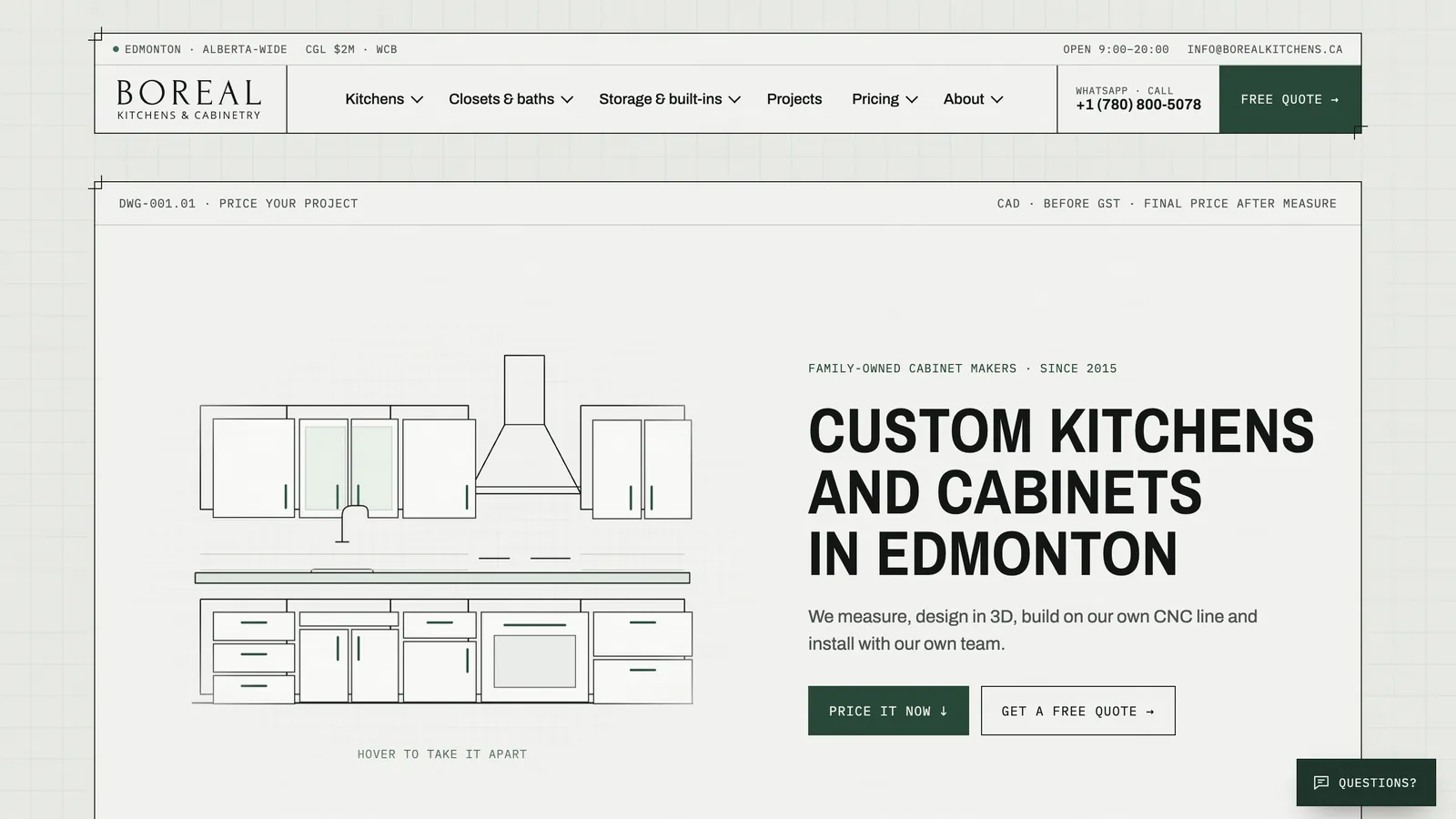 Edmonton, Canada
200 keywords on page one of Google
Boreal Kitchens
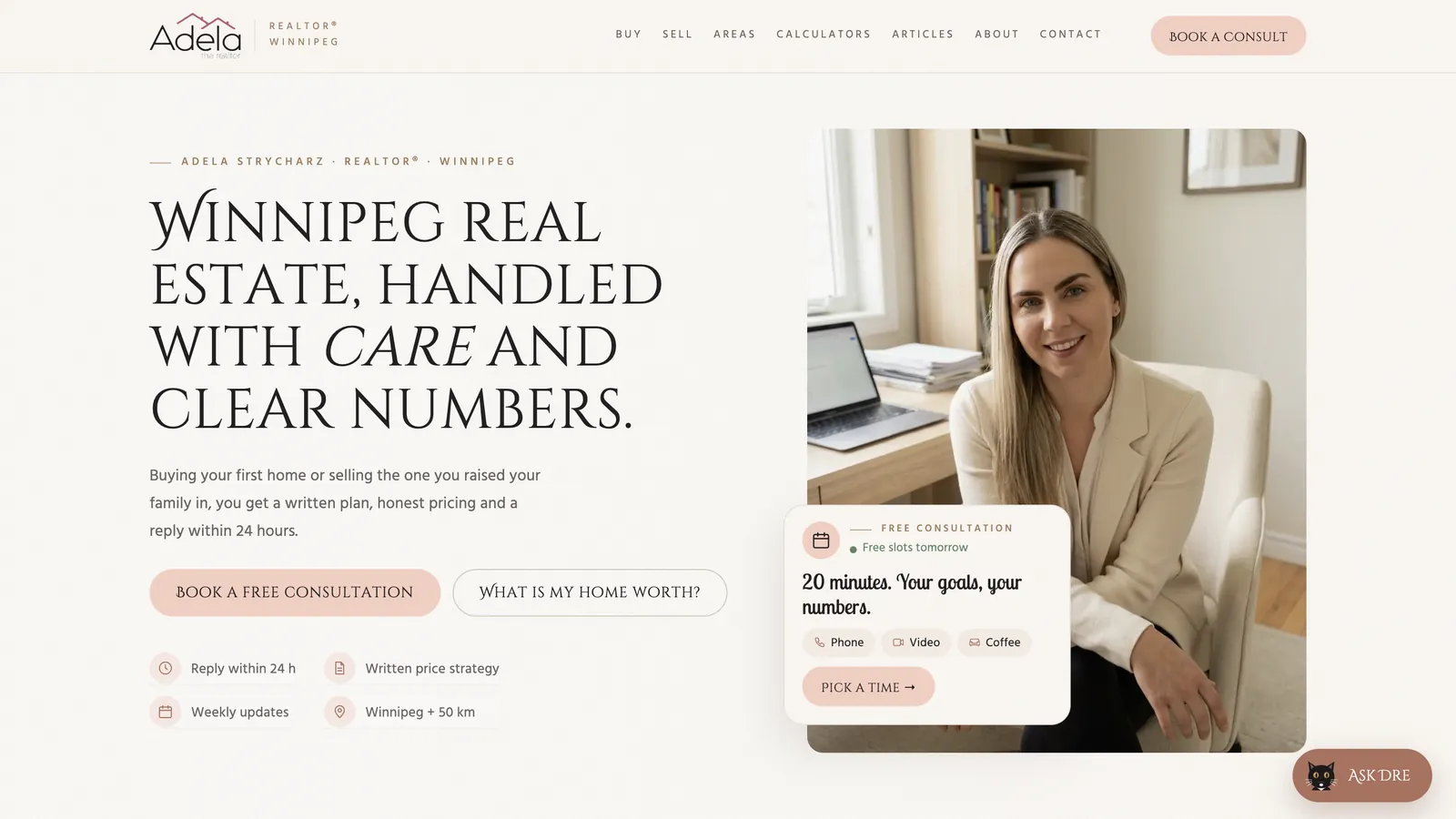 Winnipeg, Canada
up to 5 enquiries/mo from Google without ads
Adela Realtor
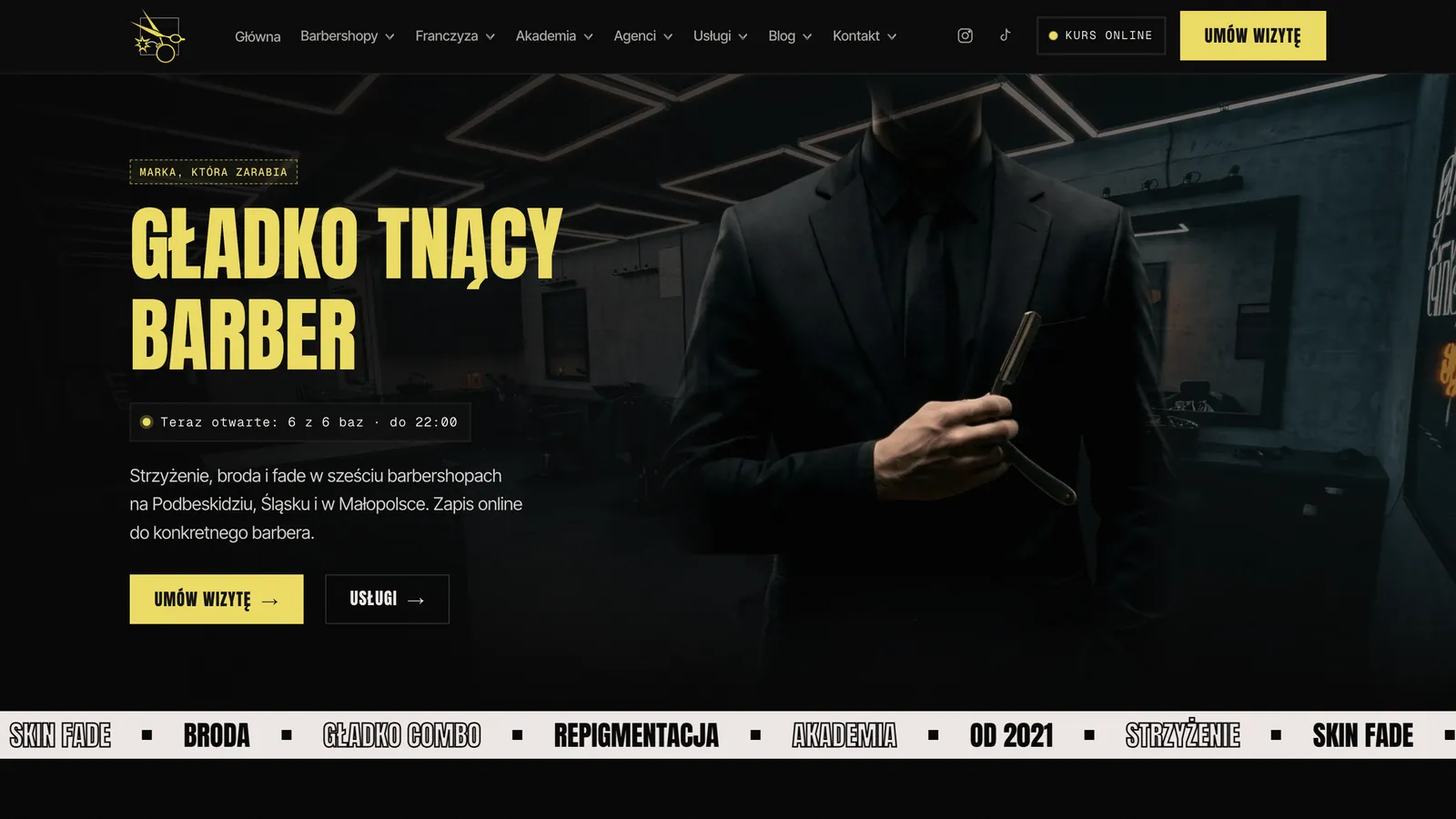 Żywiec, Poland
from 3 to 9 locations in two years
Gładko Tnący Barber
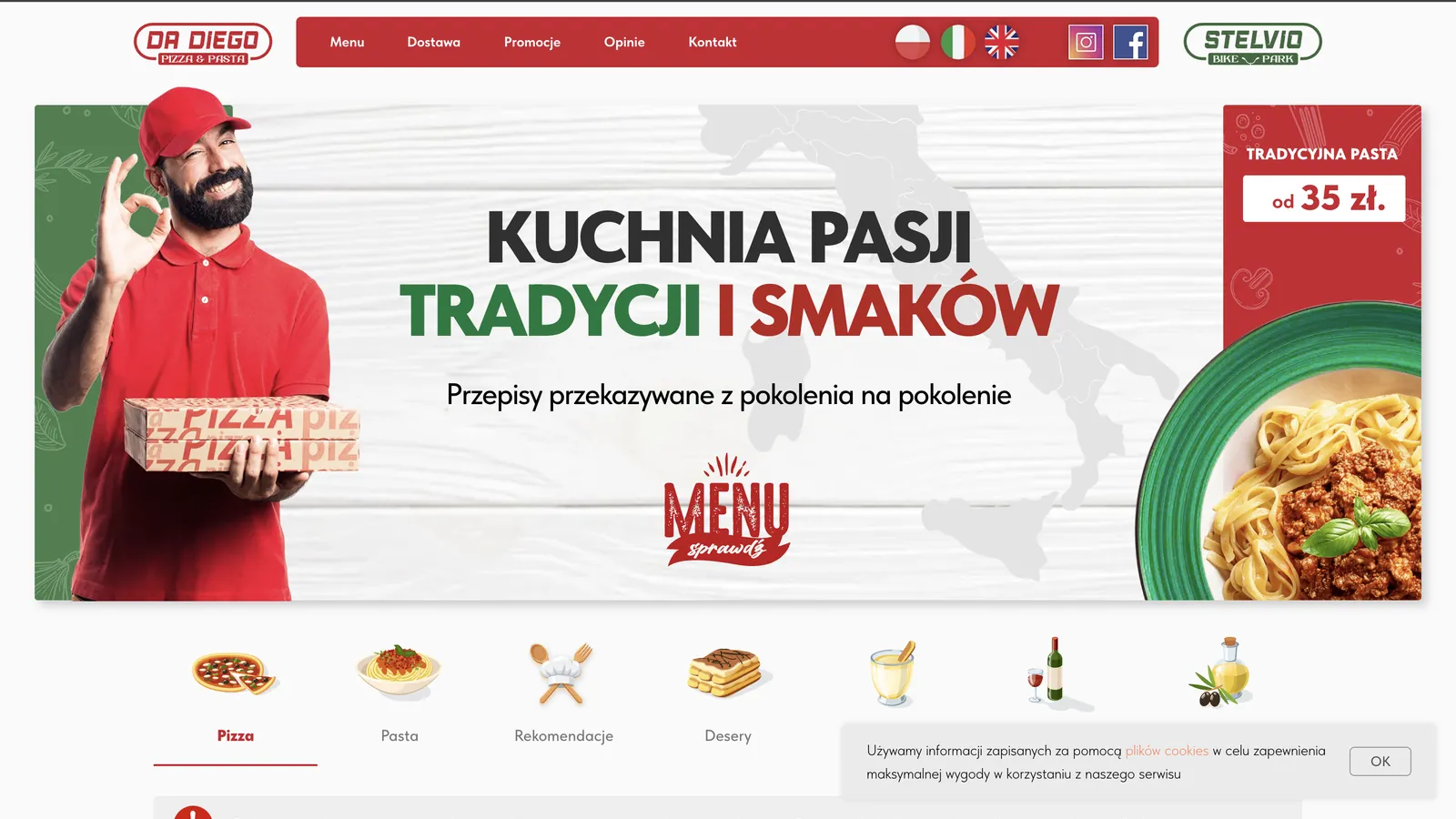 Żywiec, Poland
PLN 15 000 +/mo in delivery orders
Da Diego
A marketing strategy for small business that says what to do first, what to skip and what it costs. Before you pay for a new website, you know why, for whom and how you'll measure it.
Free: a 30-minute call, an action plan and a price range in writing.

Most owners I talk to aren't short of marketing. They're short of a reason for each piece of it.
Ads, a website retainer, a directory listing, a sponsored post. Each bill looks small, the total doesn't, and none of it is tracked to a sale.
SpendingThe SEO person says SEO, the ad person says ads, the web designer says a new site. Nobody looks at the business as a whole.
AdviceWithout a clear picture of who buys and why, the message is vague and the ads pay for clicks from people who will never call.
CustomersA website, ads and a CRM are tools. Strategy tells you which one to pick up first.
I don't write plans I couldn't carry out myself.
years in marketing: strategy, websites, ads, CRM and automation.
businesses, from a personal trainer to a nine-location barber chain.
of clients come back with another project after the first one.
in client ad budgets under management, about PLN 150,000 a month.
Order the whole strategy or start with one piece. Most projects begin with an audit and a close look at your customers; the rest depends on where the business is.
Thirty minutes on Zoom. You tell me about the business, goals and budget; I tell you honestly whether a strategy makes sense right now.
A written agreement with the scope and deadline. You share access to your website, ad accounts, analytics and Google Business Profile.
I go through your marketing, competitors, customers and the way enquiries are handled, from the first click to the invoice.
Goals in numbers, channels, budget and the order of work. You ask questions; I revise what needs revising.
You carry it out yourself, with another provider, or with me. The plan belongs to you either way.

A plan that fits on a few pages, not forty. Something you can actually read with your morning coffee.
One system for the whole chain: website, booking per location, CRM, ads and a chatbot. It grew from 3 to 9 locations in two years.
See the case study →Website, ads, bots, CRM and SEO, planned as one system. Around 200 keywords now sit on page one of Google in Canada.
See the case study →Ads, bots, CRM and a website aimed at office cleaning, the most profitable type of contract for this business.
See the case study →Final prices in Canadian dollars. The strategy is a one-time fee; a monthly fee applies only if I stay on to carry it out.
One concrete question, one hour on Zoom, a short list of next steps.
Full audit and a written plan: customers, competitors, channels, budget, KPIs.
I carry out the plan in one channel. Full outsourcing is quoted individually.
A marketing strategy for small business is a short, written answer to four questions: who buys from you, why they pick you over the next option, where they look for a business like yours, and how much you can spend to win one of them. Everything else, from the website to the ads, follows from those answers.
Most of the businesses I work with already do some marketing. The problem is rarely a missing channel. It's that nobody decided which channel does what job, so the website, the ads and the Google profile pull in different directions and the owner can't tell which part pays.
The plan starts with a marketing audit: your website, ad accounts, analytics, Google Business Profile, reviews and how fast enquiries get answered. I also look at your three to five closest competitors and at the people who already buy from you, because past customers tell you more than any survey.
After the research, I build the strategy in layers. First the customer and the offer: buyer personas and a value proposition that says in one sentence why someone should choose you. Then the channels, in order: often Google Maps and search first, ads second, social media and email after that. Then the budget and the KPIs that show whether it's working.
The result fits on a few pages. Each task has an owner, a deadline and a cost, so it's clear what happens in month one and what can wait until month four.
| Part of the plan | Question it answers |
|---|---|
| Audit | What works now and what wastes money? |
| Customers and competitors | Who buys, and what do they compare you with? |
| Offer and message | Why you, in one sentence? |
| Channels and funnel | Where do people find you, and what happens next? |
| Budget and KPIs | How much, and how do we know it's working? |
A few things are specific to marketing in Canada. If you sell in Quebec, French must be at least as available as English under the Charter of the French Language, so budget for French pages and ads from your own team or translator; my plan and work cover the English-language side. Commercial email and text messages fall under CASL, which means consent, sender details and an unsubscribe link. Distances are long and many markets are small, so a business in Red Deer or Brandon often needs a different mix than one in Toronto.
Many of my Canadian clients are immigrant-owned businesses. I speak English, Polish, Russian and Ukrainian, which helps when the owner thinks in one language and the customers search in another.
The first is starting with the tool. An owner buys a new website because the old one looks dated, but the real problem was that nobody answered the phone after 4 p.m. The second is copying a bigger competitor: their budget, their channels, their tone. A company with ten trucks and a sales team can afford to lose money on brand ads for a year; a two-person business usually can't. The third is measuring nothing. Without call tracking and form conversions, every decision about the budget is a guess, and guesses tend to favour whoever shouts loudest.
A good plan avoids all three by starting from the numbers you already have, even if they're rough.
The strategy costs $2,400 CAD as a one-time fee. You can carry it out yourself or with another provider. If you'd like me to do it, I handle websites, Google Ads, Meta ads, SEO, CRM and analytics myself, with a written agreement, deadlines in the contract and accounts in your name. Prices for each part are on the pricing page, and if you're not sure where to begin, a free consultation is the easiest first step.
With me, an audit and strategy costs $2,400 CAD, final. That covers the audit of your current marketing, competitor and customer research, the channel plan, the budget split, KPIs and a presentation on Zoom. If you only need a second opinion on one decision, a consultation at $70 an hour is usually enough, and the first 30 minutes are free.
Usually it's the small business that gains the most, because there's less room for expensive mistakes. A plan that stops you from paying for the wrong channel for six months often covers its own cost. If your business is brand new and you don't yet know what you sell or to whom, I'll tell you that on the free call instead of selling you a document.
A written plan you keep, plus a recorded walkthrough on Zoom. It describes your customers, your position against competitors, the channels in order of priority, a monthly budget, the numbers to track and a list of tasks for the first 90 days. No forty-page deck full of theory.
No. The plan is written so that you, an employee or another provider can follow it. Many clients do ask me to handle part of it, such as the website or Google Ads, because the person who wrote the plan already knows the business. That's an option, never a condition.
A short brief about the business, access to your website, ad accounts, analytics and Google Business Profile, and an hour or two of your time for questions. If you have sales data or a list of past customers, even better. I sign the agreement with you directly; there's no account manager in between.
Yes. I work remotely with businesses across Canada and schedule calls on Zoom at a time that suits your time zone, from Pacific to Newfoundland. In smaller markets the plan often looks different: fewer searches, more word of mouth, more weight on Google Maps and repeat customers.
A few sentences are enough. I'll reply within one business day with whether a strategy makes sense for you and what it would cover.
What do you need most?