Invisible for "dental implants"
One "Services" page lists twenty treatments in bullet points. A patient comparing implant options never finds you.
SearchAds and visibility: customers who are looking for your service now or don’t know about it yet.
01 Google AdsEnquiries from people searching for your service right nowfrom $750/mo 02 Social media adsMeta, TikTok, LinkedIn: customers who are not searching yetfrom $700/mo 03 SEOHigher in Google and Maps without paying per clickfrom $1,000/mo 04 Visibility in ChatGPT and AIYour business in AI assistant answerspart of SEO 05 Amazon and marketplacesSell where customers already buywith a partnerThe place where a visit turns into an enquiry, and a system that doesn’t lose that enquiry.
01 Web designA website that turns visits into enquirieslanding from $1,300 02 Online storesCart, payments and shipping, ready for adsfrom $4,800 03 CRMNo enquiry gets lost in a phonesetup $3,400 04 Chatbots and AIThey answer customers, at night too$2,500 05 Email and SMSCustomers come back instead of forgetting youquoted individuallyPlan and tracking first, budget second. You know what works before you spend more.
01 Strategy and auditKnow where to spend the budget before you spend it$2,400 02 AnalyticsSee which ad brings in money$650 03 ConsultationsA call about your specific problem$70/h 04 Free auditA quick review and 3–5 priorities to start$0How your business looks and sounds before anyone calls you.
01 Social media managementProfiles that look like a real businesswith a partner 02 Creative and videoGraphics and videos that stop the thumbquoted individually 03 BrandingA logo and style that sets you apartwith a partner Edmonton, Canada
200 keywords on page one of Google
Boreal Kitchens
 Winnipeg, Canada
up to 5 enquiries/mo from Google without ads
Adela Realtor
 Żywiec, Poland
from 3 to 9 locations in two years
Gładko Tnący Barber
 Żywiec, Poland
PLN 15 000 +/mo in delivery orders
Da Diego
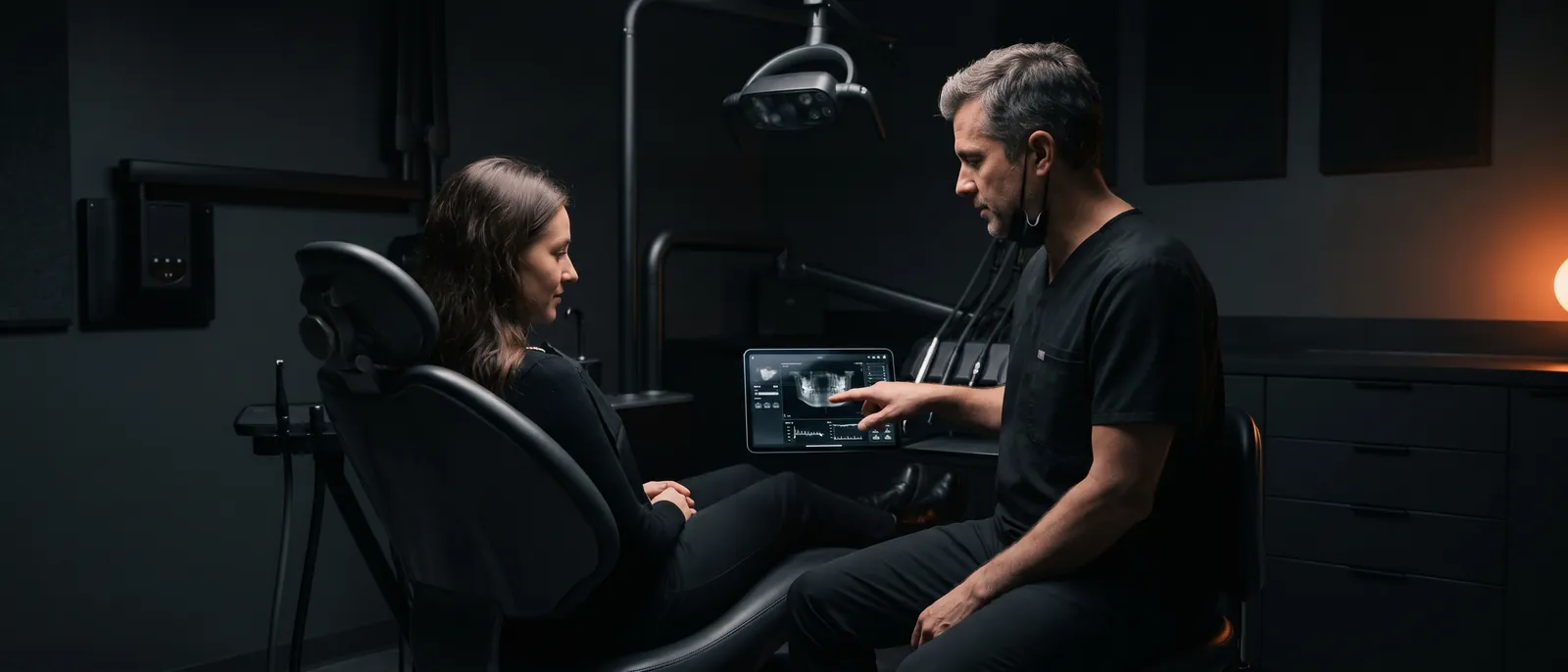
Marketing for dentists that brings the patients your schedule actually needs: emergency visits. Clear treatment pages, a Google Maps listing that earns trust, and search ads switched on only for the chairs you want filled.
Free: a 30-minute call, an action plan and a price range in writing.
Most practices I talk to are not short of recall visits. They are short of the treatments that pay for the new chair.
One "Services" page lists twenty treatments in bullet points. A patient comparing implant options never finds you.
SearchToothache calls come at night and on weekends. Without a clear next step on the site, that patient books elsewhere by morning.
CallsPatients read reviews before they read your bio. A profile with silence under every comment feels unattended.
TrustCustomers book online at any time, and a reminder before the visit cuts down on no-shows.
All prices in Canadian dollars, final. Google or Meta budget is paid by you directly; about $1,000 a month is a sensible floor.
A landing page for implants, aligners or emergencies, with analytics wired in.
Multi-page site, Google Ads setup and analytics. Management afterwards from $750/month.
Website, Google and Meta setup, CRM setup and analytics, then $1,200/month for both ad channels.
Most "dentist near me" decisions happen in the map pack. Categories, photos, hours and steady reviews matter more than anything else here.
Separate campaigns for emergencies, implants and aligners, each with its own landing page and budget cap.
Plain answers on process, recovery, typical fee ranges and payment options. These pages rank over time and make ads cheaper.
Useful for a new location, a new associate or extended hours. Not for chasing people about their teeth.
Booking per location, CRM and ads; top 1–3 in Google and Maps for "barber + city". Different chair, same local search logic.
See the case study →Price list by treatment zone, online booking around the clock, CRM and ads. The project has just launched; I will share results once there are hard numbers.
See the case study →When someone in Canada cracks a molar on a Saturday, they type "emergency dentist" with a city name and pick from the three practices in the map. Marketing for dentists is mostly about winning that moment and the calmer research that comes before bigger treatments. A dentist with a complete Google Business Profile, recent reviews with replies and a fast mobile page gets the call. That work sits in local SEO, and it pays back for years.
The second moment is research. A patient thinking about implants or clear aligners reads for weeks before booking a consult. They want the process, recovery time, fee ranges and payment options. A dedicated page for each high-value treatment answers that and gives your ads somewhere better to land than the home page.
Dentistry is a regulated profession in every province, and each regulator publishes rules on advertising. They differ, but some themes repeat: no claims of superiority, no guaranteed outcomes, care with before-and-after images, and no use of the word "specialist" unless it is earned. Patient praise used in ads is often restricted too. I write in a factual register and keep a short list of claims I steer clear of, so your review is quick.
Google also treats some health topics with extra care, and Meta does not allow ads that imply a person's health condition. That rules out "Embarrassed by your smile?" style headlines. It leaves plenty: new patient availability, evening hours, a new associate, languages spoken.
Coverage drives a lot of searches. People look for a dentist who offers direct billing to their insurer, one who accepts the Canadian Dental Care Plan, or one open on evenings and weekends. Families moving to a new city search "dentist accepting new patients" followed by a neighbourhood. If any of those describe you, they deserve a clear line on the site and on the profile.
| Search intent | What the patient needs to see |
|---|---|
| Emergency today | Phone number, hours, next slot |
| Implants, aligners | Process, fee range, financing, consult booking |
| New family | Kids' care, direct billing, location, languages |
A common mistake is sending every ad click to the home page. Someone who searched "same day emergency dentist" should land on a page with one phone number, today's hours and a sentence on what happens at the first visit. Someone researching implants should land on the implant page with a consult form. Matching the page to the search is often the cheapest improvement a practice can make, and it lowers the cost of each new patient call.
Many employer benefit plans reset on January 1, so the last months of the year often bring patients trying to use what is left. September is busy with school-age check-ups. Summer can be quieter, which is a good time to push consults for larger treatments. I plan Google Ads campaigns around those swings instead of spending evenly all year.
Recall is the other half. A CRM setup with reminders keeps patients from drifting away after their first visit, and any reminder emails or texts follow CASL consent rules. If you also run a medical clinic, see marketing for medical clinics. For pricing details beyond packages, see website pricing. Practices in the capital region can read about that market on digital marketing in Ottawa.
Each province has a dental regulator with its own advertising standards. They commonly limit superlatives, guarantees, patient endorsements and calling yourself a specialist unless you hold that recognition. I keep copy factual: treatment, dentist, process, fee range, location. Your regulator has the final word, so I flag any line that deserves a second look.
If you accept CDCP patients, many people search for exactly that, so a clear page or section helps. If you do not, say nothing rather than leaving people guessing. Either way, I keep the wording plain and avoid implying coverage details I cannot confirm; patients should check their own eligibility.
I usually suggest starting around $1,000 a month in Google, focused on one or two treatments with the best value per patient. Implants and aligners often justify more because one case is worth many hygiene visits. Management is from $750 a month on top of the ad spend.
No. I hand-code sites or build them on a custom CMS made for the practice. You own the code and content, there is no builder subscription, and the edit panel only shows what your team actually changes: hours, team, fees and announcements.
Partly. A page in the languages your team speaks can be a real draw, and I can write in English, Polish, Russian and Ukrainian myself. French is not part of my work: for Quebec practices French must be at least as available as English, so French pages would come from your own team or a translator.
Tell me which treatments you want more of and where your practice is. I answer within one business day, or book the free 30-minute call.
What do you need most?