01[01]
Broad match on autopilot
Google matches “roof repair” to “roofing jobs”, “DIY roof patch” and “roof rack”. Without a negative list you pay for all of it.
Ads and visibility: customers who are looking for your service now or don’t know about it yet.
01 Google AdsEnquiries from people searching for your service right nowfrom $750/mo 02 Social media adsMeta, TikTok, LinkedIn: customers who are not searching yetfrom $700/mo 03 SEOHigher in Google and Maps without paying per clickfrom $1,000/mo 04 Visibility in ChatGPT and AIYour business in AI assistant answerspart of SEO 05 Amazon and marketplacesSell where customers already buywith a partnerThe place where a visit turns into an enquiry, and a system that doesn’t lose that enquiry.
01 Web designA website that turns visits into enquirieslanding from $1,300 02 Online storesCart, payments and shipping, ready for adsfrom $4,800 03 CRMNo enquiry gets lost in a phonesetup $3,400 04 Chatbots and AIThey answer customers, at night too$2,500 05 Email and SMSCustomers come back instead of forgetting youquoted individuallyPlan and tracking first, budget second. You know what works before you spend more.
01 Strategy and auditKnow where to spend the budget before you spend it$2,400 02 AnalyticsSee which ad brings in money$650 03 ConsultationsA call about your specific problem$70/h 04 Free auditA quick review and 3–5 priorities to start$0How your business looks and sounds before anyone calls you.
01 Social media managementProfiles that look like a real businesswith a partner 02 Creative and videoGraphics and videos that stop the thumbquoted individually 03 BrandingA logo and style that sets you apartwith a partner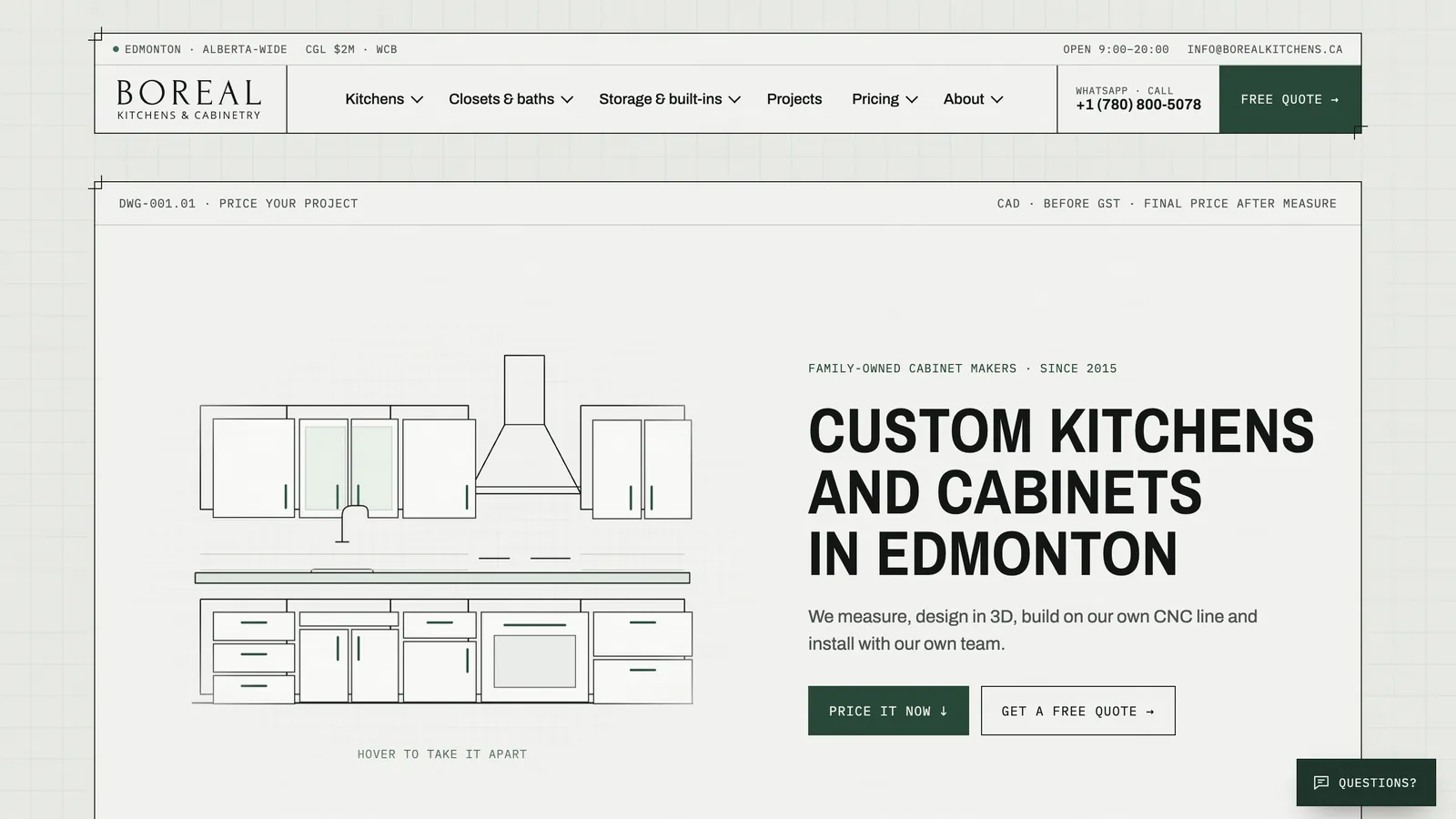 Edmonton, Canada
200 keywords on page one of Google
Boreal Kitchens
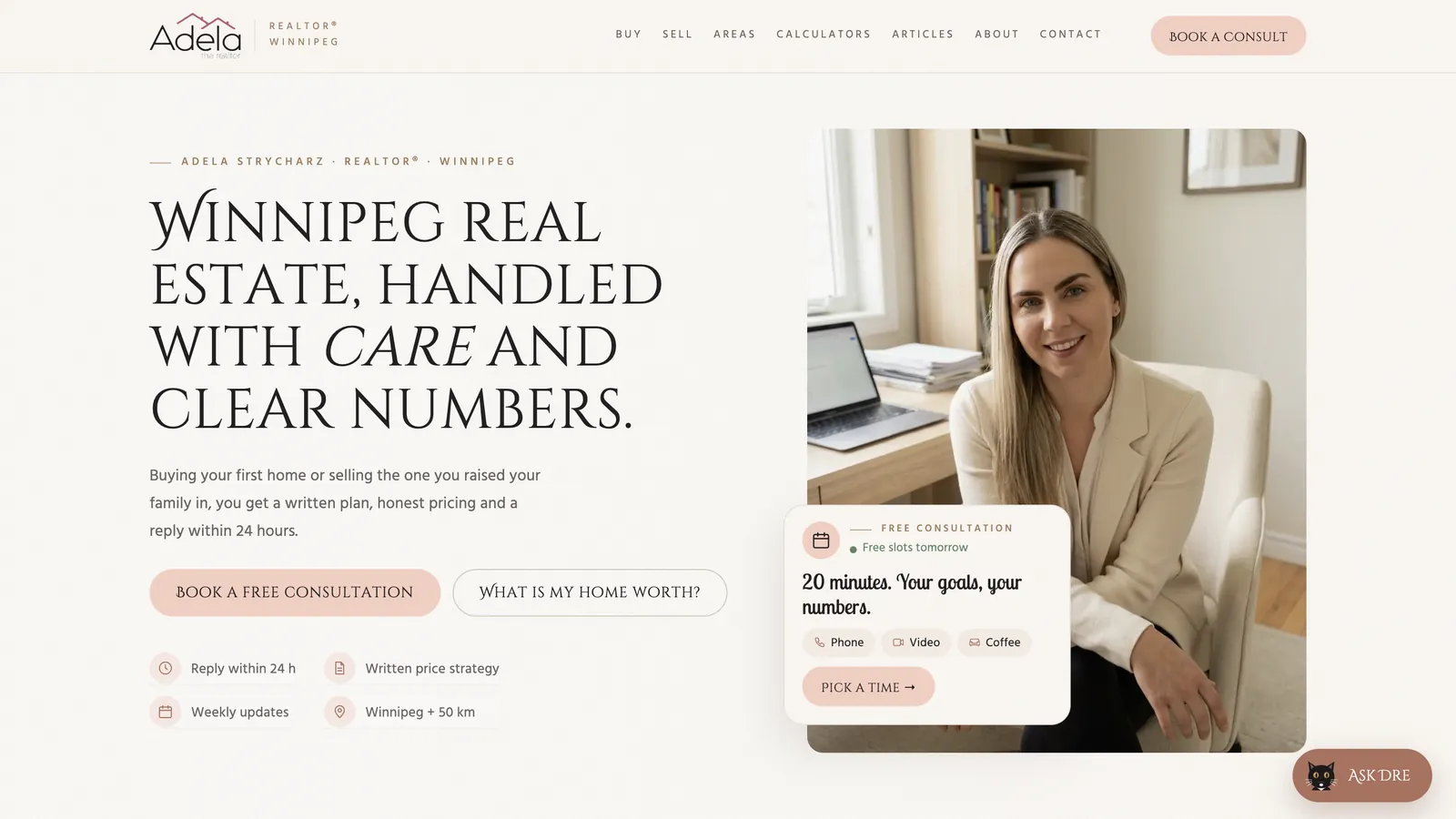 Winnipeg, Canada
up to 5 enquiries/mo from Google without ads
Adela Realtor
 Żywiec, Poland
from 3 to 9 locations in two years
Gładko Tnący Barber
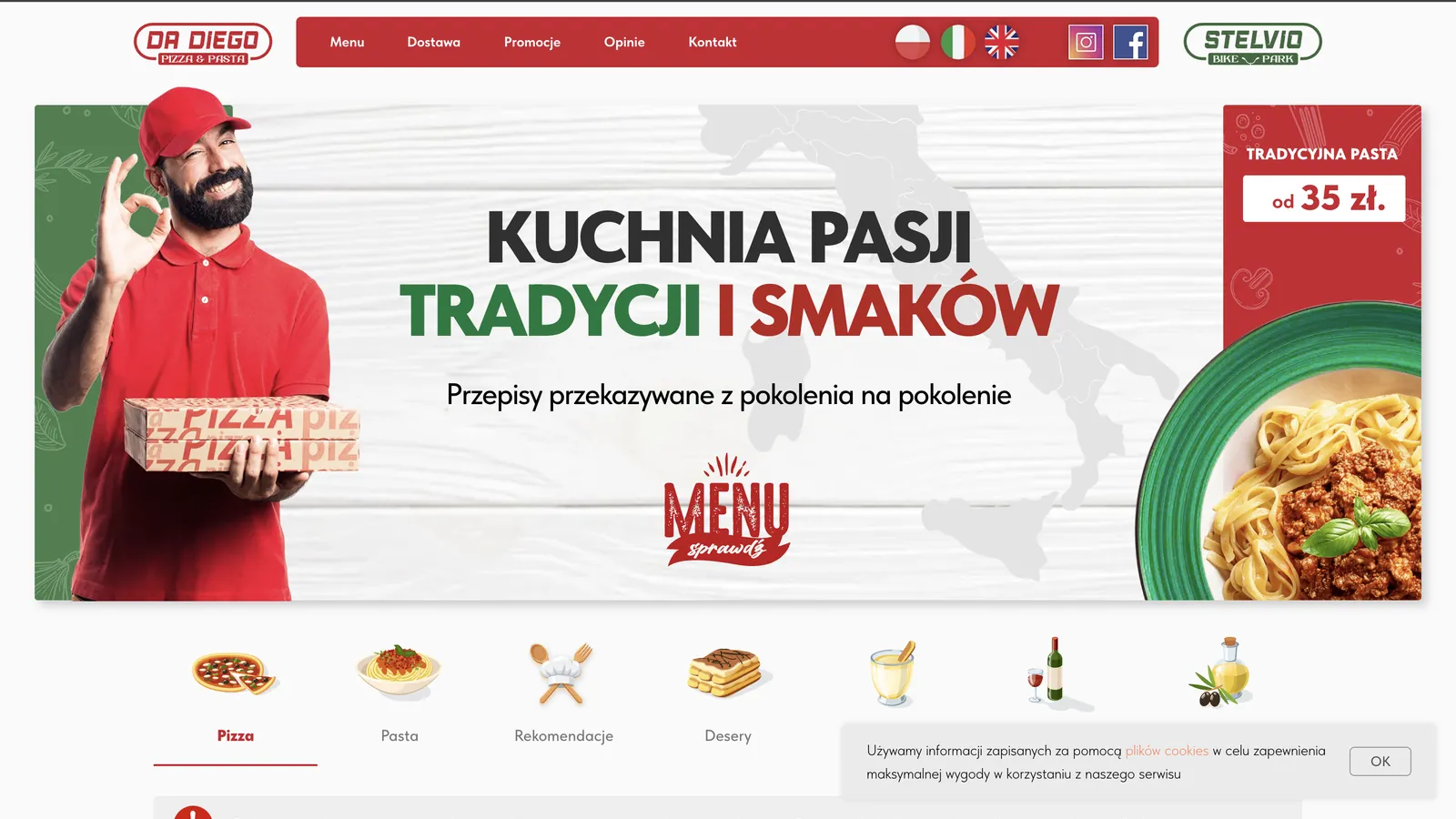 Żywiec, Poland
PLN 15 000 +/mo in delivery orders
Da Diego
Google Search ads put your business in front of people who are typing “emergency plumber”, “invisalign cost” or “kitchen renovation quote” right now. I build Search campaigns around those buying moments, so your budget pays for intent and not for curiosity.
Free: a 30-minute call, an action plan and a price range in writing.

Google matches “roof repair” to “roofing jobs”, “DIY roof patch” and “roof rack”. Without a negative list you pay for all of it.
Twenty services crammed into one group means one generic ad for all of them. Relevance drops and every click gets pricier.
If “visited the contact page” counts as a lead, smart bidding chases browsers. I count real calls, forms and messages only.
Clicks at 11 p.m. for a business that calls back the next afternoon rarely turn into jobs. The schedule should match your hours.
Every week I review what people actually searched for and exclude terms that don’t bring customers.
My fee in Canadian dollars. Clicks are billed to you directly by Google.
One-time: research, account structure, ads and tracking.
Ongoing work, no minimum term.
Google Search ads are the most direct form of online advertising: someone types a problem, and your ad answers it. A homeowner with a flooded basement isn't browsing; they want a phone number. That is why Search is the first campaign I build for almost every service business, before Display, YouTube or anything automated.
The catch is that Search only works when the keywords, the ad and the landing page match what the person actually typed. “Bathroom renovation Mississauga” and “bathroom renovation ideas” look similar in a keyword tool, but only one of them is a customer.
I sort every keyword by how close it is to a purchase:
Match types matter too. I use phrase and exact match for the core services and broad match only once the account has enough conversion data for Google's bidding to make sense of it.
A responsive search ad can hold up to 15 headlines and 4 descriptions, and Google mixes them. I write headlines that cover the service, the area, a reason to choose you (licensed, same-day, upfront prices, a warranty you actually offer) and a call to action. Then I add assets: call buttons, location from your Google Business Profile, sitelinks to key services and callouts. Bigger ads take more space on a phone screen and usually lift the click-through rate.
Google can only optimize for what it measures. I record calls from the ad itself, calls from the website, form submissions and WhatsApp or chat clicks as separate conversions, and I import offline results from your CRM when that is possible. If you're unsure your tracking is right, a GA4 and Tag Manager setup is a good first step; it costs $650 and fixes the foundation for every channel.
Picture an HVAC company in a mid-sized Prairie city. In January, “furnace repair” and “no heat” searches jump, and a campaign that was set up in summer will run out of budget by noon. In practice I build separate ad groups for repair, installation and maintenance, raise the repair budget in cold months, and pause installation ads during the busiest emergency weeks when the crew is fully booked. In spring, the budget shifts to air conditioning. The same logic applies to snow removal, roofing or landscaping.
A great ad that lands on a slow homepage loses most of its value. The page a click lands on should repeat the promise from the ad, show a phone number at the top, answer the price question at least roughly, and ask for one action. For many service businesses I send each main service to its own page rather than the homepage, and the cost per lead drops simply because people find what they clicked for.
Search captures demand that already exists. If few people search for what you sell, or if you sell online with a product feed, other campaign types do better: Google Shopping for stores, YouTube or Demand Gen to create demand. For local businesses, Search pairs well with Local Services Ads and a strong Google Business Profile.
Setup costs $650 and management starts from $750 a month. You can see how this fits other channels on the advertising pricing page, or go back to the Google Ads services overview to compare all campaign types.
It depends on the industry and city far more than on anything I could promise. Some local services pay a dollar or two per click, while legal, insurance or home renovation keywords can cost much more. Before setup I pull estimates for your exact keywords and area, so you see the range in your own market instead of an average from somewhere else.
Usually yes, if competitors show up on your name. Brand clicks are cheap, and they keep a rival's ad from sitting above your listing. If nobody else bids on your name, I keep the brand campaign small or paused and spend the budget on non-brand searches.
Not with me. I write and manage Search campaigns in English only. If you sell in Quebec, French ads and a French landing page are generally expected there, so French campaigns would need to come from your own team or a French-language specialist. I keep the English campaigns I run targeted where English ads make sense.
It depends on data. A new account with few conversions often starts with manual or enhanced bidding so I control costs. Once it records enough real leads, automated strategies like target cost per acquisition usually perform better. I switch when the numbers justify it, not because the interface recommends it.
The usual suspects are an exhausted daily budget, a payment problem, a disapproved ad or keyword, or bids too low for the auction. Sometimes it's an ad schedule set months ago. I check these first in any account; most of the time it's a quick fix.
Send me your services and service area. On a free call I'll show search volumes, likely click costs and which keywords I'd start with.
Do you already have a Google Ads campaign?