Launch[01]
No list
before the drop
The collection goes live and you post about it. Only your most loyal followers see it, and the algorithm does the rest. Usually not much.
Ads and visibility: customers who are looking for your service now or don’t know about it yet.
01 Google AdsEnquiries from people searching for your service right nowfrom $750/mo 02 Social media adsMeta, TikTok, LinkedIn: customers who are not searching yetfrom $700/mo 03 SEOHigher in Google and Maps without paying per clickfrom $1,000/mo 04 Visibility in ChatGPT and AIYour business in AI assistant answerspart of SEO 05 Amazon and marketplacesSell where customers already buywith a partnerThe place where a visit turns into an enquiry, and a system that doesn’t lose that enquiry.
01 Web designA website that turns visits into enquirieslanding from $1,300 02 Online storesCart, payments and shipping, ready for adsfrom $4,800 03 CRMNo enquiry gets lost in a phonesetup $3,400 04 Chatbots and AIThey answer customers, at night too$2,500 05 Email and SMSCustomers come back instead of forgetting youquoted individuallyPlan and tracking first, budget second. You know what works before you spend more.
01 Strategy and auditKnow where to spend the budget before you spend it$2,400 02 AnalyticsSee which ad brings in money$650 03 ConsultationsA call about your specific problem$70/h 04 Free auditA quick review and 3–5 priorities to start$0How your business looks and sounds before anyone calls you.
01 Social media managementProfiles that look like a real businesswith a partner 02 Creative and videoGraphics and videos that stop the thumbquoted individually 03 BrandingA logo and style that sets you apartwith a partner Edmonton, Canada
200 keywords on page one of Google
Boreal Kitchens
 Winnipeg, Canada
up to 5 enquiries/mo from Google without ads
Adela Realtor
 Żywiec, Poland
from 3 to 9 locations in two years
Gładko Tnący Barber
 Żywiec, Poland
PLN 15 000 +/mo in delivery orders
Da Diego
Marketing for fashion brands that builds demand before the collection lands. Waitlists, launch campaigns and a store you own for seasonal collections.
Free: a 30-minute call, an action plan and a price range in writing.
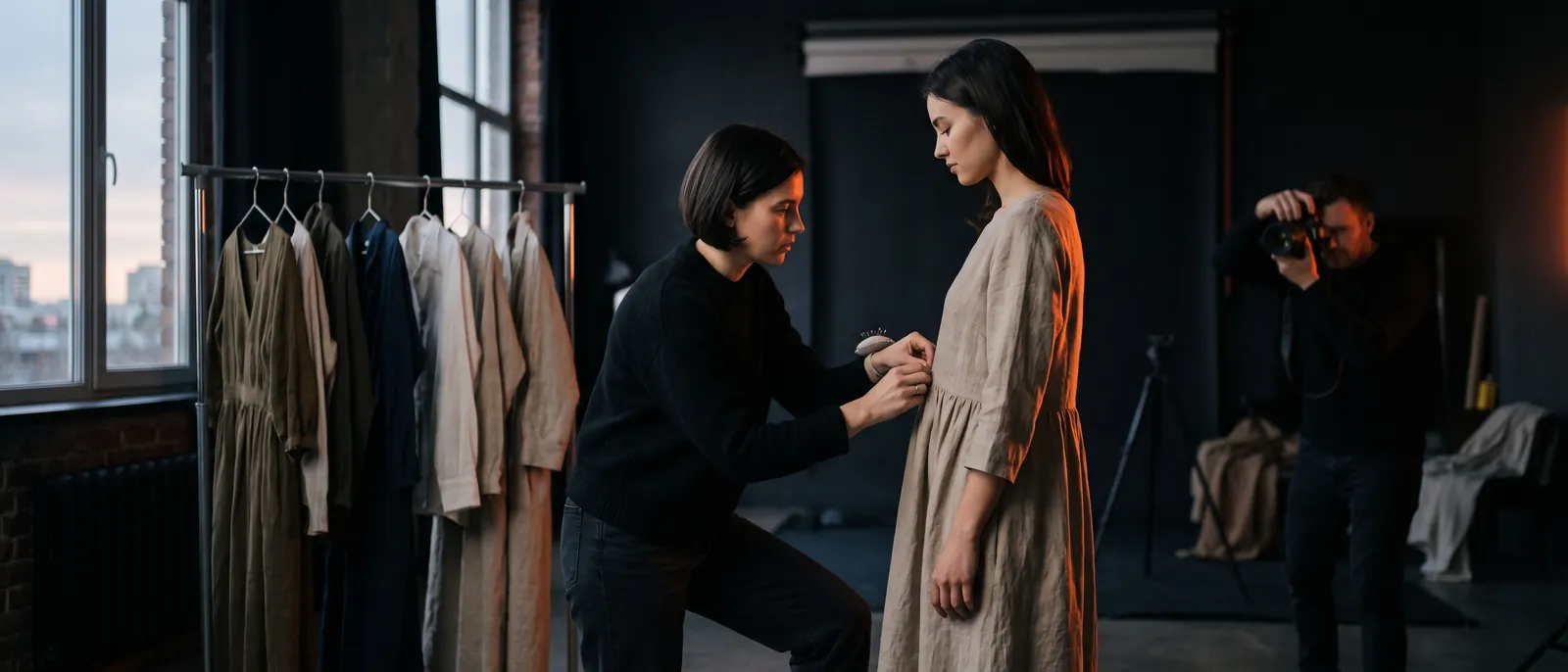
Sales website, order CRM with tracking, ads and a chatbot, launching through a waitlist and a timed drop. The project has just launched; I will share results once there are hard numbers.
See the case study →Website, platform, ads, bots and CRM; sales over PLN 100,000 (about C$37,000).
See the case study →Before calling, customers read reviews. I help you collect them and reply in a way that builds trust.
The collection goes live and you post about it. Only your most loyal followers see it, and the algorithm does the rest. Usually not much.
Return shipping across Canada is expensive. Vague size guides turn sales into losses.
A monthly bill for the store, plus a dozen app subscriptions for features a custom store would simply include.
A teaser with the date and a sign-up that collects consent. Your audience before you need it.
Fast product pages, real size guides, lookbooks and a checkout that works on a phone.
Catalogue ads, short video from the shoot, and Google Shopping for people searching the item.
Launch sequence, abandoned cart and post-purchase care. Quoted after a short call.
Delivered with a trusted partner when it fits; contract and communication stay with me.
Prices in Canadian dollars, final. Ad budget is paid directly to Meta and Google.
A waitlist landing page plus analytics, for one collection or drop.
A custom store with lookbook, size guides and your own admin panel.
Setup with catalogue; management from $700/month.
Independent fashion lives and dies by launches. A new collection or a limited drop has a short window to sell, and the brands that sell out usually built their audience weeks before. Marketing for fashion brands is therefore a calendar: list-building, teasers, launch day and the weeks after.
Instagram remains the main stage for most labels, but it is not where you own the relationship. The waitlist and the email list are. When the drop goes live, a message to people who asked for it beats any post.
Canadian seasons are distinct, and so are shopping habits. Winter outerwear, boots and knits sell from September to December. Spring is short, summer is festival and wedding season, and back-to-school is a real moment in August. Black Friday and Boxing Day dominate November and December. Plan collections and campaigns around those windows rather than dropping randomly.
Fashion stores need strong visuals, fast pages and practical details: size guides with real measurements, fabric and care information, model height and size, and clear returns. I build custom online stores with lookbooks and collection pages, without monthly builder fees and without a stack of apps.
Shipping across Canada is expensive, so a free-shipping threshold and clear delivery times matter. Returns cost even more, which is why size guides are a marketing tool, not just a product detail.
Meta ads for e-commerce carry most launches: short vertical videos from the shoot, catalogue ads for retargeting, and lookalike audiences built from your buyers. Google Shopping catches people searching for a specific item, like "merino wool sweater women Canada". Both need a clean product feed and purchase tracking.
Textile labelling in Canada has its own federal rules: fibre content, dealer identity and bilingual labels. "Made in Canada" claims have conditions set out in Competition Bureau guidance. Environmental claims, such as "sustainable" or "eco-friendly", now need proper substantiation under the Competition Act. I write product copy that describes what is true and specific: materials, where items are cut and sewn, and how to care for them.
If you sell in Quebec, product pages and checkout should be in French. I write and build in English, so the French text would come from your own team or translator; plan that step before a Quebec launch.
Look at the numbers after each drop: sell-through by product and size, return rate, and which channel brought first-time buyers. Those three numbers shape the next collection better than likes or reach. The second purchase is where a brand becomes a business. Post-purchase emails with care tips, early access for past buyers and a reminder when a new collection is coming build loyalty. All marketing emails need CASL consent; the waitlist collects it from day one.
For beauty and skincare labels, see marketing for cosmetics brands. General e-commerce advice is on marketing for online stores. Labels in Canada’s biggest fashion market can see digital marketing in Toronto.
It is a showroom, not a store. You need a place to sell where you own the customer list, plus email to reach them without paying each time. Instagram brings attention; the store and list turn it into sales and repeat buyers.
Only if they qualify. The Competition Bureau has guidelines on "Made in Canada" and "Product of Canada" claims, with specific conditions on where the last substantial transformation happens and what share of costs are Canadian. When in doubt, describe exactly what happens where: "designed and sewn in Montreal".
Detailed size guides with real measurements, fit notes ("runs small"), photos on different body types and clear fabric details. Post-purchase emails with care tips help too. Fewer returns often improves profit more than another ad campaign.
For many fashion brands it helps, especially for younger audiences. I deliver TikTok ads and content with a trusted partner and quote them individually. I would usually get the store, list and Meta working first, then add TikTok.
Send your store or Instagram and the launch date. I reply within one business day.
What do you need most?