Freight[01]
Too dependent
on brokers
Load boards and brokers keep trucks moving, but the margin stays with someone else. Direct shippers cannot find you online.
Ads and visibility: customers who are looking for your service now or don’t know about it yet.
01 Google AdsEnquiries from people searching for your service right nowfrom $750/mo 02 Social media adsMeta, TikTok, LinkedIn: customers who are not searching yetfrom $700/mo 03 SEOHigher in Google and Maps without paying per clickfrom $1,000/mo 04 Visibility in ChatGPT and AIYour business in AI assistant answerspart of SEO 05 Amazon and marketplacesSell where customers already buywith a partnerThe place where a visit turns into an enquiry, and a system that doesn’t lose that enquiry.
01 Web designA website that turns visits into enquirieslanding from $1,300 02 Online storesCart, payments and shipping, ready for adsfrom $4,800 03 CRMNo enquiry gets lost in a phonesetup $3,400 04 Chatbots and AIThey answer customers, at night too$2,500 05 Email and SMSCustomers come back instead of forgetting youquoted individuallyPlan and tracking first, budget second. You know what works before you spend more.
01 Strategy and auditKnow where to spend the budget before you spend it$2,400 02 AnalyticsSee which ad brings in money$650 03 ConsultationsA call about your specific problem$70/h 04 Free auditA quick review and 3–5 priorities to start$0How your business looks and sounds before anyone calls you.
01 Social media managementProfiles that look like a real businesswith a partner 02 Creative and videoGraphics and videos that stop the thumbquoted individually 03 BrandingA logo and style that sets you apartwith a partner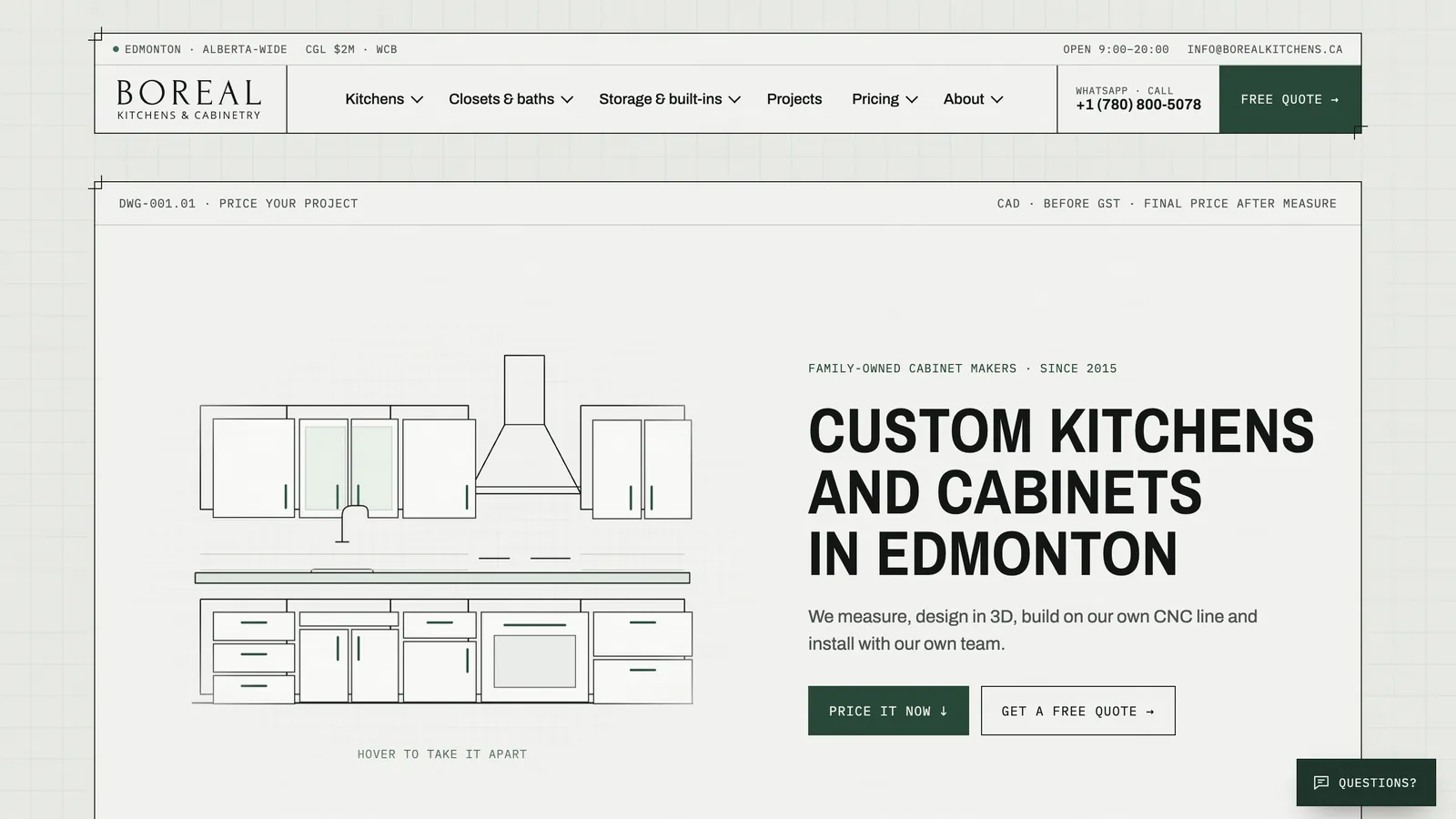 Edmonton, Canada
200 keywords on page one of Google
Boreal Kitchens
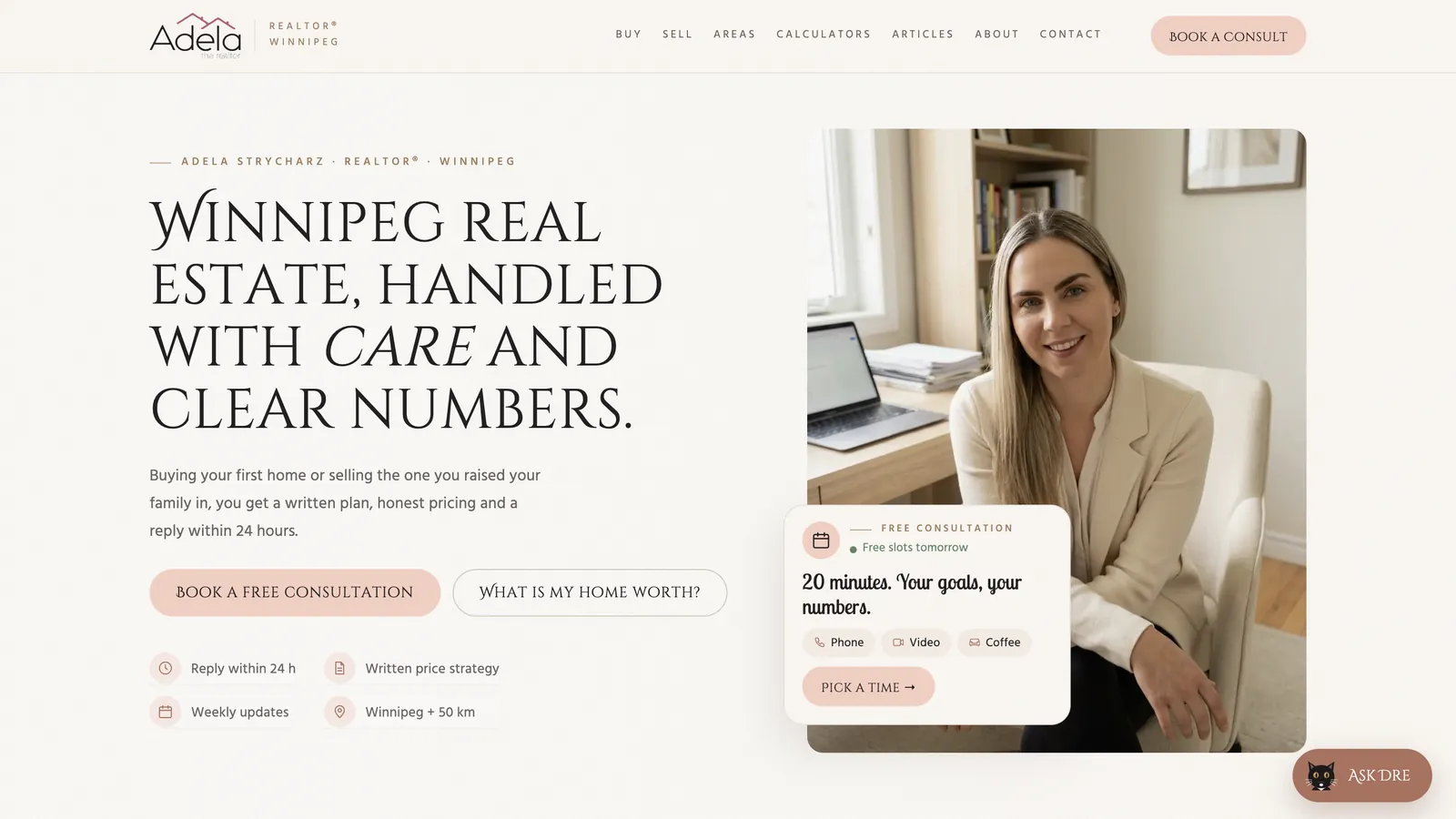 Winnipeg, Canada
up to 5 enquiries/mo from Google without ads
Adela Realtor
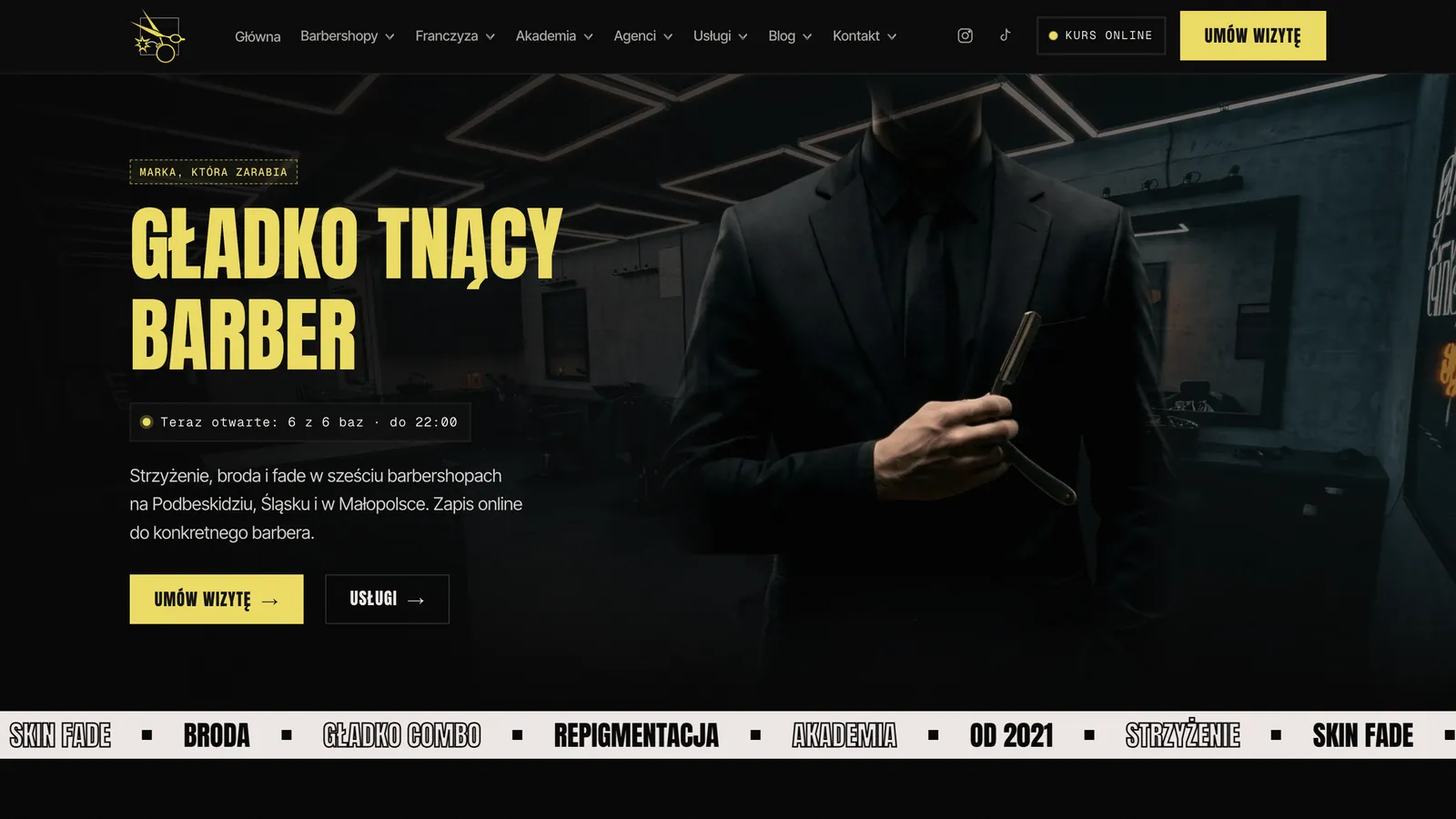 Żywiec, Poland
from 3 to 9 locations in two years
Gładko Tnący Barber
 Żywiec, Poland
PLN 15 000 +/mo in delivery orders
Da Diego
Marketing for trucking companies has two jobs at once: win steady freight and hire people to haul it. I build the site, the ads and the follow-up so you get quote requests from shippers without a sales department.
Free: a 30-minute call, an action plan and a price range in writing.

Most small carriers grow on referrals and a few brokers. That works until one big customer leaves.
Load boards and brokers keep trucks moving, but the margin stays with someone else. Direct shippers cannot find you online.
Job boards bring a stack of applications that do not match your licence class, experience or routes.
A shipper asks for a rate, someone emails a number, and nobody calls back. Two weeks later the freight moved with a competitor.
Before calling, customers read reviews. I help you collect them and reply in a way that builds trust.
Dry van, reefer, flatbed, LTL, cross-border, warehousing. One page for each, with the regions you actually serve, so a logistics manager finds a match in seconds.
Narrow campaigns on searches like "reefer carrier Alberta to BC" or "3PL warehouse Mississauga". Small budget, high intent.
Meta ads aimed at drivers in your area, leading to a short application page that asks the questions dispatch actually cares about.
Every rate request becomes a card with lane, equipment and a reminder. Nothing sits in someone's inbox.
Recurring contracts a month, mostly offices, from ads, bots and a CRM. Same logic as freight: win the account, then keep it.
See the case study →On page one of Google in Canada, plus a CRM and bots that route every enquiry to the right person.
See the case study →Thirty minutes on your fleet, lanes, best customers and the gaps you want filled. Free.
What shippers see when they search for you, what drivers see, and a written plan with budget and deadlines.
Website or landing pages, ad accounts registered to your company, CRM pipeline for quotes and applicants.
Ad check-ins every two weeks, a monthly report on quotes, hires and cost per result.
Final prices, nothing hidden. Ad budget goes straight to Google or Meta, around $1,000 a month to start.
Landing page plus analytics, ready for Meta recruiting ads.
Multi-page website, Google Ads setup and analytics. Management afterwards from $750/month.
A system built around quotes, lanes, customers and applicants. Ready-made CRM setup is $3,400.
Marketing for trucking companies is unusual because you sell to two groups at the same time. Shippers and logistics managers want reliability, coverage and a quick rate. Drivers want fair pay, predictable home time and a dispatcher who answers the phone. Most carrier websites try to talk to both on one page and end up convincing neither. I split them: a freight section with service and lane pages, and a separate careers section with its own ads.
The freight side should read like a capability sheet, not a brochure. Equipment types, regions covered, cross-border capability, warehousing, safety record in plain words, and a quote form that asks for origin, destination, equipment and timing. That form should land in a CRM where someone gets a reminder to follow up the next morning.
Freight searches are specific. People type a lane, a province pair or a type of load: "flatbed Saskatchewan to Ontario", "temperature controlled freight Winnipeg", "LTL Montreal". A page that matches that search beats a generic home page every time. This is where Google Search campaigns earn their keep: you pay only for those narrow, high-intent searches instead of chasing broad terms like "trucking".
Cross-border work deserves its own page. Shippers want to know if you handle US freight, which crossings you use, and whether you work with customs brokers. Keep claims factual. For Quebec-based companies, French must be at least as available as English. My work is in English, so French pages would come from your own team or translator.
The driver shortage has been a talking point in Canadian trucking for years, and every carrier feels it in its own way. Paid recruiting works when the landing page is honest and fast. I usually include:
Meta classifies job ads as a special category, which limits targeting by age and narrow interests. That is fine: location, a clear headline and a page that answers questions do most of the work. Applications go into a separate pipeline so they do not get mixed with quotes. If you hire many newcomers, a page in their language can help, and I write in English, Polish, Russian and Ukrainian myself.
Freight volume moves with the seasons: produce in summer and fall, retail peaks before the holidays, winter roads that slow everything and push some carriers out for weeks. I plan ad budgets around your real calendar, pulling back when you are already full and pushing in the slower months. Hiring campaigns often work best before your busy season, not during it.
| Mistake | What to do instead |
|---|---|
| One page for every service | A page per service and region |
| Quote form with 20 fields | Lane, equipment, date, contact |
| Jobs page buried in the footer | A careers section with its own ads |
| No follow-up system | A CRM with reminders |
If you also sell parts, equipment or warehouse space to other businesses, have a look at marketing for wholesalers and distributors. If you prefer to start small, a landing page for driver hiring is often the fastest win, and the pricing page for websites lays out the rest.
It can, but not overnight. Logistics managers do search for carriers by lane, equipment and region, especially when a current carrier lets them down. A site with clear service pages and a fast quote form catches those moments. Search ads speed it up. I would not promise a flood; I would promise you will be findable and that every request is tracked.
Often, yes, if the page answers what drivers ask first: routes, home time, equipment, pay structure and who they will deal with. Meta treats job ads as a special category with limited targeting, so the message and the location do most of the work. I keep the form short and send applications straight to the person who hires.
For brokers and 3PLs selling to procurement teams, LinkedIn can make sense. I run LinkedIn ads with a trusted partner; the contract, deadlines and communication stay with me. For a small carrier, a strong site and Google search usually come first.
I do not patch other people's sites. I build a new one, keep your domain and move over the content that still earns its place. The result is a site you own in full, with an edit panel made for your business.
Search ads can bring the first requests within days of launch. Organic results from service and lane pages usually take a few months to build. I show both in the monthly report, so you can see which one is paying.
A few lines about your fleet, regions and goals. I reply within one business day, or book the free 30-minute call.
What do you need most?