Offer[01]
A list of
modules, not a result
Twelve modules and forty videos. The buyer still does not know what they will be able to do afterwards.
Ads and visibility: customers who are looking for your service now or don’t know about it yet.
01 Google AdsEnquiries from people searching for your service right nowfrom $750/mo 02 Social media adsMeta, TikTok, LinkedIn: customers who are not searching yetfrom $700/mo 03 SEOHigher in Google and Maps without paying per clickfrom $1,000/mo 04 Visibility in ChatGPT and AIYour business in AI assistant answerspart of SEO 05 Amazon and marketplacesSell where customers already buywith a partnerThe place where a visit turns into an enquiry, and a system that doesn’t lose that enquiry.
01 Web designA website that turns visits into enquirieslanding from $1,300 02 Online storesCart, payments and shipping, ready for adsfrom $4,800 03 CRMNo enquiry gets lost in a phonesetup $3,400 04 Chatbots and AIThey answer customers, at night too$2,500 05 Email and SMSCustomers come back instead of forgetting youquoted individuallyPlan and tracking first, budget second. You know what works before you spend more.
01 Strategy and auditKnow where to spend the budget before you spend it$2,400 02 AnalyticsSee which ad brings in money$650 03 ConsultationsA call about your specific problem$70/h 04 Free auditA quick review and 3–5 priorities to start$0How your business looks and sounds before anyone calls you.
01 Social media managementProfiles that look like a real businesswith a partner 02 Creative and videoGraphics and videos that stop the thumbquoted individually 03 BrandingA logo and style that sets you apartwith a partner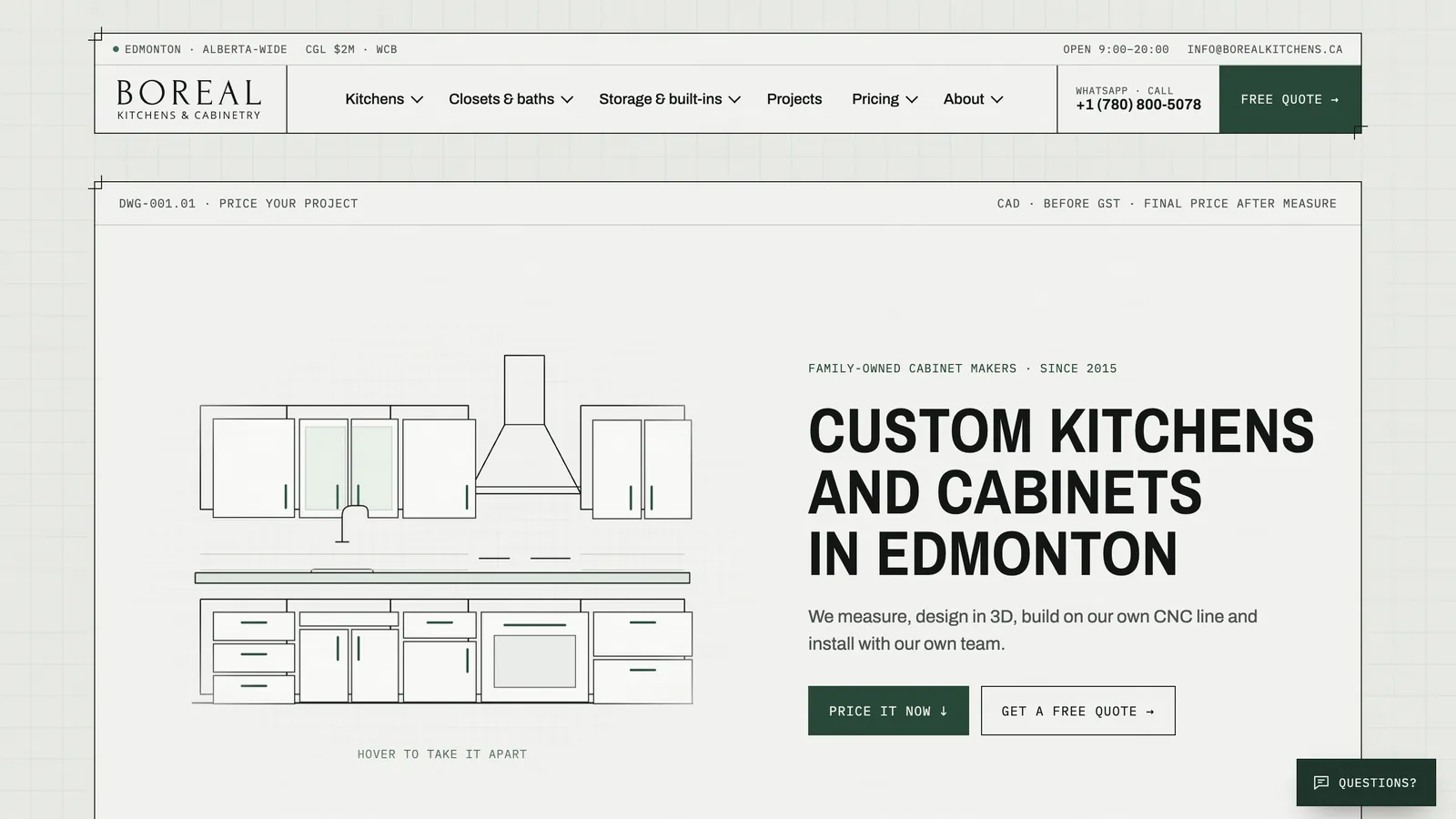 Edmonton, Canada
200 keywords on page one of Google
Boreal Kitchens
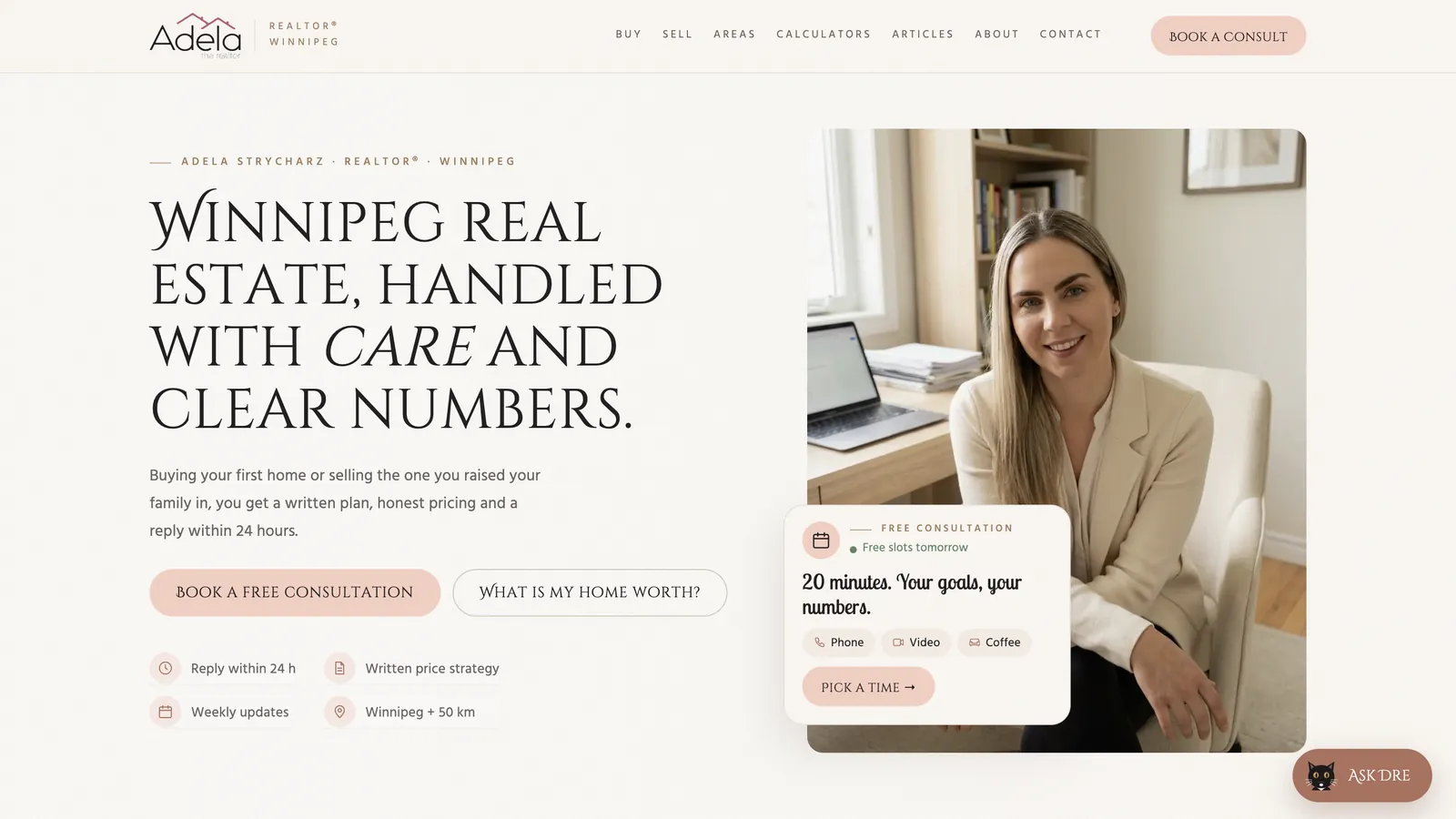 Winnipeg, Canada
up to 5 enquiries/mo from Google without ads
Adela Realtor
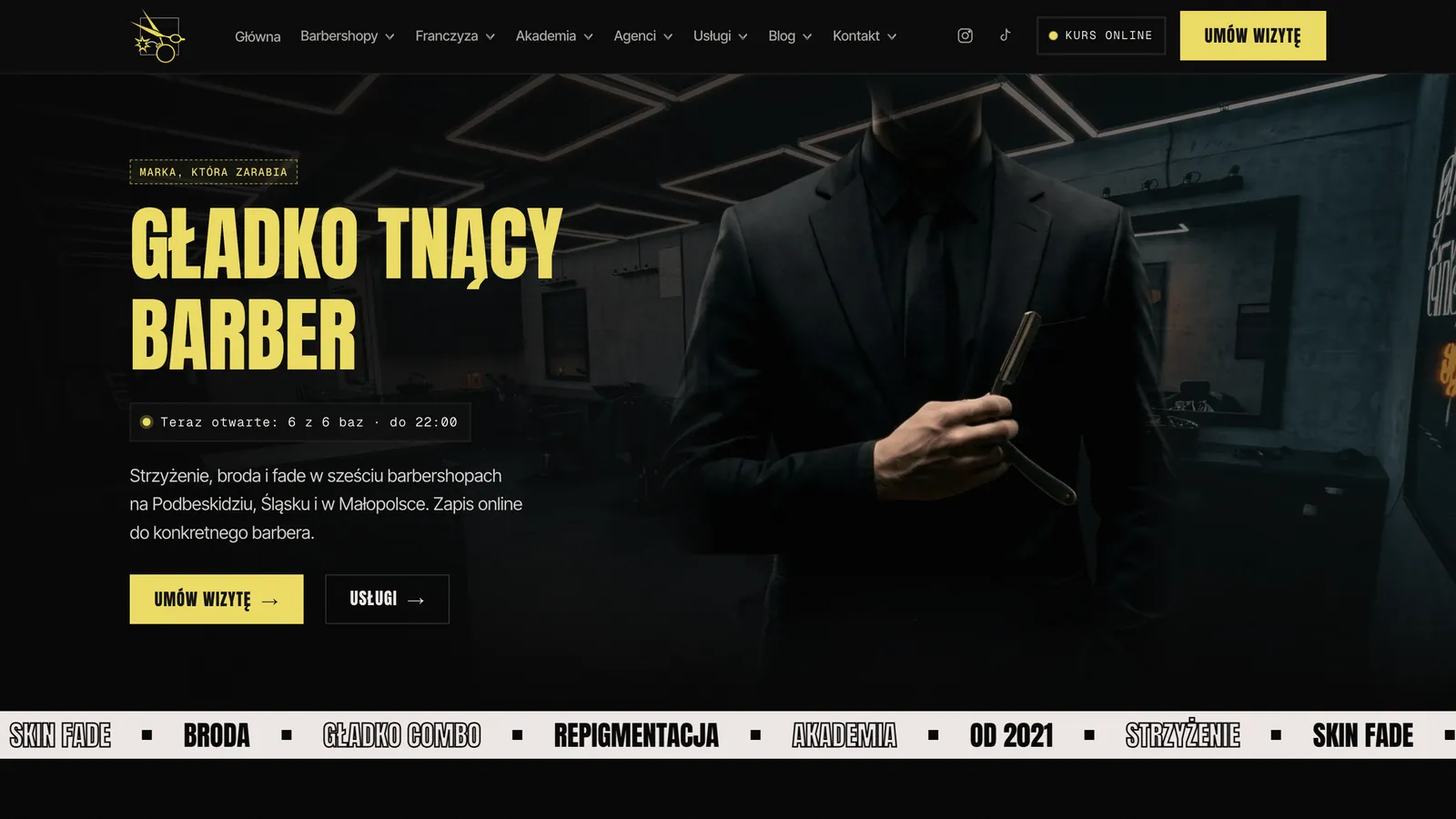 Żywiec, Poland
from 3 to 9 locations in two years
Gładko Tnący Barber
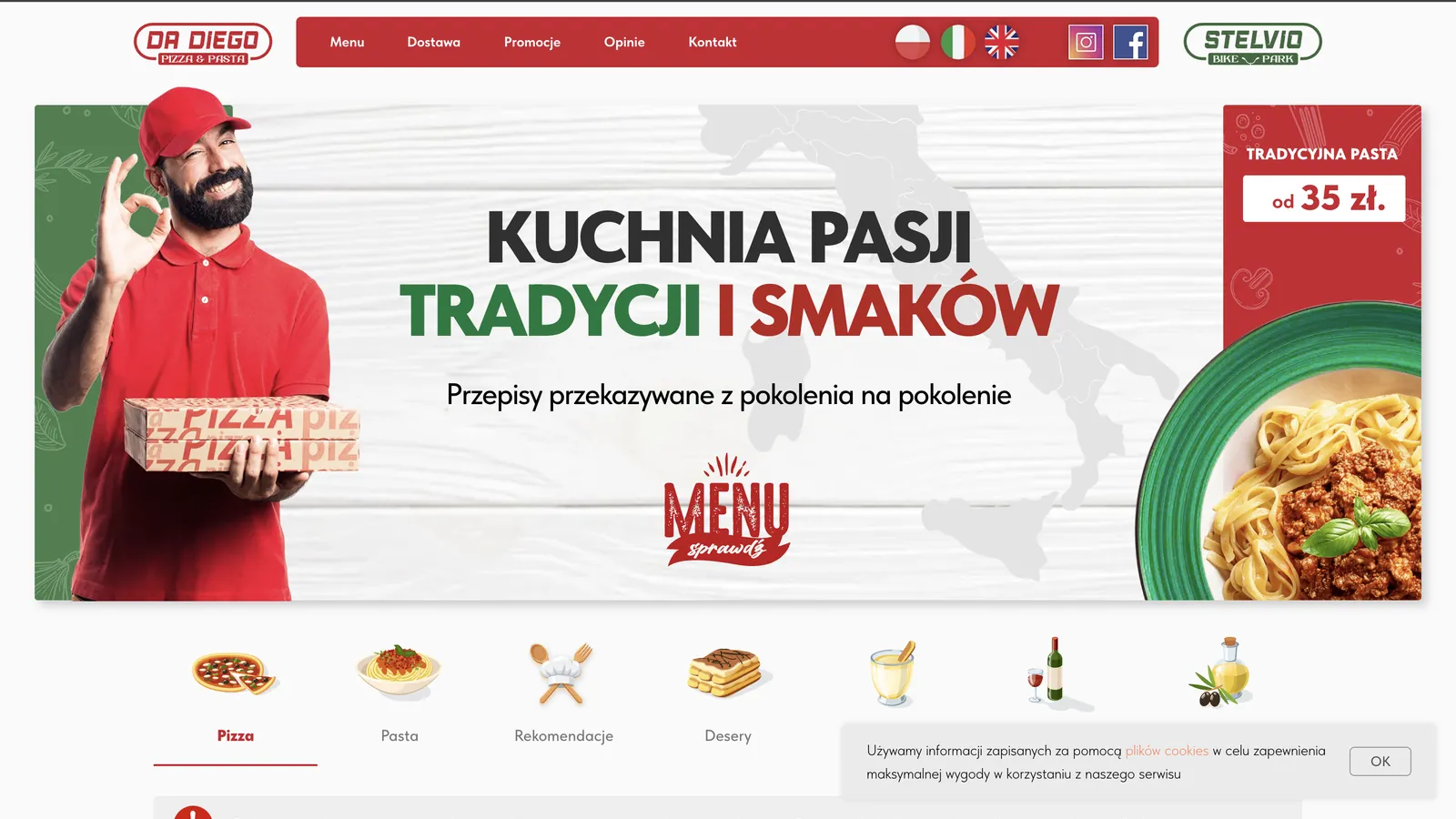 Żywiec, Poland
PLN 15 000 +/mo in delivery orders
Da Diego
Marketing for online courses that sells your know-how without fake countdowns or income screenshots. I build sales pages for experts who teach.
Free: a 30-minute call, an action plan and a price range in writing.

students on a course platform I built, with a website, ads, bots and a CRM
in course sales (over PLN 100,000, roughly) for a beauty education studio
Before calling, customers read reviews. I help you collect them and reply in a way that builds trust.
Creators usually know their subject. They are less sure how to explain the outcome and where to find buyers.
Twelve modules and forty videos. The buyer still does not know what they will be able to do afterwards.
A monthly subscription plus a share of each sale on a course marketplace, and the students belong to them.
The first launch sells to your followers. The second one sells to the same people, or to nobody.
Who the course is for, the result in practical terms, the program, the teacher, the price and a refund policy.
A short lesson, webinar or checklist that shows how you teach and collects consent for email.
Meta and YouTube for visual skills, Google Search for professional ones. Retargeting for people who watched the free lesson.
A few useful emails, then the offer, then reminders. Most course sales happen in email, not on the first visit.
Final prices in Canadian dollars. Ad budget is paid directly to Meta or Google; around $1,000 a month to test a course properly.
A sales page plus analytics, connected to your payment and course tool.
Website, Google and Meta setup, CRM setup and analytics, then $1,200/month for both ad channels.
Your own course platform with student accounts, lessons and progress, no marketplace fees.
People do not buy forty videos. They buy the ability to do something: lay lashes professionally, pass a bookkeeping exam, train a reactive dog, build a portfolio. Marketing for online courses starts by naming that outcome in plain words and showing how your course gets people there. Everything else, the sales page, the ads, the emails, follows from it.
Maro Studio, a beauty education business in Warsaw, is a good example. I built its website, course platform, ads, bots and CRM. Courses have sold for over PLN 100,000 (about C$37,000), and there are 500 students on the platform. The approach was not hype; it was a clear promise of a skill, real teaching samples and steady follow-up.
Most course sales follow a similar path:
Each step can be measured. If many people watch and few sign up, the free lesson needs work. If many sign up and few buy, the offer or price needs a second look. I set up GA4 and Tag Manager plus pixels so every step is visible.
| Course marketplace or hosted tool | Your own platform | |
|---|---|---|
| Start cost | Low | Higher, from $11,900 |
| Fees | Monthly plus per sale, often | No per-sale fees |
| Student data | Partly theirs | Yours |
| Flexibility | Their features | Your format |
Starting on a hosted tool is sensible. Moving to your own platform makes sense when fees add up or when you need features the tool cannot offer.
Pricing deserves a word. Many first-time creators underprice, then try to make up for it with volume they cannot reach. A course that changes someone's income or career can carry a serious price if the sales page explains the result well. Payment plans and a clear refund policy lower the barrier more honestly than a permanent markdown.
Three sets of rules matter. CASL governs email and text marketing: consent, identification and an unsubscribe in every message. The Competition Act targets misleading claims, which includes unrealistic earnings promises, fake scarcity and reviews you wrote yourself. And privacy law, PIPEDA federally and Law 25 in Quebec, governs how you collect and track student data. If you sell to Quebec, French versions of the sales page and checkout are expected; I build in English, so that part would come from your own team or translator.
Visual skills sell well with Meta ads and short videos. Professional skills, like exam prep or software training, often do better with Google Search. Retargeting people who watched the free lesson is usually the most efficient spend. I check campaigns every two weeks and move budget to what produces students, not just clicks.
If your course is a language course, see marketing for language schools. Coaches and advisers who sell services alongside courses may also like marketing for consulting firms.
For a first course, an existing tool is fine and cheaper. Once you have hundreds of students, several courses or special needs like certificates per module or group cohorts, your own platform starts to pay off: no per-sale fees, full control of the student list and a design that matches your brand.
Be very careful. The Competition Act prohibits misleading representations, and earnings claims are a classic example. Meta also restricts ads promising income. Show what students learn and do, with permission, and avoid figures that are not typical.
Real deadlines work: a cohort that starts on a date, enrolment that closes because you teach live. Fake timers that reset for every visitor erode trust and can be treated as misleading. I build launches around genuine dates.
Under CASL, you need consent before sending commercial emails, plus your identification and an unsubscribe link in each message. A free lesson or checklist with a clear consent checkbox is the usual way. I record consent with date and source in the CRM, so you can prove it if ever asked.
Tell me about your course, your audience and where you are now. I reply within one business day, or book a free 30-minute call.
What do you need most?