Ads written from the inside
The copy lists what the owner is proud of. Customers were looking for something else: a price range, a date, a guarantee.
GuessworkAds and visibility: customers who are looking for your service now or don’t know about it yet.
01 Google AdsEnquiries from people searching for your service right nowfrom $750/mo 02 Social media adsMeta, TikTok, LinkedIn: customers who are not searching yetfrom $700/mo 03 SEOHigher in Google and Maps without paying per clickfrom $1,000/mo 04 Visibility in ChatGPT and AIYour business in AI assistant answerspart of SEO 05 Amazon and marketplacesSell where customers already buywith a partnerThe place where a visit turns into an enquiry, and a system that doesn’t lose that enquiry.
01 Web designA website that turns visits into enquirieslanding from $1,300 02 Online storesCart, payments and shipping, ready for adsfrom $4,800 03 CRMNo enquiry gets lost in a phonesetup $3,400 04 Chatbots and AIThey answer customers, at night too$2,500 05 Email and SMSCustomers come back instead of forgetting youquoted individuallyPlan and tracking first, budget second. You know what works before you spend more.
01 Strategy and auditKnow where to spend the budget before you spend it$2,400 02 AnalyticsSee which ad brings in money$650 03 ConsultationsA call about your specific problem$70/h 04 Free auditA quick review and 3–5 priorities to start$0How your business looks and sounds before anyone calls you.
01 Social media managementProfiles that look like a real businesswith a partner 02 Creative and videoGraphics and videos that stop the thumbquoted individually 03 BrandingA logo and style that sets you apartwith a partner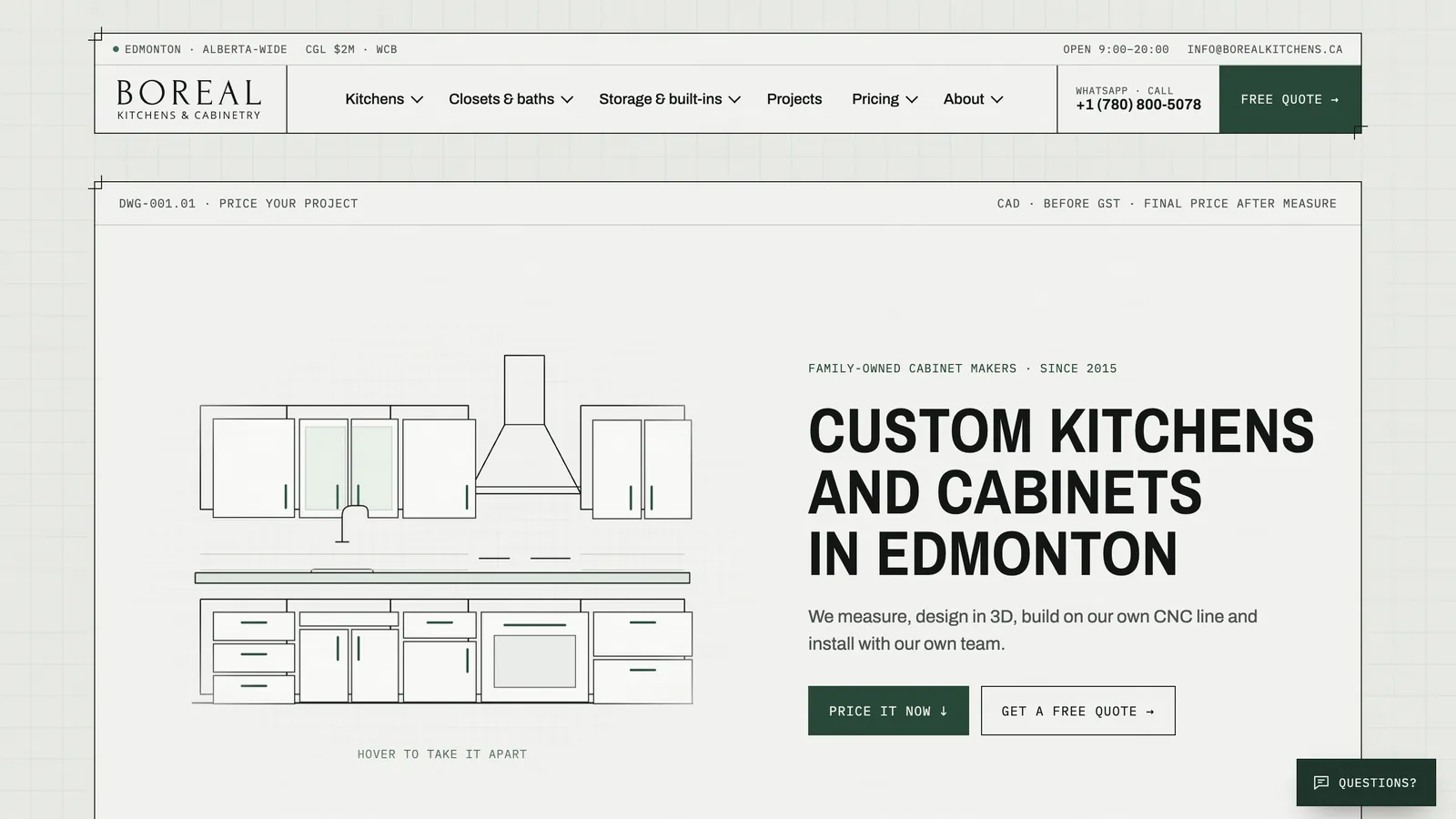 Edmonton, Canada
200 keywords on page one of Google
Boreal Kitchens
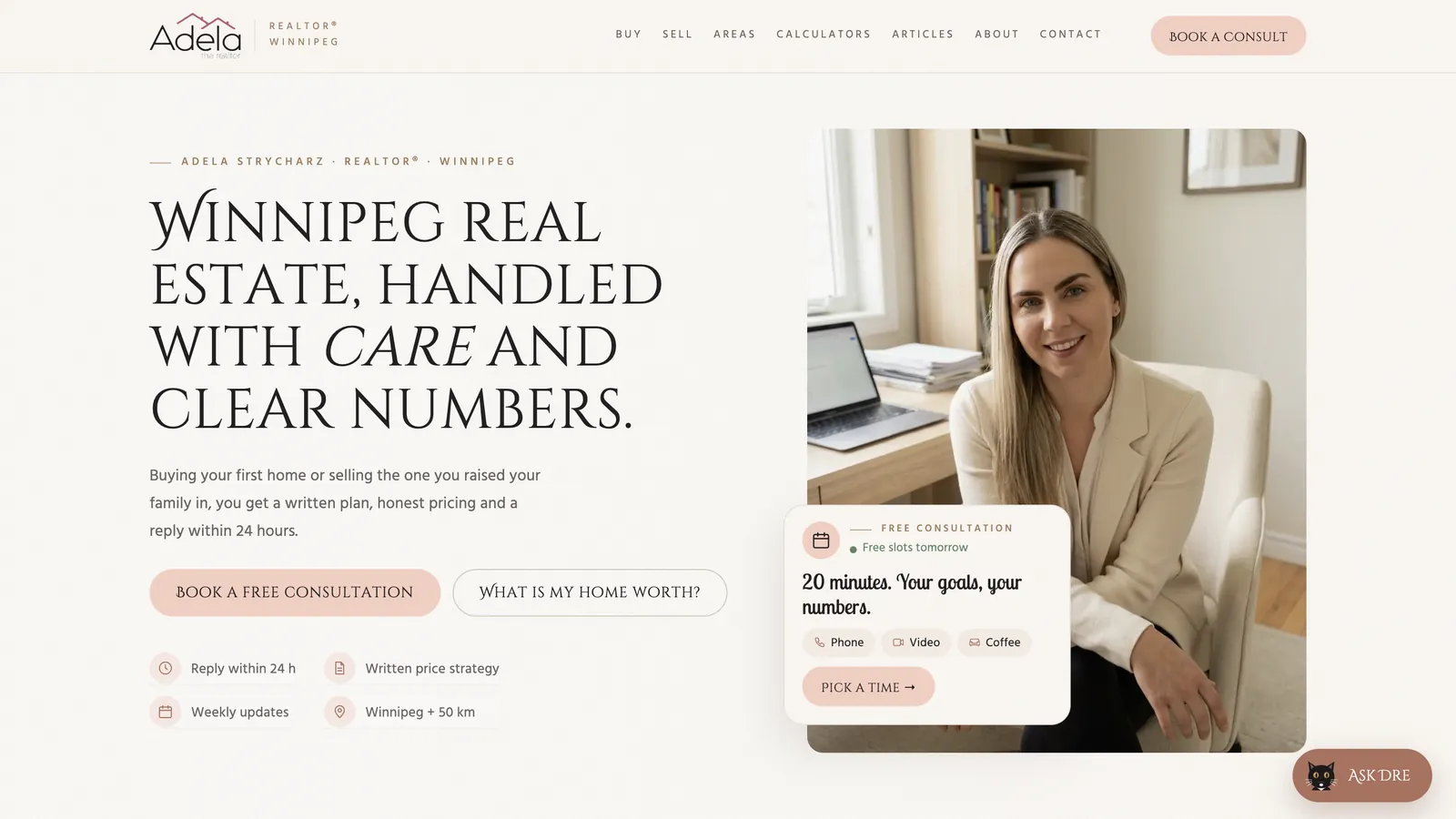 Winnipeg, Canada
up to 5 enquiries/mo from Google without ads
Adela Realtor
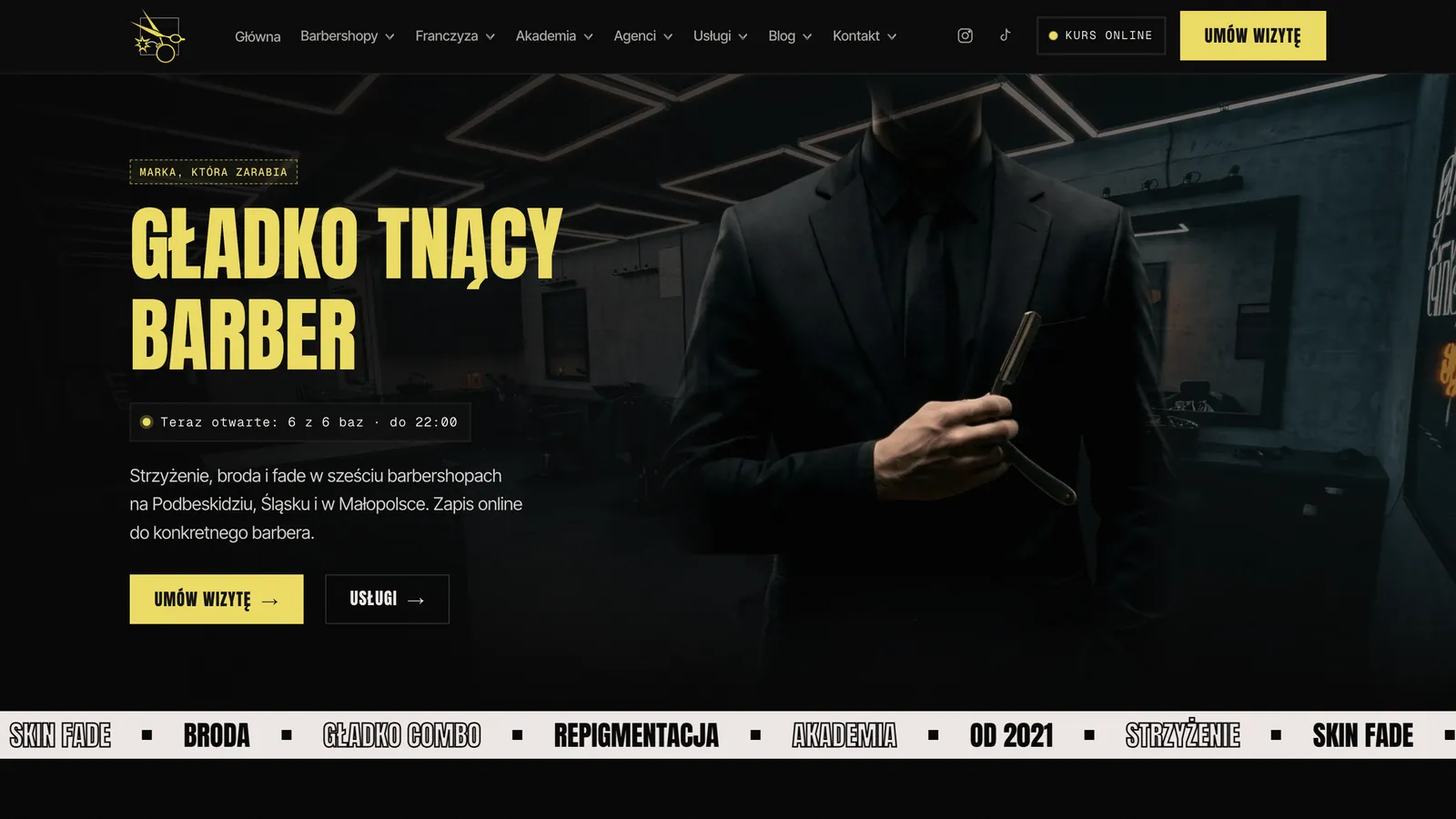 Żywiec, Poland
from 3 to 9 locations in two years
Gładko Tnący Barber
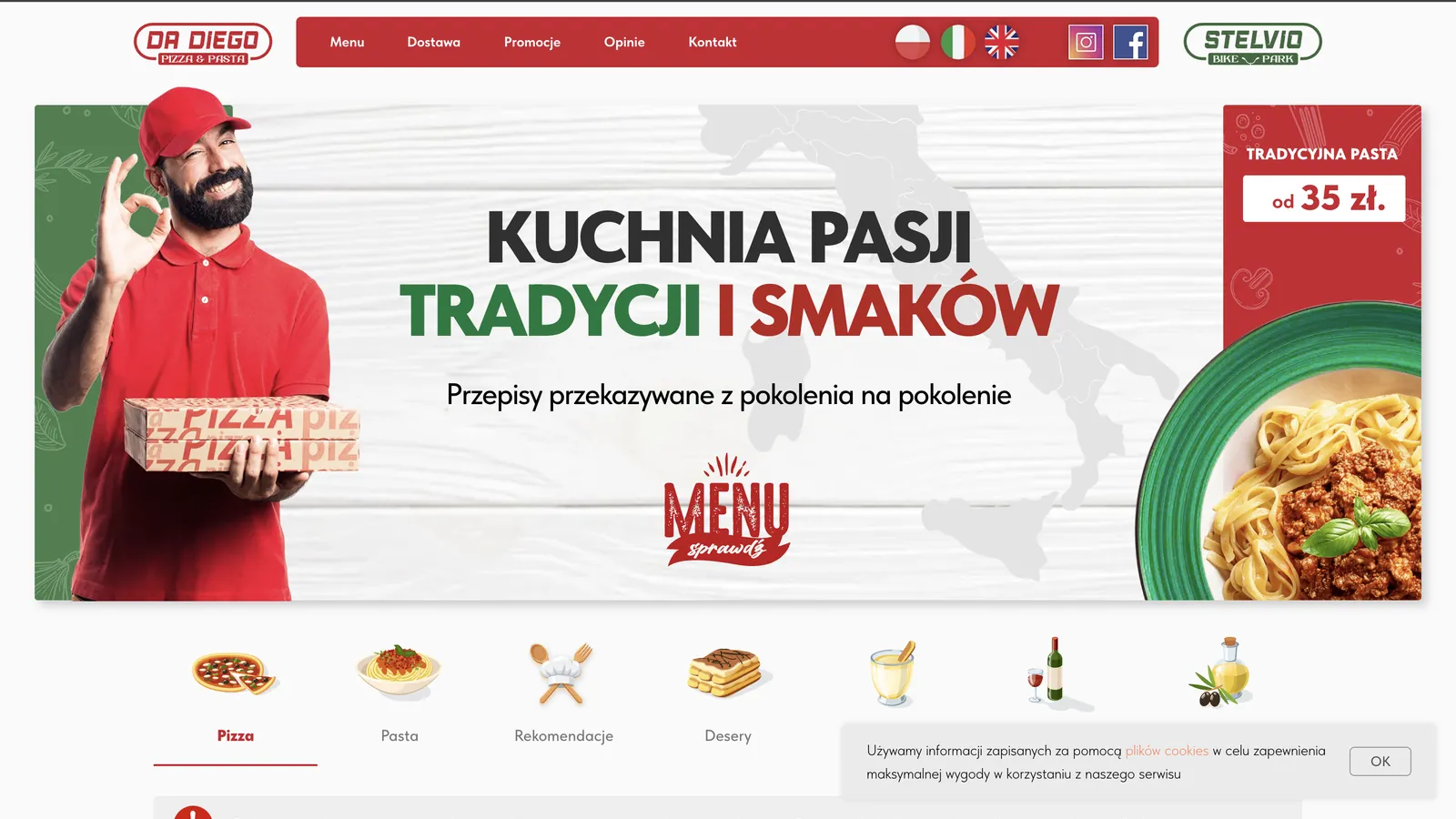 Żywiec, Poland
PLN 15 000 +/mo in delivery orders
Da Diego
Customer research that asks the people who already paid you: why did you choose us, what almost stopped you, where did you look first? Their answers become your ads, your website copy and your offer.
Free: a 30-minute call, an action plan and a price range in writing.

The copy lists what the owner is proud of. Customers were looking for something else: a price range, a date, a guarantee.
GuessworkYou say "millwork", they type "custom kitchen cabinets near me". Google matches what people type.
Wrong wordsPeople ask for a quote and vanish. Usually there's one fear nobody addressed, and only customers can tell you which.
Hidden doubtsInterviews take 15 to 20 minutes, by phone or video. I ask, listen and take notes. Nobody gets a sales pitch, and your customers' details stay with you.
Sales, CRM or invoices: who buys most, most often and at the best margin.
5 to 10 conversations with recent customers, plus one or two who chose someone else.
What people type into Google about your service, by season and by city.
Your reviews and your competitors', read for patterns rather than stars.
Who buys, why, what stops them, and the exact phrases to use.
Final prices in Canadian dollars.
Customer research together with the audit, competitors, channels, budget and KPIs.
Want to run interviews yourself? I'll help you write the questions and read the answers.
Customer research for a small business isn't a big survey with charts. It's a handful of honest conversations and a close look at data you already have, done to answer three questions: who buys from you, why they picked you, and what nearly made them pick someone else. Those answers decide what your ads say, what goes on the first screen of your website and which offer you lead with.
The value is in the exact words. When a customer says "I just wanted someone who'd show up on the day they said", that sentence will outperform any slogan you could write yourself.
You pick five to ten recent customers, ideally a mix of your best ones and a couple who bought only once. You send each a short message asking if they'd spare fifteen minutes. I take the calls on the phone or Zoom, at a time that suits them.
I ask open questions and then dig into the answers:
I also try to talk to one or two people who requested a quote and went elsewhere. They're harder to reach but often the most useful: they tell you exactly where you lost them.
Interviews tell you why. Data tells you how many and how much. I look at your sales or CRM records to see which customers bring the most revenue over a year, which services have the best margin and which months are busy. Then I check what people actually search for in your area using Google's keyword data and Search Console, if your site has it connected.
The mix matters. A customer who spends $300 once is a different target from one who spends $3,000 a year, even if both are happy. The research shows you which one to chase with your ad budget.
A short summary: two or three main customer types, their triggers, their doubts, the phrases they use, and where they look for you. It feeds straight into buyer personas and your value proposition. You also keep the interview notes, so you can come back to them when writing a new service page or briefing a designer.
The easiest mistake is interviewing only your biggest fans. They're pleasant to talk to, but they rarely mention the doubts that make other people walk away. Another is asking leading questions, such as "you liked our fast service, right?", which produce polite agreement and no insight. A third is letting the owner run the calls. Customers are more candid with someone outside the business, which is one reason I do the interviews myself. Finally, research that never reaches the website or the ads is wasted. I always end with concrete changes: which headline to rewrite, which objection to answer, which audience to stop paying for.
In Canada, plenty of small businesses serve customers in two or more languages. A Ukrainian-speaking dental patient in Edmonton or a Polish-speaking homeowner in Mississauga may search in English but decide in their first language. I speak English, Polish, Russian and Ukrainian, so I can run interviews where customers are most comfortable, which usually means more honest answers.
Customer research is included in the marketing strategy for $2,400 CAD, final, together with the audit, competitor analysis, channels, budget and KPIs. If you'd rather run the interviews yourself, a one-hour consultation at $70 gives you a question script and a way to sort the answers. The first 30 minutes of any consultation are free.
Rarely, if the call is short and clearly not a sales pitch. Most people who were happy with a service are glad to spend fifteen minutes explaining why. You send a short personal message first, so they know the call comes from you. I take it from there and keep it under twenty minutes.
For a local business, five to ten usually reveal the main patterns. After about the sixth, you start hearing the same reasons and doubts again, which is exactly what you want. One or two conversations with people who chose a competitor are often the most valuable of all.
Surveys get few replies and short answers, and you can only ask what you already thought of. In a conversation, the best insights come from follow-up questions: "what made you hesitate?", "what did you compare us with?". That's hard to get from a form.
Early customers, even if there are only a few, plus people who match your ideal buyer. We can also learn a lot from competitor reviews and search data. If there's truly no one to talk to yet, I'll suggest testing the offer with a small ad budget before building a full strategy.
I speak English, Polish, Russian and Ukrainian, so I can interview customers in any of those. That helps immigrant-owned businesses whose clients are more comfortable in their first language. I don't work in French, so interviews with French-speaking customers would need someone on your side.
Tell me about your business and who buys from you. I'll reply within one business day, or start with a free 30-minute consultation.