Budget
"How much should I spend?" with no answer
The number comes from what's left over at month end, or from what a salesperson suggested.
Ads and visibility: customers who are looking for your service now or don’t know about it yet.
01 Google AdsEnquiries from people searching for your service right nowfrom $750/mo 02 Social media adsMeta, TikTok, LinkedIn: customers who are not searching yetfrom $700/mo 03 SEOHigher in Google and Maps without paying per clickfrom $1,000/mo 04 Visibility in ChatGPT and AIYour business in AI assistant answerspart of SEO 05 Amazon and marketplacesSell where customers already buywith a partnerThe place where a visit turns into an enquiry, and a system that doesn’t lose that enquiry.
01 Web designA website that turns visits into enquirieslanding from $1,300 02 Online storesCart, payments and shipping, ready for adsfrom $4,800 03 CRMNo enquiry gets lost in a phonesetup $3,400 04 Chatbots and AIThey answer customers, at night too$2,500 05 Email and SMSCustomers come back instead of forgetting youquoted individuallyPlan and tracking first, budget second. You know what works before you spend more.
01 Strategy and auditKnow where to spend the budget before you spend it$2,400 02 AnalyticsSee which ad brings in money$650 03 ConsultationsA call about your specific problem$70/h 04 Free auditA quick review and 3–5 priorities to start$0How your business looks and sounds before anyone calls you.
01 Social media managementProfiles that look like a real businesswith a partner 02 Creative and videoGraphics and videos that stop the thumbquoted individually 03 BrandingA logo and style that sets you apartwith a partner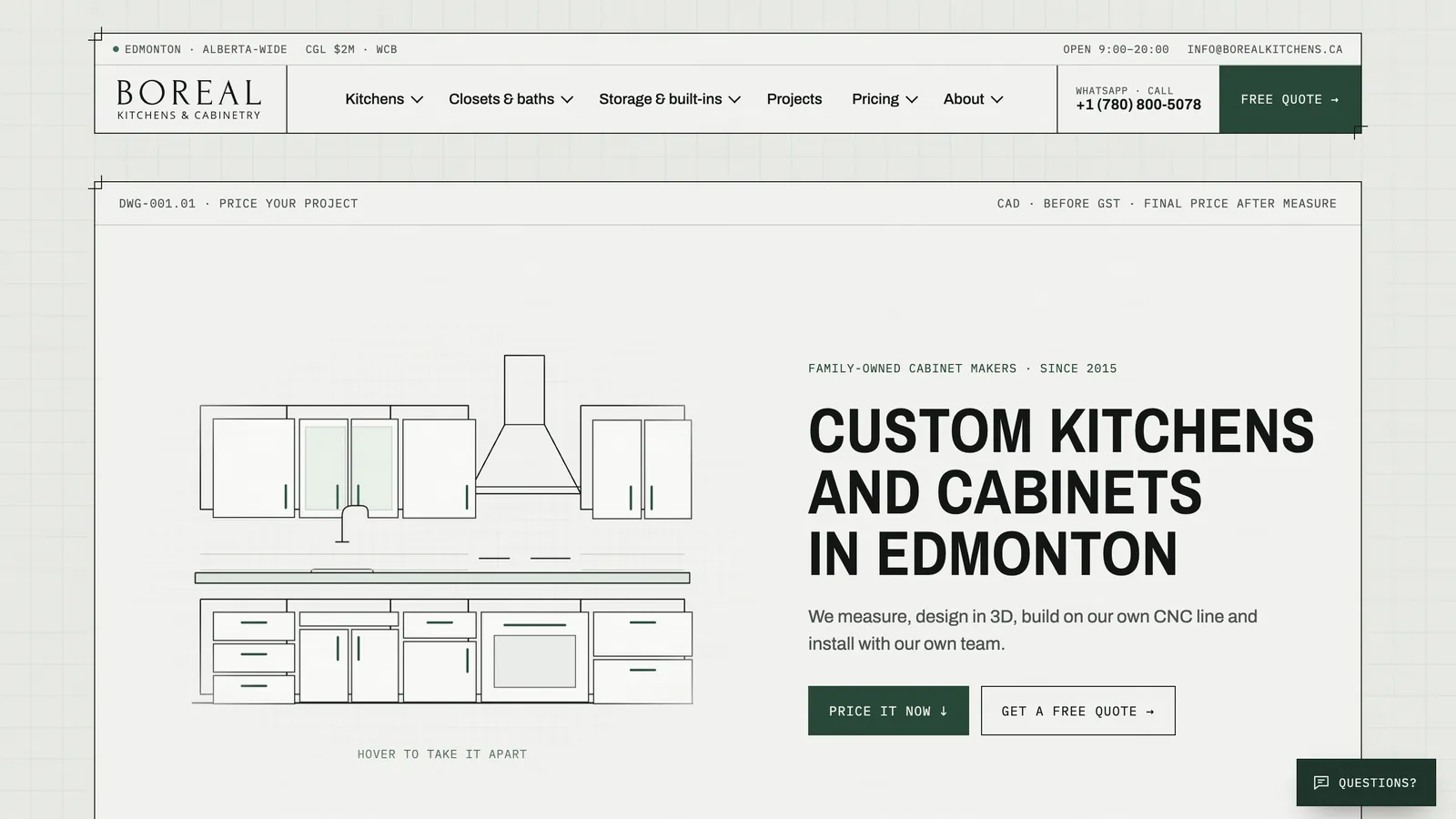 Edmonton, Canada
200 keywords on page one of Google
Boreal Kitchens
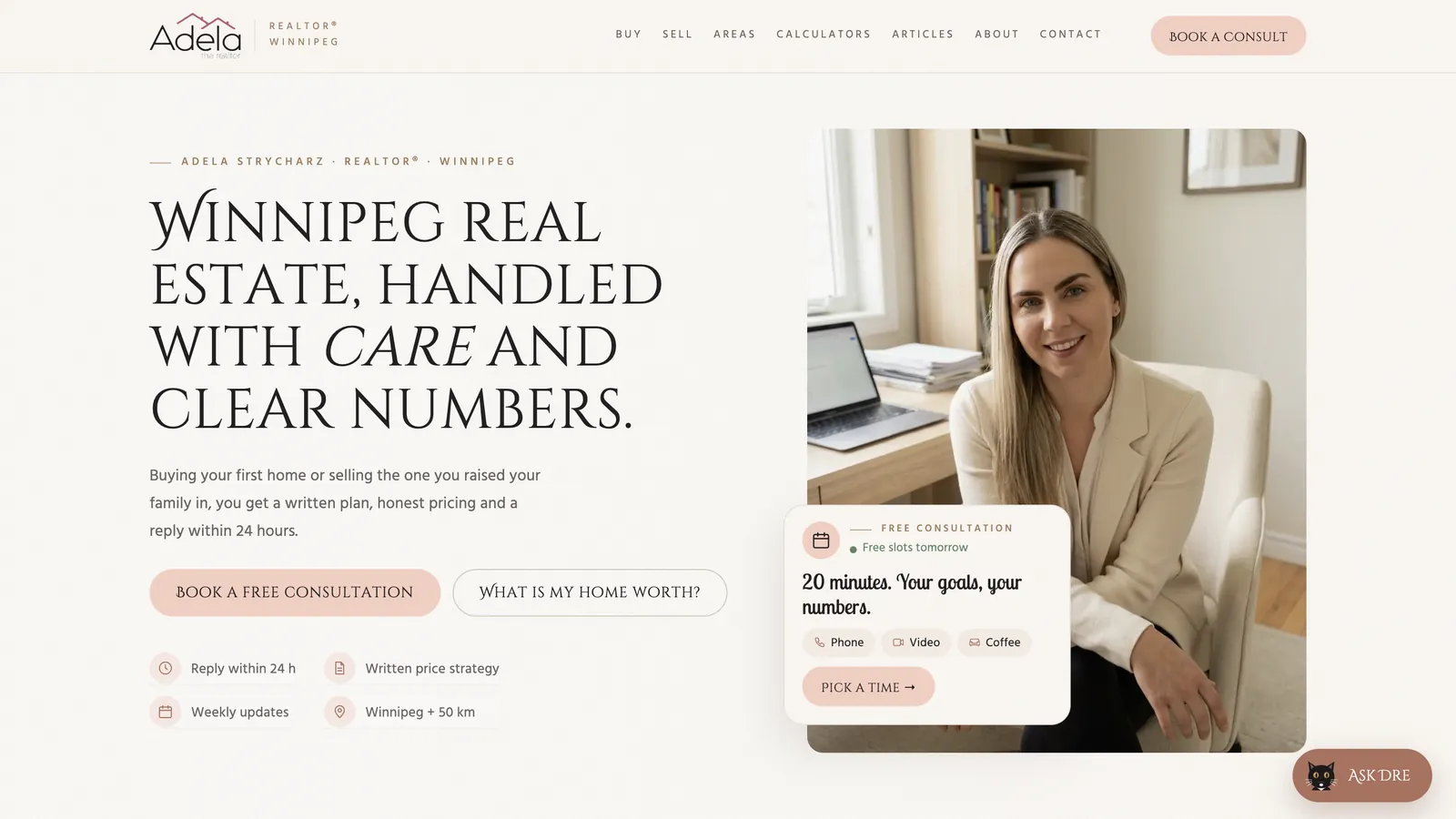 Winnipeg, Canada
up to 5 enquiries/mo from Google without ads
Adela Realtor
 Żywiec, Poland
from 3 to 9 locations in two years
Gładko Tnący Barber
 Żywiec, Poland
PLN 15 000 +/mo in delivery orders
Da Diego
A marketing budget and KPIs worked out backwards from your margins: what a customer is worth, what you can pay to get one, how many you need, and how to split the money between channels. Then five numbers to check every month instead of fifty.
Free: a 30-minute call, an action plan and a price range in writing.

The number comes from what's left over at month end, or from what a salesperson suggested.
Reports full of numbers that don't connect to calls, bookings or revenue.
Without targets, a channel keeps running because nobody knows whether it's good or bad.
You don't need perfect accounting. Average order value, approximate margin and how often customers come back are enough to start. We refine as data comes in.
What a customer brings in margin over a year, not just the first sale.
The most you can pay to win one and still make money.
How many new customers you need, and can handle, each month.
Budget per channel, starting with the one closest to the sale.
Targets and the dates when each channel gets reviewed.
Final prices in Canadian dollars.
Budget model, channel split and KPIs as part of the full marketing plan.
GA4, Tag Manager and pixels, so the KPIs come from real data.
A quarterly budget review on Zoom, if you run the marketing yourself.
A marketing budget and KPIs only work if they come from your own business: your margins, your customers, your capacity. Generic advice like "spend 5% of revenue" ignores whether you sell a $40 haircut every month or a $40,000 kitchen once in a decade. So I work the other way around, starting from what one customer is worth.
Take the average sale, subtract the direct cost of delivering it, and multiply by how many times a typical customer buys from you in a year or two. That's the value of a customer in margin, not revenue. A cleaning company with a client who books every two weeks has a very different number from a contractor who builds one deck per customer.
From there, the ceiling is simple: the most you can pay to win a customer and still make money. Most businesses aim well below that ceiling, to keep a healthy profit. You can read more about the logic in my articles on customer lifetime value and customer acquisition cost.
Next comes volume. How many new customers a month do you want, and how many can you actually serve? There's no point paying for 40 leads if your crew can take 10 jobs. Multiply the target by the cost you're willing to pay, and you have a first monthly budget. Then I check it against reality: what clicks typically cost in your industry and city, how well your website converts, how many enquiries turn into sales.
The budget goes first to the channels closest to the sale. For most local businesses that means Google search and Maps, where people already look for the service. Then remarketing, then Meta ads to reach new audiences, then content and SEO for long-term growth. A typical split for a service business starting out might look like this:
| Item | Share | Note |
|---|---|---|
| Google search ads | Largest share | Main services, best margins |
| Meta ads | Smaller share | Remarketing first, then new audiences |
| SEO and Google profile | Fixed monthly | Slower, builds free traffic |
| Email to past customers | Small | Cheap repeat business |
The plan also accounts for seasons. Many Canadian businesses have strong months and dead months, and a flat monthly budget wastes money in the quiet period and runs short when demand peaks.
I keep the owner's dashboard to five numbers:
To get these, tracking has to work. That means GA4 and Tag Manager, call tracking where phones matter, and a CRM or at least a spreadsheet that records which enquiries turned into sales. Without the last step, the most important KPI stays a guess.
Every channel in the plan has a review date. On that date we compare the numbers with the targets and decide: keep, grow, fix or stop. If I run your ads, the review is part of the monthly report; ad reports come every two weeks. If you run things yourself, a short consultation every quarter keeps the budget honest.
The budget model and KPIs are part of the marketing strategy at $2,400 CAD, final. Analytics setup is $650. Your ad budget is separate and goes straight to the platforms, never through me.
Rules of thumb exist, but they ignore your margins and goals. A business with high margins and repeat customers can afford far more per new customer than one selling a low-margin item once. I prefer to work from what a customer is worth and how many you need. The percentage then falls out of the math.
I recommend about $1,000 a month per platform as a starting point, paid by you directly to Google or Meta. With less, campaigns gather data slowly and it takes months to know what works. If that's too much right now, it's usually better to start with one platform properly than two half-funded.
Usually five: number of enquiries, cost per enquiry, how many enquiries become customers, cost per customer, and revenue from those customers. Clicks and impressions are useful for whoever runs the ads, but for the owner these five tell you whether marketing pays.
For search ads, often within one to three months. For SEO, longer, typically several months. For Meta ads, a few weeks to see early signals. The plan sets a review date for each channel in advance, so you don't cut something too early or keep paying for something too long.
No. My fees cover my work: the strategy, setup and management. The ad budget is paid by you directly to Google or Meta with your own card, in accounts registered in your name. That way you always see exactly what was spent and nothing is marked up.
Tell me roughly what you sell, your average order and what you spend today. I'll reply within one business day, or we can start with a free 30-minute call.