



Missed calls are lost customers: how to fix it
Missed calls quietly send customers to your competitors. How to measure the problem, and seven fixes from simple text-back messages to call routing and voicebots.
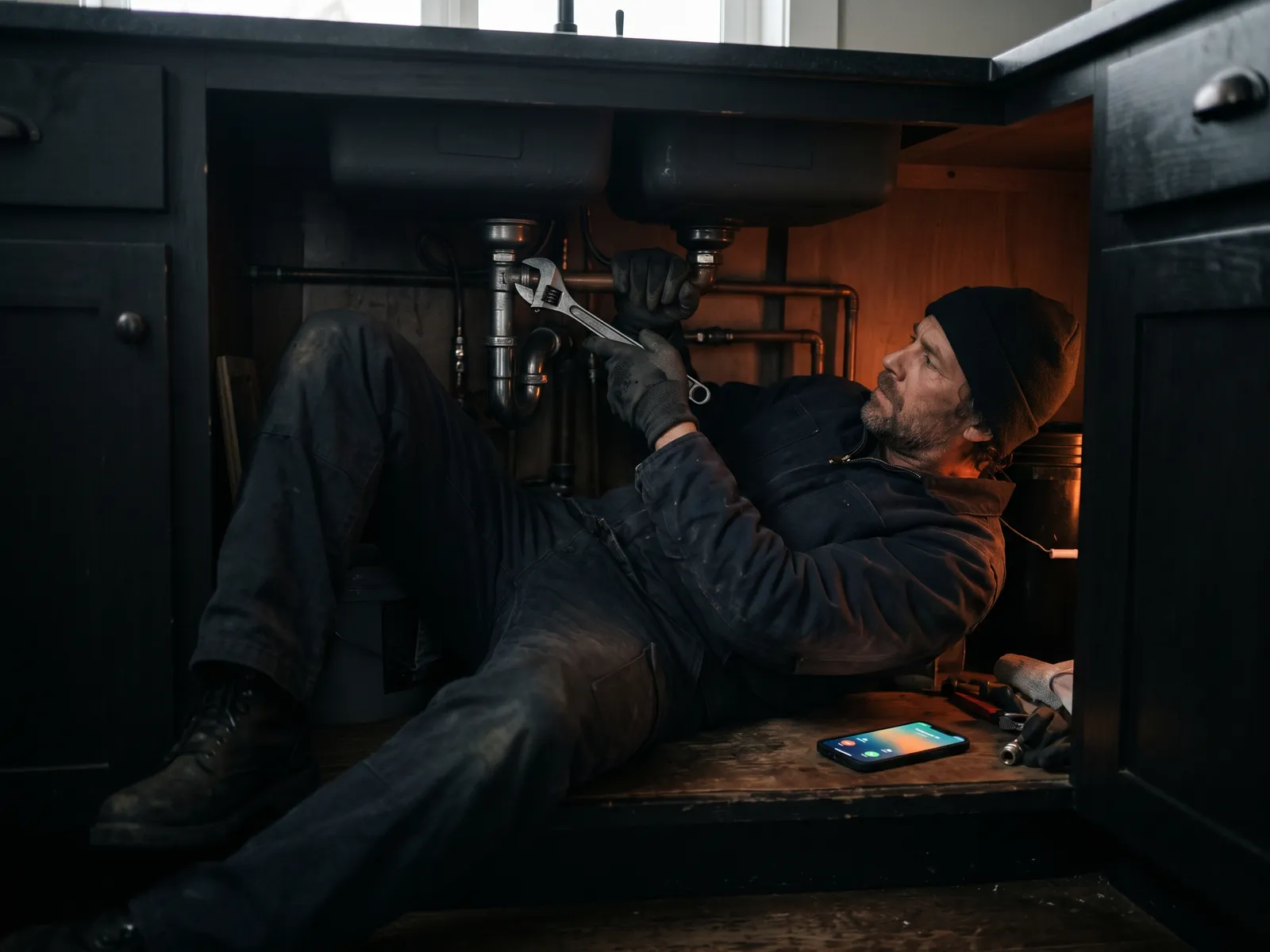
Missed calls are one of the most expensive leaks in a small service business, and one of the least visible. A homeowner with a burst pipe or a patient with a toothache will not wait for a callback; they ring the next number on Google. The fix is a combination of measuring how many calls you miss, catching the caller with an instant text, and routing calls so a person or a bot answers when you cannot. None of it needs a call centre.
Most owners underestimate the problem because a missed call leaves no trace beyond a number in the phone log. There is no angry email, no lost-deal card in a CRM. The customer simply goes elsewhere.
Why missed calls hurt more than missed emails
People who pick up the phone usually have an urgent or concrete need. Someone writing an email may be comparing options for next spring; someone calling often wants a booking today. That makes calls some of your highest-value leads, especially for trades, clinics, auto repair, cleaning and moving companies.
Calls also arrive at the worst moments. A plumber is under a sink, a hairdresser is mid-colour, a dentist is with a patient. The busier your business, the more calls you miss, which means growth makes the problem worse unless you build a system around it.
Step one: count them
Before buying any tool, find out how big the problem is. Over two normal weeks, look at:
- The total number of incoming calls.
- How many went unanswered, and at what times of day.
- How many of those callers you called back, and how quickly.
- How many of the callbacks reached someone who still needed you.
Many phone providers and VoIP systems show this in their dashboards. If yours does not, a simple log on paper for two weeks will still reveal the pattern. Typical findings: a spike of missed calls at lunch, early morning before anyone is in, or evenings when customers get home from work.
If you run ads, the cost becomes obvious. Every missed call from a paid click is ad budget spent for nothing. My article on call tracking shows how to tie calls back to the ad or page that produced them.
Seven ways to stop losing callers
1. Missed-call text-back. When a call goes unanswered, the caller gets a text within seconds: your business name, an apology, and a question such as "What can I help with? Reply here and I'll get back to you shortly." Many people prefer texting anyway, and the conversation stays alive while you finish the job.
2. A callback task with a deadline. Every missed call should create a task in your CRM or phone system assigned to a real person. A missed call that sits only in the phone's history is easy to forget by evening.
3. Smart routing. Ring the office first, then a second phone, then the owner. Or route by time: business hours to the front desk, after hours to whoever is on call. Most modern phone systems can do this without new hardware.
4. Clear hours and expectations. Put your phone hours on your website and Google Business Profile, and offer an alternative such as a form, booking link or messenger for other times. Callers who know when you answer are less likely to give up.
5. Online booking. For standard appointments, a booking link in the text-back message lets the customer choose a slot without another call. See automating bookings and reminders.
6. A chatbot or messenger channel. Some callers will happily switch to WhatsApp or website chat if you offer it. A bot can collect details and answer common questions. More on this in WhatsApp for business in Canada.
7. A voicebot for overflow. For businesses with heavy call volumes, a voice assistant can answer, ask a few questions and book or log the request. It is not right for everyone, and callers with complex problems still need a human, but it can cover peaks and after-hours.
Which fix fits your business
| Situation | First fix to try |
|---|---|
| Owner-operator in the field all day | Missed-call text-back plus callback tasks |
| Small office with a front desk | Routing to a second phone at lunch and busy times |
| Clinic or salon with standard appointments | Online booking linked from text-back and website |
| Many calls after hours | Messenger or chatbot, voicebot for larger volumes |
| Paid ads driving calls | Call tracking to see which campaigns are wasted |
Start with the cheapest fix that covers your biggest gap. For most small businesses, that is text-back plus a callback rule.
Writing the text-back message
Short, human and specific works best. For example, for a made-up plumbing company:
"Hi, this is Mark from Northline Plumbing. Sorry I missed your call, I'm on a job. What do you need help with? Reply here or I'll call you back within the hour."
Avoid adding promotions or links to unrelated offers. A reply to someone who just called you is a service message; turning it into marketing brings CASL into play. My article on SMS marketing in Canada covers where the line usually sits.
If your customers speak French or another language, a bilingual message or a language choice can help. Many Canadian businesses serve customers who are more comfortable writing than speaking in English, and a text gives them that option.
Measuring the result
After a month, repeat the count from step one. The numbers to compare are the share of missed callers who ended up in a conversation (by phone, text or booking) and how many of those became customers. If you have a CRM, mark the source of these leads as "missed call recovered" so you can see the effect in money, not just in calls.
How I can help
I set up the CRM side: lead cards from missed calls, reminders, source tracking and reports. Chatbots and voicebots I deliver with a trusted partner; the contract, deadlines and communication stay with me. For businesses that also need the ads side to make sense, call tracking connects each call to its source, and is quoted individually after a short call.
You cannot answer every call personally. You can make sure no caller is left without a reply.
Work out what
Facebook ads could bring
The profitability calculator shows at what budget and cost per enquiry your ads start making money.

12+ years in online marketing, 100+ clients. I build websites, Google Ads and Meta ads campaigns, CRMs and automations for small and mid-sized businesses. About me →
Missed calls:
quick answers
Is it legal to text someone back after a missed call?
A one-to-one reply to someone who just called you about your services is generally treated as a response to their enquiry rather than a marketing message. Keep it about their call, identify your business and do not add promotions. If you later want to add them to SMS campaigns, CASL consent rules apply. For anything beyond a simple reply, check with a lawyer.
Do I need a new phone number for this?
Not always. Many business phone services and VoIP providers can add missed-call text-back and routing to your existing number, and numbers can often be ported. Call tracking may add extra numbers for ads, forwarding to your main line. Keep the number customers already know on your website, Google Business Profile and vehicles.
What should a voicemail greeting say?
Keep it short: your business name, that you are with a customer, when you will call back, and an invitation to leave a name, number and what they need. If you send a text after missed calls, mention it, so callers know to expect it. Update the greeting during holidays so nobody waits for a call that will not come that day.
Find out how many calls
you are missing
I'll help you count missed calls by hour and source, then set up the simplest fix that fits your team. It starts with a free 30-minute consultation.