01
Customers don't recognize you
The ad, the website and the truck look unrelated, so each contact starts from zero.
Ads and visibility: customers who are looking for your service now or don’t know about it yet.
01 Google AdsEnquiries from people searching for your service right nowfrom $750/mo 02 Social media adsMeta, TikTok, LinkedIn: customers who are not searching yetfrom $700/mo 03 SEOHigher in Google and Maps without paying per clickfrom $1,000/mo 04 Visibility in ChatGPT and AIYour business in AI assistant answerspart of SEO 05 Amazon and marketplacesSell where customers already buywith a partnerThe place where a visit turns into an enquiry, and a system that doesn’t lose that enquiry.
01 Web designA website that turns visits into enquirieslanding from $1,300 02 Online storesCart, payments and shipping, ready for adsfrom $4,800 03 CRMNo enquiry gets lost in a phonesetup $3,400 04 Chatbots and AIThey answer customers, at night too$2,500 05 Email and SMSCustomers come back instead of forgetting youquoted individuallyPlan and tracking first, budget second. You know what works before you spend more.
01 Strategy and auditKnow where to spend the budget before you spend it$2,400 02 AnalyticsSee which ad brings in money$650 03 ConsultationsA call about your specific problem$70/h 04 Free auditA quick review and 3–5 priorities to start$0How your business looks and sounds before anyone calls you.
01 Social media managementProfiles that look like a real businesswith a partner 02 Creative and videoGraphics and videos that stop the thumbquoted individually 03 BrandingA logo and style that sets you apartwith a partner Edmonton, Canada
200 keywords on page one of Google
Boreal Kitchens
 Winnipeg, Canada
up to 5 enquiries/mo from Google without ads
Adela Realtor
 Żywiec, Poland
from 3 to 9 locations in two years
Gładko Tnący Barber
 Żywiec, Poland
PLN 15 000 +/mo in delivery orders
Da Diego
Visual identity for businesses whose website, Instagram, invoices and van all look like they came from different companies. I turn your logo into a simple system of colours, fonts, images and layouts, with templates your team can use without a designer every time.
Free: a 30-minute call, an action plan and a price range in writing.
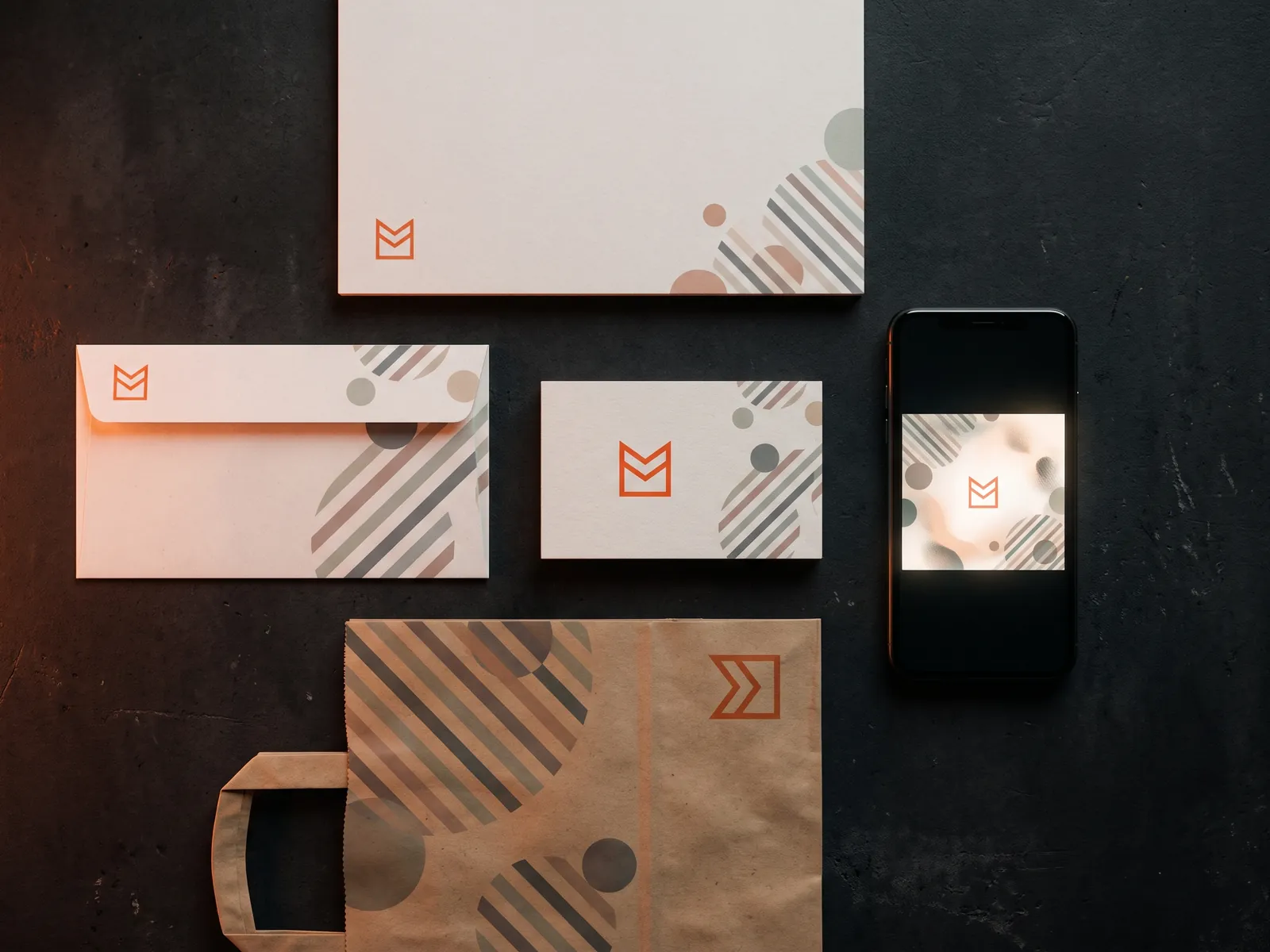
The ad, the website and the truck look unrelated, so each contact starts from zero.
Each flyer, post and price list is a new decision about colours and fonts.
Printers and designers redo work because nobody has the right files or colour codes.
A patchwork of styles reads as improvised, even when the work is excellent.
Logo, colours and typeface come together into a system that works on your website, in ads and on your sign.
Every place your brand appears today: site, social, signage, vehicles, forms, packaging.
Mood, colour and type options shown on your real materials, not abstract boards.
Colour palette, type pairing, photo and graphic style, layout rules.
Social posts, Stories, letterhead, invoice, price list, email signature and more.
Files, a short guide and a call with whoever will use the templates.
Quoted individually in Canadian dollars. The number of templates and applications drives most of the cost.
System and templates, delivered with my trusted design partner.
Your new identity applied to a site on code you own.
See website redesign→A visual identity is the set of rules that makes your business look like itself everywhere. The logo is the starting point, but most of what customers see is everything around it: the colour of your buttons and trucks, the font on your quotes, the style of photos in your ads, the layout of your Instagram posts. When those choices are made once and reused, people recognize you faster and trust you sooner. When they are made fresh each time, even a good business looks scattered.
For small businesses, the most valuable part of a visual identity is often not the design itself but the time it saves. Staff stop guessing. Printers get the right files the first time. Social posts take minutes instead of an hour.
Colours are chosen for more than mood. They have to work on screens and on paper, on a sunny storefront and on a phone at night. They also need enough contrast for text and buttons to be readable by people with low vision. In Ontario, AODA requires many organizations to meet WCAG 2.0 AA on their websites, and contrast is part of that. Even where it is not required, readable colours simply convert better. I check the palette against contrast rules before it is approved, which avoids problems later in website accessibility work.
I start with an inventory: every place your brand appears today. For a contractor, that might be the website, vans, job site signs, quotes, invoices, uniforms and Facebook. For a cafe, the menu boards, cups, bags, Instagram and delivery app listings. Directions are then shown on those real items, not on abstract mood boards. You see your van, your menu, your Instagram grid in each option, which makes the choice much easier.
The templates are where an identity pays for itself. A post template means a staff member can announce a holiday closure in five minutes, on brand. A price list template means updates do not require a designer. A presentation master and an email signature keep every document consistent. I set them up in tools your team already uses, such as Canva, Google Workspace or Microsoft Office, so they actually get used.
Because I build websites and run ads myself, I make sure the identity works in performance marketing, not just in print. Ad graphics need a clear call-to-action colour and room for short headlines. Websites need button, link and form styles. Emails need a simple header and footer. If you have many people creating materials, document the rules in brand guidelines. Then the identity flows into ad graphics and a refreshed website.
Visual identity work is delivered with a trusted design partner. I run the brief and the inventory, review every direction against your real marketing, and handle the contract and deadlines. You get three rounds of revisions, all files and templates, and a handover call with whoever will use them.
The logo is one element. A visual identity is the whole set: colours, fonts, photo style, icons, patterns and layout rules that make your materials recognizable even when the logo is not visible. Think of how you can recognize some brands from a single ad without seeing the name.
Usually, yes. Many businesses have a perfectly usable logo and simply lack the system around it. Building an identity on top of the existing logo keeps the recognition you have earned and fixes the inconsistency.
We choose them based on what you produce most. Common ones are social posts and Stories, a price list or menu, letterhead and invoice, email signature, a presentation master and a simple flyer. The goal is that routine materials need no designer.
Sometimes. Many good fonts are free for commercial use, including on websites. Some premium fonts require a licence for desktop, web or both. I tell you upfront if a font needs a licence and suggest free alternatives where that makes sense.
A trusted design partner I work with regularly. I lead the brief, review everything against how your website, ads and print will use it, and handle the agreement and deadlines. You have one contact: me.
Send me links to your website and social profiles. I'll reply within one business day with what I would fix first.