01[01]
Thirty slides about you
History, mission, team photos. The buyer's problem appears on slide 22, if at all.
Ads and visibility: customers who are looking for your service now or don’t know about it yet.
01 Google AdsEnquiries from people searching for your service right nowfrom $750/mo 02 Social media adsMeta, TikTok, LinkedIn: customers who are not searching yetfrom $700/mo 03 SEOHigher in Google and Maps without paying per clickfrom $1,000/mo 04 Visibility in ChatGPT and AIYour business in AI assistant answerspart of SEO 05 Amazon and marketplacesSell where customers already buywith a partnerThe place where a visit turns into an enquiry, and a system that doesn’t lose that enquiry.
01 Web designA website that turns visits into enquirieslanding from $1,300 02 Online storesCart, payments and shipping, ready for adsfrom $4,800 03 CRMNo enquiry gets lost in a phonesetup $3,400 04 Chatbots and AIThey answer customers, at night too$2,500 05 Email and SMSCustomers come back instead of forgetting youquoted individuallyPlan and tracking first, budget second. You know what works before you spend more.
01 Strategy and auditKnow where to spend the budget before you spend it$2,400 02 AnalyticsSee which ad brings in money$650 03 ConsultationsA call about your specific problem$70/h 04 Free auditA quick review and 3–5 priorities to start$0How your business looks and sounds before anyone calls you.
01 Social media managementProfiles that look like a real businesswith a partner 02 Creative and videoGraphics and videos that stop the thumbquoted individually 03 BrandingA logo and style that sets you apartwith a partner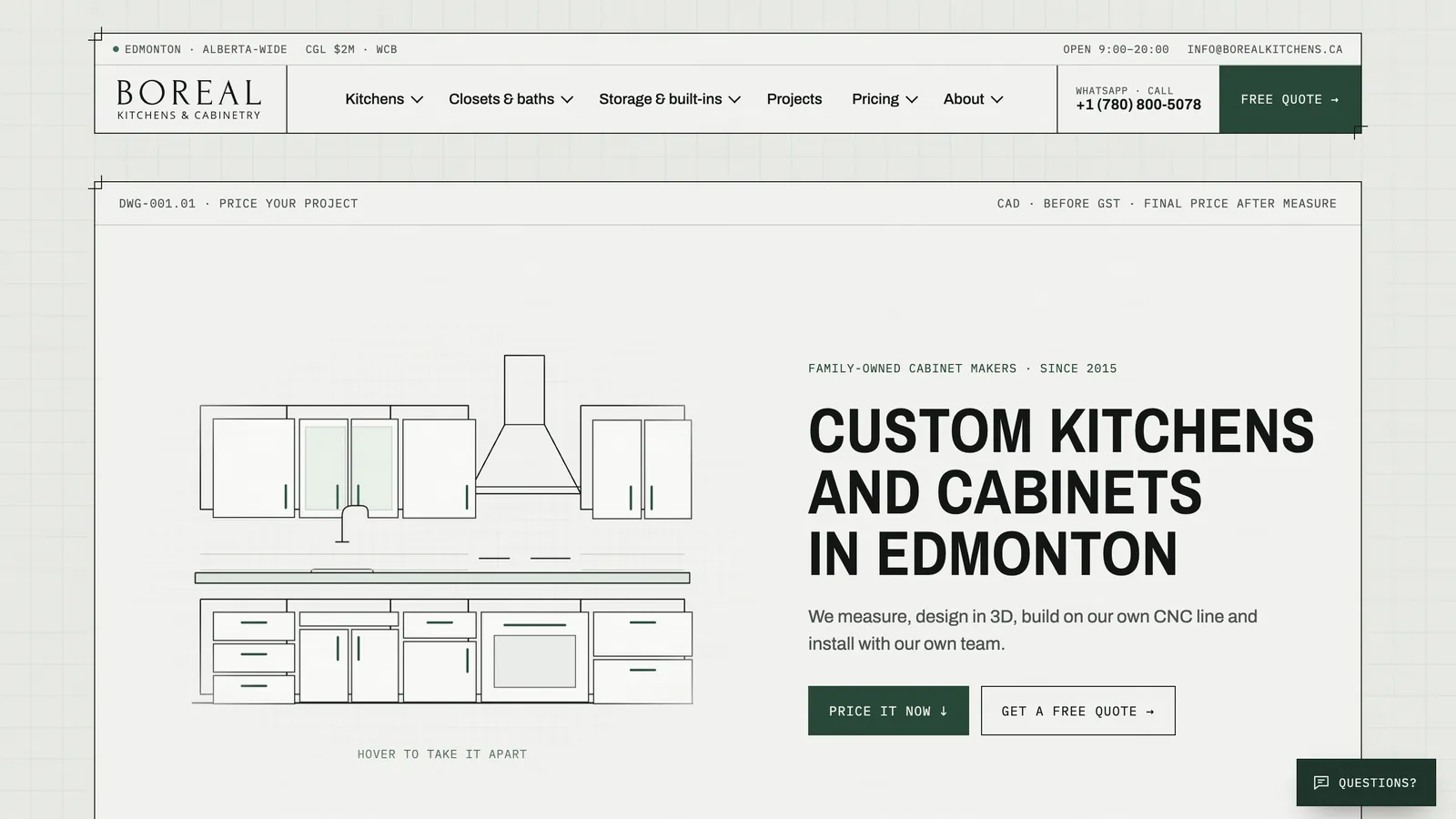 Edmonton, Canada
200 keywords on page one of Google
Boreal Kitchens
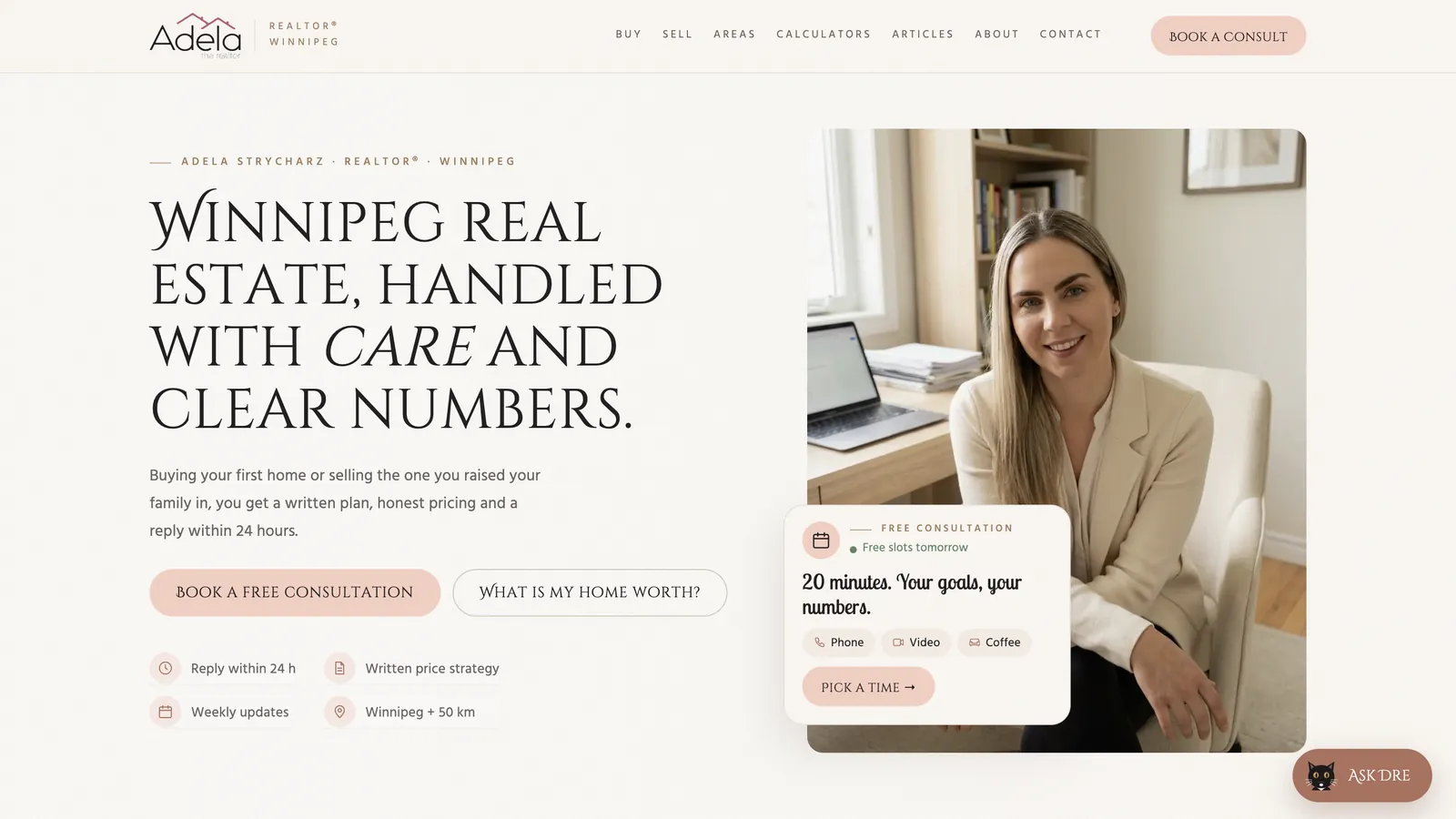 Winnipeg, Canada
up to 5 enquiries/mo from Google without ads
Adela Realtor
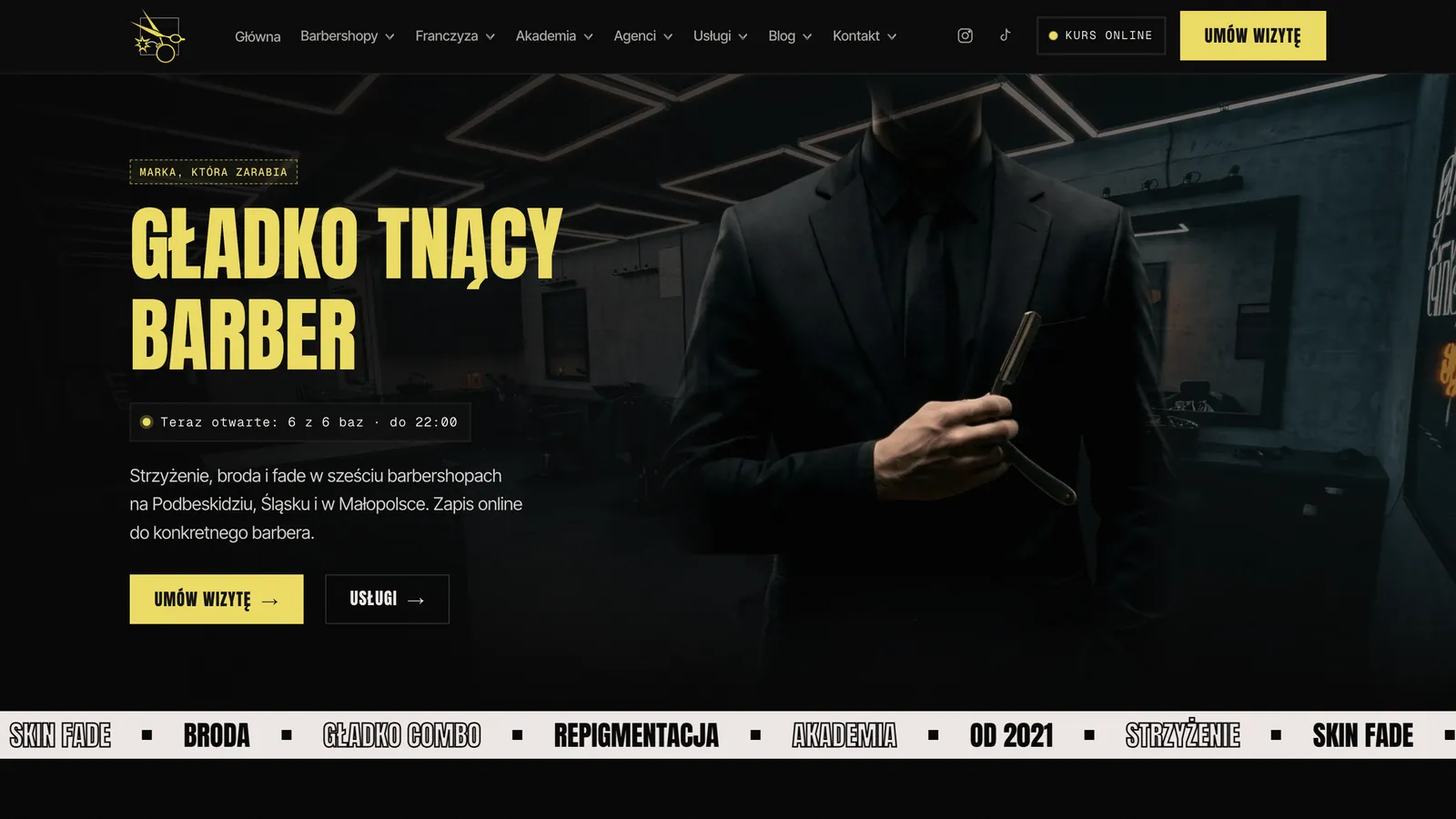 Żywiec, Poland
from 3 to 9 locations in two years
Gładko Tnący Barber
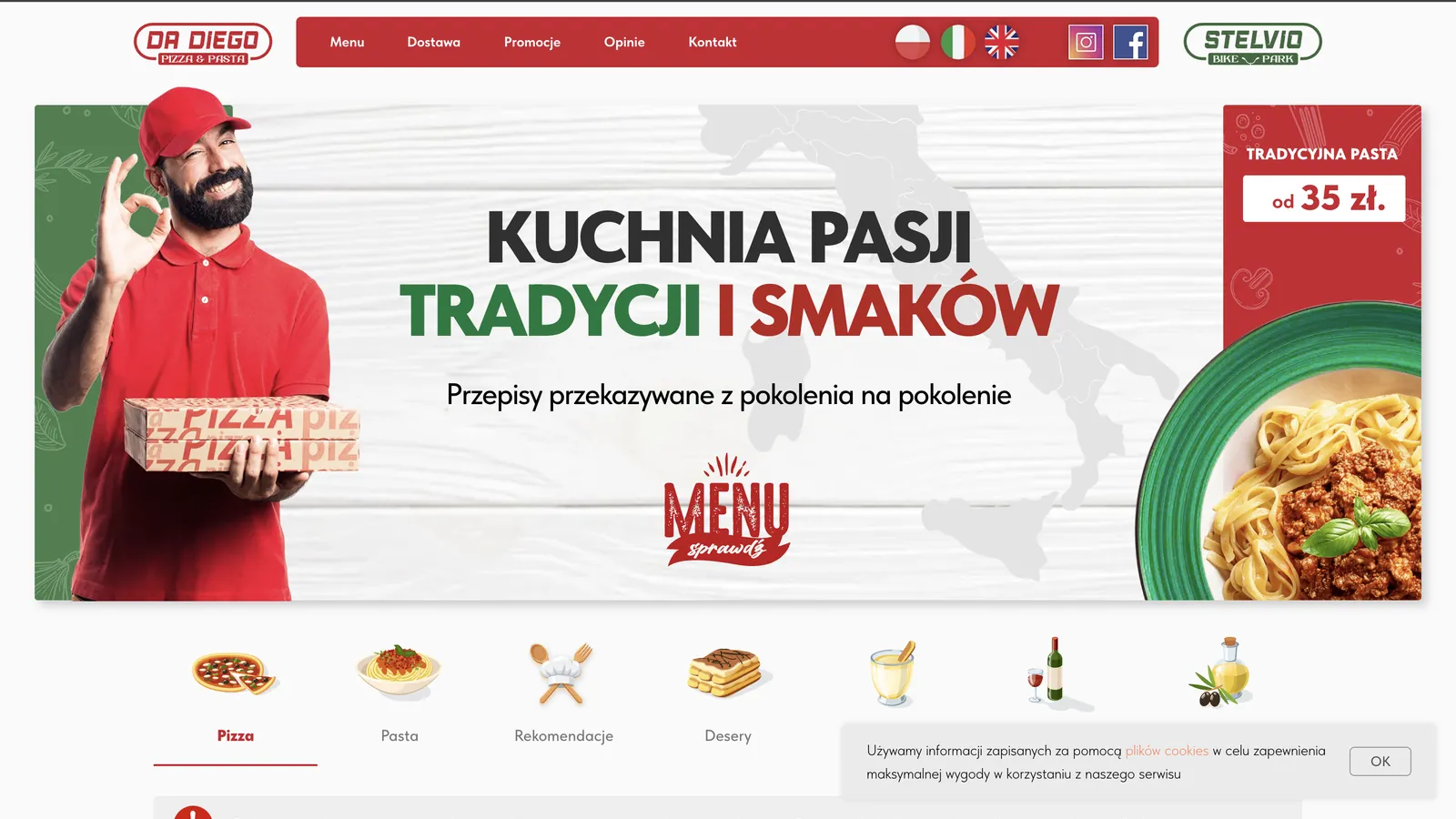 Żywiec, Poland
PLN 15 000 +/mo in delivery orders
Da Diego
Company presentations for firms that win work in meetings and lose it in the inbox. I build a deck that tells your story in the order a buyer thinks, with slides you can present on Zoom and a PDF version that still makes sense when it is forwarded to someone who never met you.
Free: a 30-minute call, an action plan and a price range in writing.

History, mission, team photos. The buyer's problem appears on slide 22, if at all.
Slides written to be read, presented out loud. Nobody can listen and read at the same time.
Your deck reaches the decision-maker without you, and without you it doesn't make sense.
Sales staff copy old decks and edit them at midnight, each version a little worse.
Quoted individually in Canadian dollars, based on length, number of versions and how much content needs writing from scratch.
Storyline, copy and design, made by me.
If you are not sure what your key message is, we work it out first in a consultation.
Book a consultation→In B2B sales, a company presentation often travels further than you do. You present it to a manager on Zoom, they like it, and then they forward the PDF to their director, the finance team and maybe a colleague in another office. Those people make the decision without ever hearing you speak. If the deck only works with your voice over it, it stops working at exactly the moment it matters.
That is why I build two versions from one storyline: a presenting deck with short, visual slides, and a reading version with enough text that someone can follow it alone.
Most company decks open with the founding year, the mission statement and a team photo. Buyers do not care yet. They care about their problem. A storyline that works for most small and mid-sized firms looks like this:
Your history and team still belong in the deck, usually near the end, where they support trust rather than delay the point.
Good slides do one thing each. A single statement, a single chart, a photo with a short caption. I use your brand colours and fonts, real photos of your work wherever possible, and simple diagrams for processes. Charts are stripped to what matters: one line highlighted, the rest greyed out, the conclusion in the title. If you do not have a consistent visual style, the deck can follow a light set of rules that later becomes part of your visual identity.
The same principles apply to sales proposals and capability statements for tenders. For proposals, I create a template your team fills in for each client: the fixed sections stay polished, the variable sections are clearly marked. For capability decks sent to procurement teams, structure matters: clear sections, easy-to-find certifications or insurance details you already hold, and project references they can check. Firms selling to governments or large Canadian companies often need a French version as well, which would come from their own team or translator; the decks I make are in English.
One of the most useful outcomes is an editable master in PowerPoint, Keynote or Google Slides. It includes title, content, chart, quote and photo layouts, locked brand elements, and a short guide on how to add new slides without breaking the design. Sales staff stop rebuilding decks from scratch, and every presentation that leaves your company looks like it came from the same business.
A deck often reuses the core message from your website and LinkedIn. If that message is fuzzy, it is worth fixing first through value proposition work. The proof slides can link to case pages on your site, and the deck itself can be shared from the owner's LinkedIn profile in the Featured section. For the words themselves, my approach to copywriting applies here too: customer language, specific benefits, one next step.
A storyline, slide copy and design made by me, with presenting and reading versions, an editable master and three rounds of revisions. Deadlines are agreed in writing before work starts, and all files are yours.
Whichever your team uses day to day. The master template is built in that tool so your staff can edit it without special software. For the reading version, a PDF is usually the safest format to send.
Long enough to answer the buyer's main questions, and no longer. For a first meeting, ten to fifteen slides is common. A capability deck sent ahead of a tender can be longer, as long as each slide earns its place.
Yes. Most of the value is in the storyline and the words. I interview you, use your existing materials and turn them into short, clear slide text. Design comes after the story is right.
I focus on sales and company presentations for customers and partners. The principles overlap, and I can help with structure and design, but I do not advise on fundraising or financial models.
I write and design decks in English only. If you sell to Quebec or to federal buyers, a French version may be expected; that would come from your own team or translator.
Even a rough one helps. I'll reply within one business day with what I would change first.