

Landing page vs website
Landing page vs website: what each is for, when one page is enough to start, when a full site pays off, and how to grow from one into the other without waste.
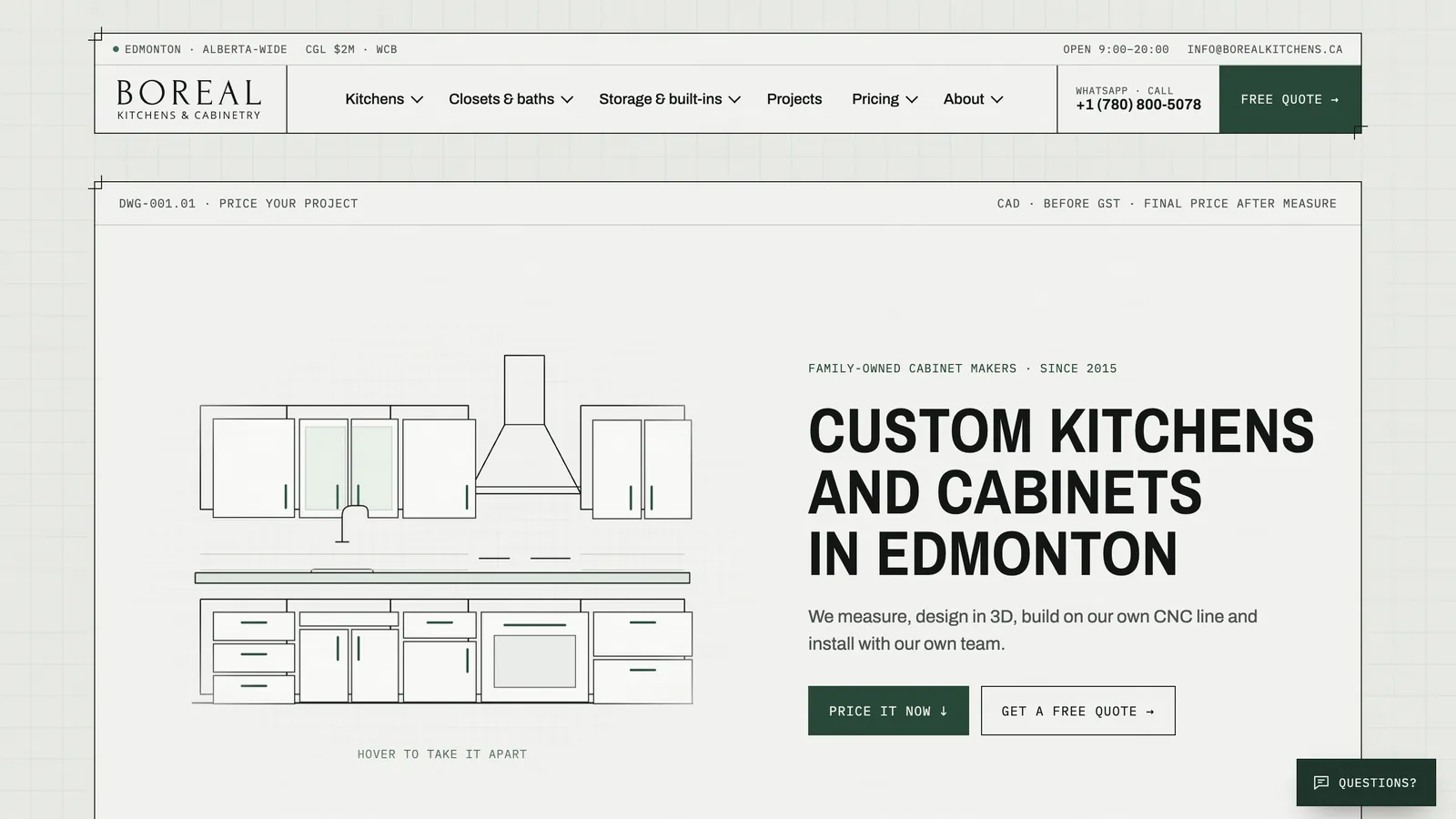
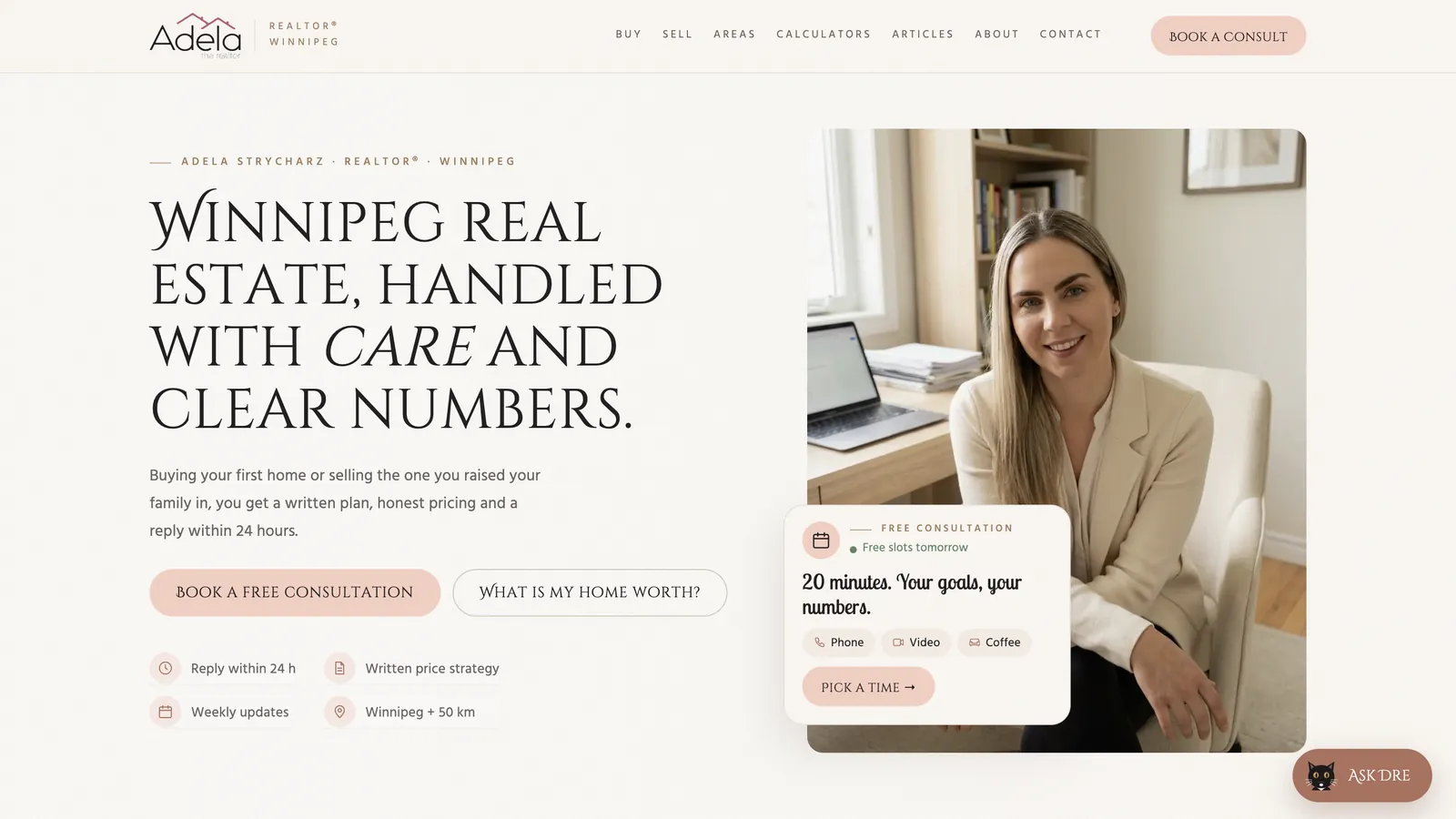
Landing page vs website is a question of focus versus breadth. A landing page is one page with one offer and one action, built to turn a specific stream of visitors (usually from ads) into enquiries. A full website is a set of pages that covers all your services, answers many questions and gets found on Google for many searches. Most businesses eventually need both, but which one comes first depends on where your customers will come from.
The short version: if you will start with paid ads for one main service, build a landing page first. If customers will find you through Google search, compare you carefully, or buy several different services, start with a website.
What each one is built for
| Landing page | Full website | |
|---|---|---|
| Goal | One action: call, form, booking | Inform, persuade, rank, convert |
| Traffic | Mostly ads, email, QR codes | Search, maps, referrals, ads, social |
| Pages | One | Several to many |
| Navigation | None or minimal | Full menu |
| SEO potential | Limited to one topic | Many topics and searches |
| Speed to launch | From 10 days with me | Longer, depends on scope |
| Price with me | from $1,300 | from $3,000 |
Prices are in Canadian dollars. Both include copy, design for phones first, forms and a fast, hand-coded build.
When a landing page is the right first step
A landing page wins when:
- You are starting with Google Ads or Meta ads. The ad promises something; the page delivers on that promise straight away, with no menu to wander off into.
- You sell one main service or are testing one. A new physio clinic promoting assessments, a roofer focused on repairs, a course launch.
- You need to be online quickly. A landing page can be live while a full site is still being planned.
- The budget is tight. One strong page beats five weak ones.
The risk is relying on it too long. A single page cannot rank for dozens of searches, and visitors who want to know more about you have nowhere to go. More on the price side in how much does a landing page cost.
When you need a full website first
A full website comes first when:
- Organic search matters. If people find businesses like yours through Google rather than ads, you need a page for each service and area.
- Customers compare carefully. Renovations, legal services, clinics, B2B. People read about you, look at examples, check prices and come back several times.
- You offer several distinct services. A cleaning company doing homes, offices and post-construction cleaning serves three different customers.
- Trust needs space. An about page, examples of work, reviews, FAQ, process. That is hard to fit on one page without it becoming endless.
The middle path: website plus landing pages
For many businesses the best setup is a business website for search and trust, plus a few focused landing pages for ad campaigns. The website catches people who search and research; the landing pages turn paid clicks into enquiries. Both live on the same domain, share your brand and feed the same analytics.
This is what the Growth package (from $4,300) is built around: a website, Google Ads setup and analytics, so the pages and the campaign are planned together.
A five-question test
Answer honestly:
- Will most of your first customers come from paid ads? (Yes leans landing page.)
- Do you sell one main service? (Yes leans landing page.)
- Do people usually research for days before buying from you? (Yes leans website.)
- Do you want to rank on Google without paying per click? (Yes leans website.)
- Do you need to be online within two weeks? (Yes leans landing page.)
If you answered yes to questions 1, 2 and 5, start with a landing page. If 3 and 4, start with a website. If it is mixed, start with the one that matches where your money goes first, and plan the other.
Two quick examples
Picture a new mobile dog groomer in Halifax. One service, one area, ads on Facebook and Google from day one. A landing page with prices, photos of happy dogs, the service area and a booking form is all that is needed for the first months. A full website can wait until there is time to write about each service.
Now picture an established accounting practice in Calgary that offers bookkeeping, personal tax, corporate tax and payroll. Its clients search for each of those separately, compare firms carefully and often want to know who exactly will handle their files. That firm needs a full website first, with a page per service and a proper about page, and can add landing pages later for seasonal campaigns such as tax time.
The difference is not the size of the business. It is how customers find and choose it.
Common mistakes
- Sending ads to the homepage. It talks to everyone, so it convinces nobody in particular. A dedicated page for each campaign usually converts better.
- Building a one-page site and expecting SEO traffic. One page can rank for one topic. Many topics need many pages.
- Building a 30-page site before having an offer. Lots of pages with nothing specific to say. Start narrow, learn what sells, expand.
- Making them look unrelated. Landing pages and the main site should feel like the same business, so visitors who click around do not get confused.
Growing from one into the other
Starting with a landing page is not wasted work. The headline, offer, proof and FAQ you test on it become the backbone of the service page on your future website. The analytics tells you which messages work before you write ten more pages.
Going the other way works too: a business with a website adds landing pages as soon as it starts advertising. I build both, on the same code base, so moving between them is natural. See the landing page and business website pages for scope, or compare with a one-page or multi-page website if you are leaning towards a compact site rather than a single campaign page.
If you are still unsure, a free 30-minute consultation is enough to decide.
See what is holding
your website back
Paste the address: I’ll check speed, the mobile version, tappable contact details and analytics. Results right away, for free.

12+ years in online marketing, 100+ clients. I build websites, Google Ads and Meta ads campaigns, CRMs and automations for small and mid-sized businesses. About me →
Landing page
or website
Can a landing page replace a website?
For a short time and a narrow goal, yes: a new business promoting one service through ads can live on a landing page for a while. Over time, most businesses need a full site to rank on Google, answer more questions and cover several services. Think of the landing page as the first step, not the final home.
Should my landing page be on the same domain as my website?
Usually yes. It keeps your brand consistent, builds trust and lets analytics see the whole journey in one place. A separate domain can make sense for a distinct product or event, but for most local businesses a page like yourbusiness.ca/offer is simpler and works well.
How many landing pages do I need?
One per distinct offer or audience you advertise to. A dental clinic running ads for implants and for emergency visits needs two pages, because the people and their worries are different. Start with the campaign that matters most and add pages as you add campaigns.
Is a landing page good for SEO?
It can rank for one closely related topic if it has enough useful content. But landing pages are built mainly to convert ad traffic, often with little text and no navigation, so they are not the best SEO tool. For organic search, a website with a page per service and area works much better.
Not sure which
one you need?
Tell me what you sell and where your customers come from. I'll recommend the first step and price it, usually within one business day.