Search
Branches invisible in local search
One page lists all addresses, so the new Brampton location never shows up when someone searches nearby.
Ads and visibility: customers who are looking for your service now or don’t know about it yet.
01 Google AdsEnquiries from people searching for your service right nowfrom $750/mo 02 Social media adsMeta, TikTok, LinkedIn: customers who are not searching yetfrom $700/mo 03 SEOHigher in Google and Maps without paying per clickfrom $1,000/mo 04 Visibility in ChatGPT and AIYour business in AI assistant answerspart of SEO 05 Amazon and marketplacesSell where customers already buywith a partnerThe place where a visit turns into an enquiry, and a system that doesn’t lose that enquiry.
01 Web designA website that turns visits into enquirieslanding from $1,300 02 Online storesCart, payments and shipping, ready for adsfrom $4,800 03 CRMNo enquiry gets lost in a phonesetup $3,400 04 Chatbots and AIThey answer customers, at night too$2,500 05 Email and SMSCustomers come back instead of forgetting youquoted individuallyPlan and tracking first, budget second. You know what works before you spend more.
01 Strategy and auditKnow where to spend the budget before you spend it$2,400 02 AnalyticsSee which ad brings in money$650 03 ConsultationsA call about your specific problem$70/h 04 Free auditA quick review and 3–5 priorities to start$0How your business looks and sounds before anyone calls you.
01 Social media managementProfiles that look like a real businesswith a partner 02 Creative and videoGraphics and videos that stop the thumbquoted individually 03 BrandingA logo and style that sets you apartwith a partner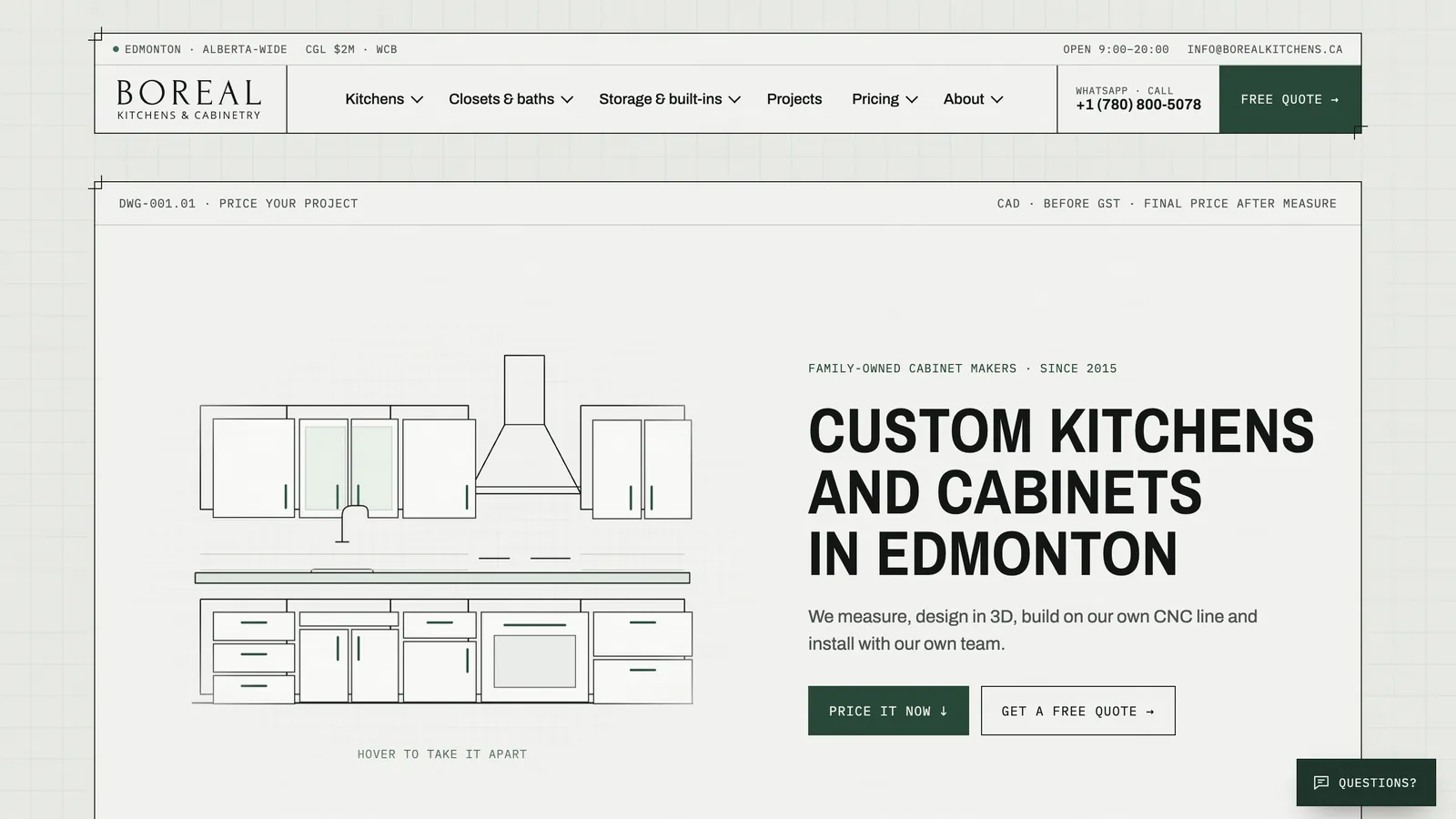 Edmonton, Canada
200 keywords on page one of Google
Boreal Kitchens
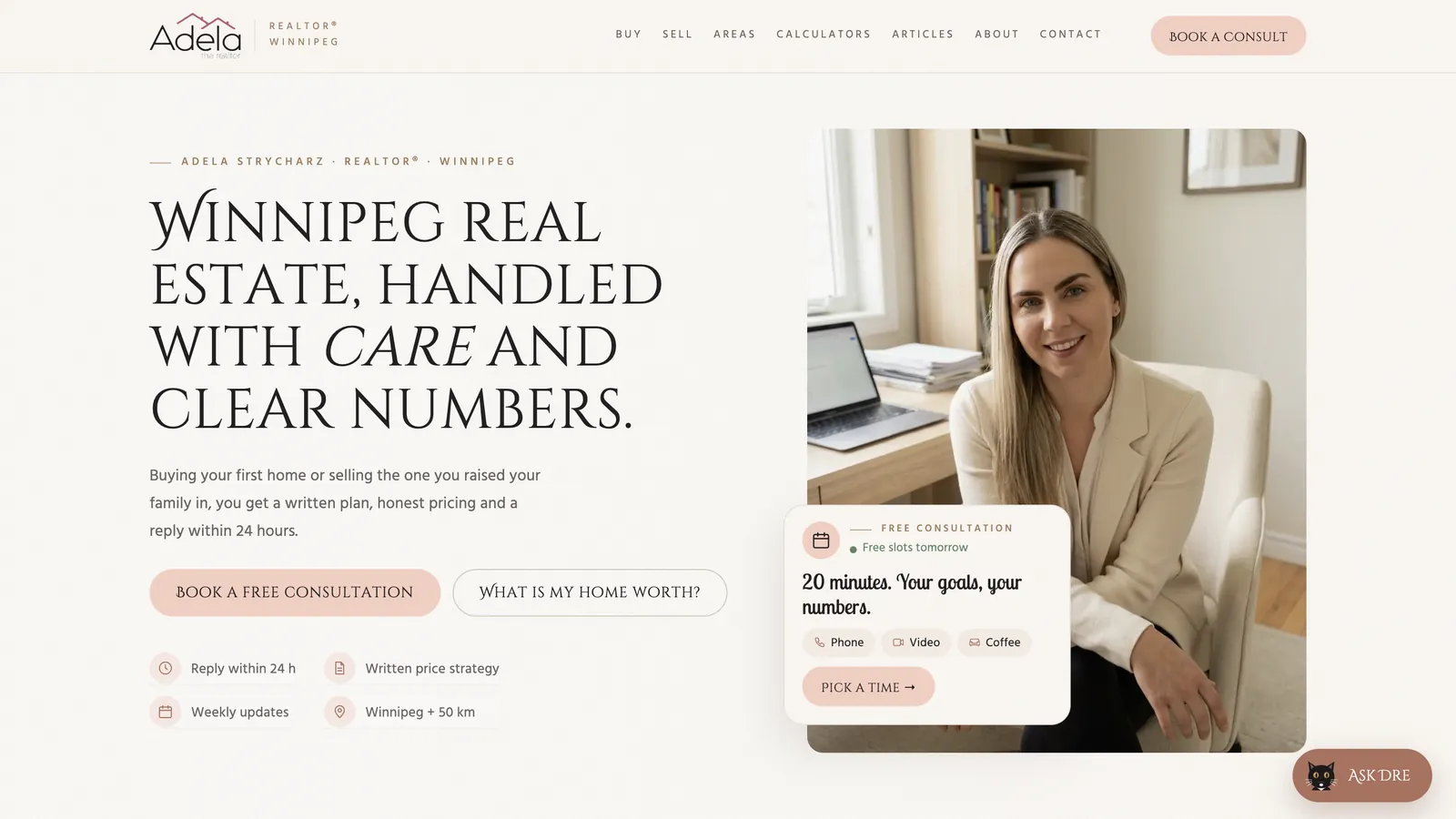 Winnipeg, Canada
up to 5 enquiries/mo from Google without ads
Adela Realtor
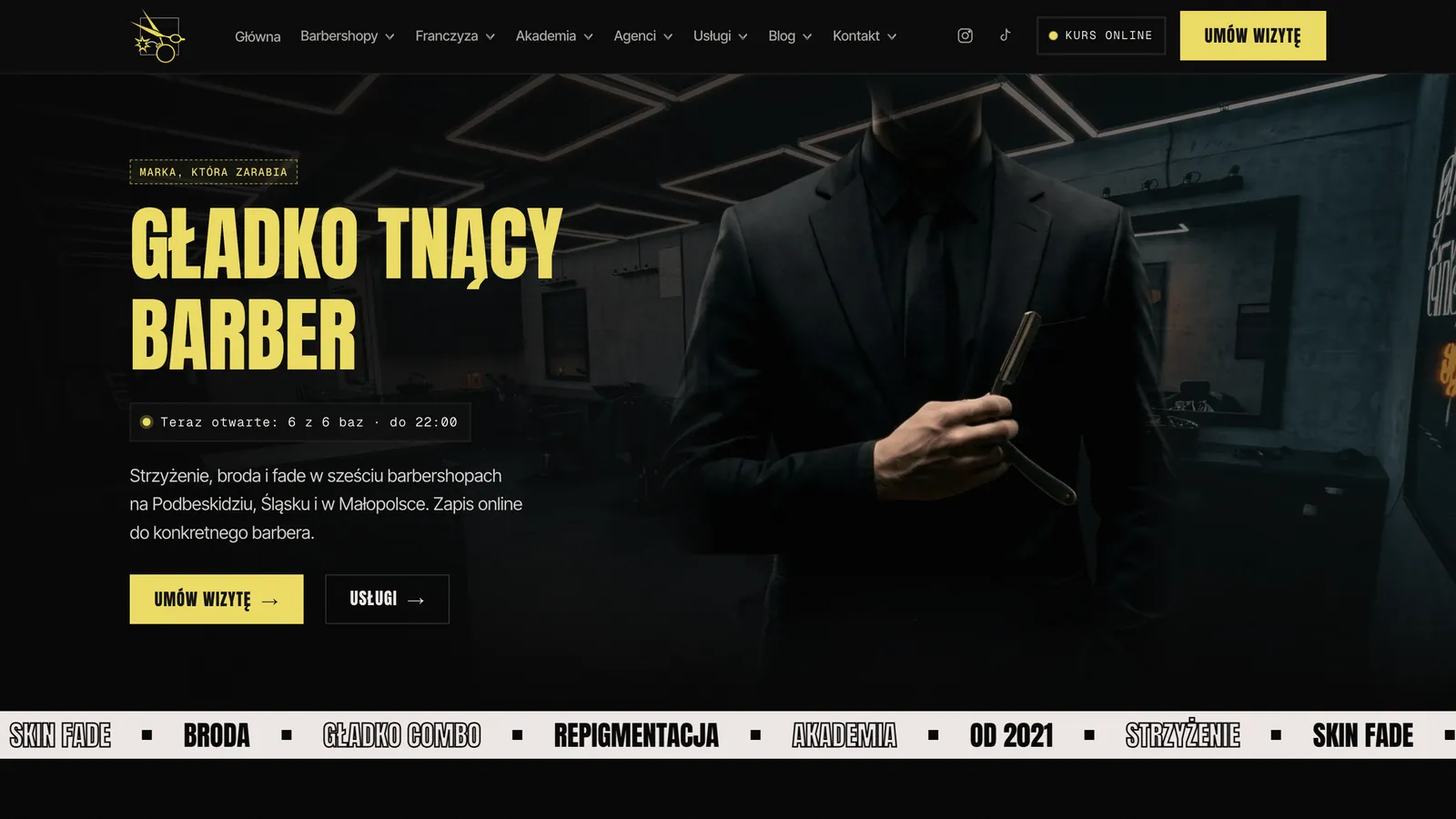 Żywiec, Poland
from 3 to 9 locations in two years
Gładko Tnący Barber
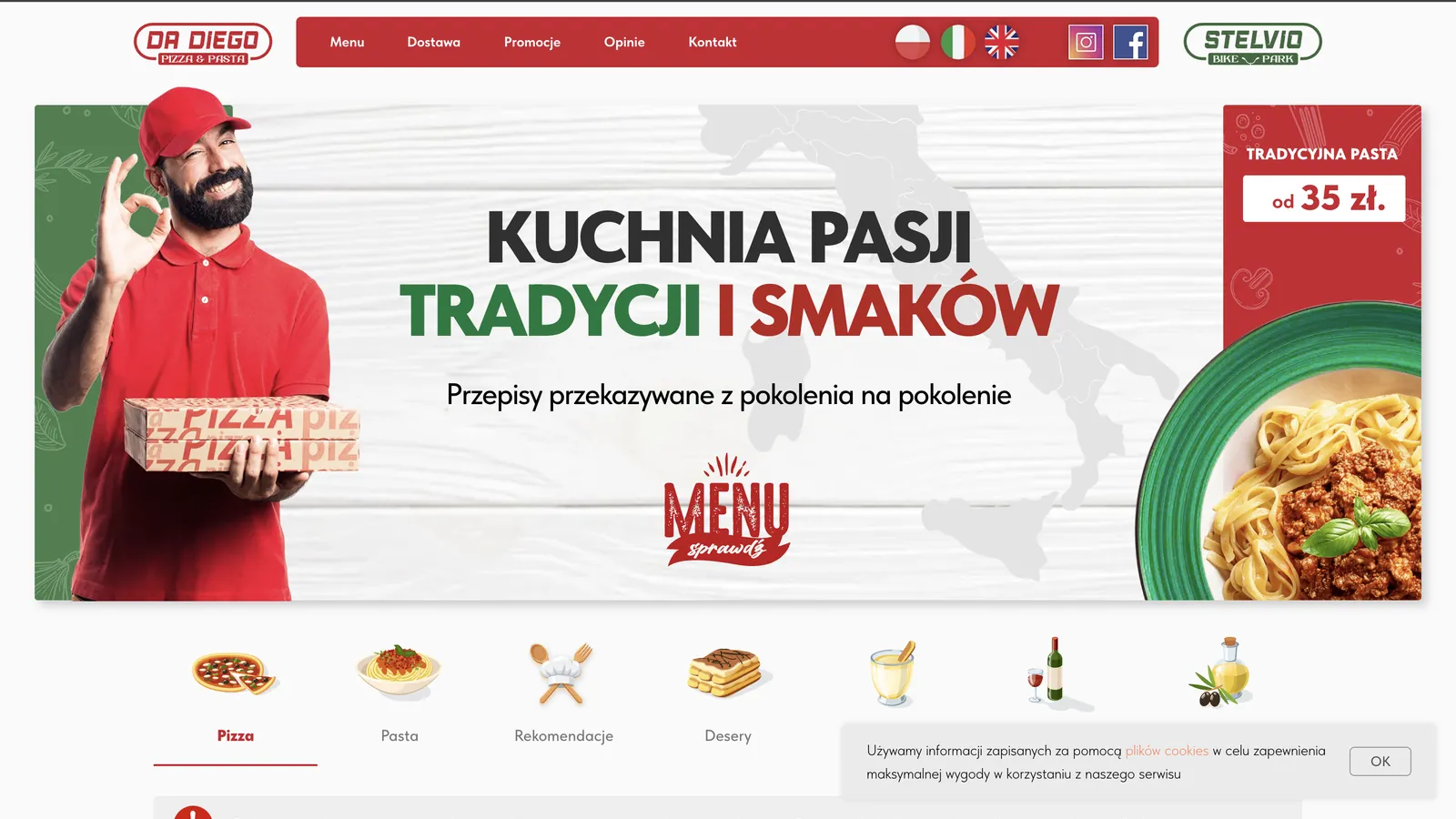 Żywiec, Poland
PLN 15 000 +/mo in delivery orders
Da Diego
A multi-location website keeps one brand consistent while giving every branch its own page, hours, team and booking. Head office controls the look and the offer; each location manager updates only what is theirs.
Free: a 30-minute call, an action plan and a price range in writing.
Chains often outgrow their first website long before they notice. These are the signs.
One page lists all addresses, so the new Brampton location never shows up when someone searches nearby.
A manager wants to change hours for a holiday and has to wait three days for whoever has the login.
Different logos, prices and promises across the network, and customers can't tell which one is real.
Address, map, hours, team, services and prices for that branch, plus a short local text. Not a template with the city swapped.
Customers pick a branch first, then a service and a time. Each location sees its own bookings.
Head office edits the brand and offer; managers edit their own hours, staff and photos.
Find the nearest branch by postal code or map, with tap-to-call and directions.
Each page matches its Google Business Profile, with consistent name, address and phone.
A form on the Saskatoon page reaches Saskatoon, not a general inbox.
Website with booking per location, CRM, ads and a chatbot. The chain grew from 3 to 9 shops in two years and ranks top 1–3 for "barber + city".
See the case study →A large website with a booking system, CRM and ads. The project has just launched; I'll share results once there are hard numbers.
See the case study →Final prices in Canadian dollars. The quote depends on the number of locations, languages and integrations.
For chains, franchises and service-area businesses.
Ongoing work on rankings and profiles for your branches.
A single-location business needs a good website. A chain needs a system. Every new branch adds pages, people who want to edit them, booking calendars, Google Business Profiles and local search phrases. If the website wasn't planned for that, each expansion turns into a pile of manual work and the site slowly falls out of date.
A multi-location website is designed around that growth. The brand, the services and the design live in one place. Locations are entries in the system, each with its own fields, staff, hours, photos and booking. Adding the tenth branch takes an afternoon, not a new project.
For most chains, location pages bring more business than the homepage. Someone searching "physiotherapy near me" in Surrey sees the map pack, taps through and lands on the Surrey branch page, so that page has to work on its own. It needs the address and map, parking or transit tips, hours including holidays, the team with photos, the services available at that branch, prices if they differ, and a booking or call button.
Each location page also links to its own Google Business Profile, and the name, address and phone match exactly. I add LocalBusiness schema for every branch. All of this helps search engines connect the dots. For deeper work on rankings, see local SEO and the article on SEO for multiple cities.
Franchise networks have an extra challenge: independent owners who want some control over their corner of the site. I solve this with roles in a custom CMS. The franchisor controls the brand, the core offer, legal text and design. Franchisees edit their local details, team and promotions within set limits. Everyone works on one platform, and customers see one recognizable brand from Halifax to Victoria.
When booking runs through the website, the first step is choosing the location. After that, services and time slots come from that branch only. Notifications go to the right manager, and leads from contact forms are tagged with the location in your CRM. That's how the barbershop chain in my case studies runs booking across its shops. If you need chat-based booking too, a booking chatbot can sit on top of the same calendar.
Many chains arrive with a mix: the original site, a separate page a franchisee built, a booking tool on another domain. I don't patch those. I build the new platform, move the content that's worth keeping and set up redirects from every old address, so links from directories and Google profiles keep working. Old domains can point to the right location page. The details of that process are on website migration.
Chains that span provinces meet a few extra rules. Quebec branches need French versions at least as complete as English, which affects both the location pages and booking messages; I work in English, so that French content comes from your own team or translator. Privacy laws differ: PIPEDA applies broadly, while Quebec, BC and Alberta have their own private-sector acts, so the privacy policy and consent banner should account for where your customers are. Different time zones matter too: opening hours and booking slots must show local time, not head-office time.
Large projects run on the same principles as small ones: a written agreement with deadlines, staged payments, three rounds of revisions and training at the end. You deal with me directly, not with an account manager. Domain, code and accounts are registered in your company's name. For marketing beyond the website, see marketing for franchises.
Usually not. Separate sites split your authority on Google, cost more to maintain and drift apart in branding. One site with a strong page per location works better for most chains. The exception is a franchise where owners are fully independent; even then, a shared platform with separate sections tends to be easier.
Each one gets real local content: the team, photos of that branch, services and prices specific to it, parking or transit tips, nearby neighbourhoods served. Google tends to ignore pages that differ only by the city name, and customers notice too.
Yes. In the custom CMS each manager gets a login limited to their branch: hours, holiday closures, staff, photos and local news. Head office keeps control over the brand, the main offer and the design.
From $11,900 CAD, final, on a custom CMS. The main factors are the number of locations, languages, booking and CRM integrations. You get a written quote after a short call, with payment in stages and deadlines in the agreement.
I build franchise sites in English only. Branches in Quebec need French at least as available as English, so French location pages and messages would come from your own team or translator, outside my work. If most of your locations are in Quebec, we'll talk honestly on the first call about whether my English-language work fits.
Tell me the number of branches, the cities and how bookings work today. I'll reply within one business day with a proposed structure. The first 30 minutes on Zoom are free.
What do you need most?