01[01]
Optimizing for installs only
Google is very good at finding cheap installs. Many of those people open the app once and forget it.
Ads and visibility: customers who are looking for your service now or don’t know about it yet.
01 Google AdsEnquiries from people searching for your service right nowfrom $750/mo 02 Social media adsMeta, TikTok, LinkedIn: customers who are not searching yetfrom $700/mo 03 SEOHigher in Google and Maps without paying per clickfrom $1,000/mo 04 Visibility in ChatGPT and AIYour business in AI assistant answerspart of SEO 05 Amazon and marketplacesSell where customers already buywith a partnerThe place where a visit turns into an enquiry, and a system that doesn’t lose that enquiry.
01 Web designA website that turns visits into enquirieslanding from $1,300 02 Online storesCart, payments and shipping, ready for adsfrom $4,800 03 CRMNo enquiry gets lost in a phonesetup $3,400 04 Chatbots and AIThey answer customers, at night too$2,500 05 Email and SMSCustomers come back instead of forgetting youquoted individuallyPlan and tracking first, budget second. You know what works before you spend more.
01 Strategy and auditKnow where to spend the budget before you spend it$2,400 02 AnalyticsSee which ad brings in money$650 03 ConsultationsA call about your specific problem$70/h 04 Free auditA quick review and 3–5 priorities to start$0How your business looks and sounds before anyone calls you.
01 Social media managementProfiles that look like a real businesswith a partner 02 Creative and videoGraphics and videos that stop the thumbquoted individually 03 BrandingA logo and style that sets you apartwith a partner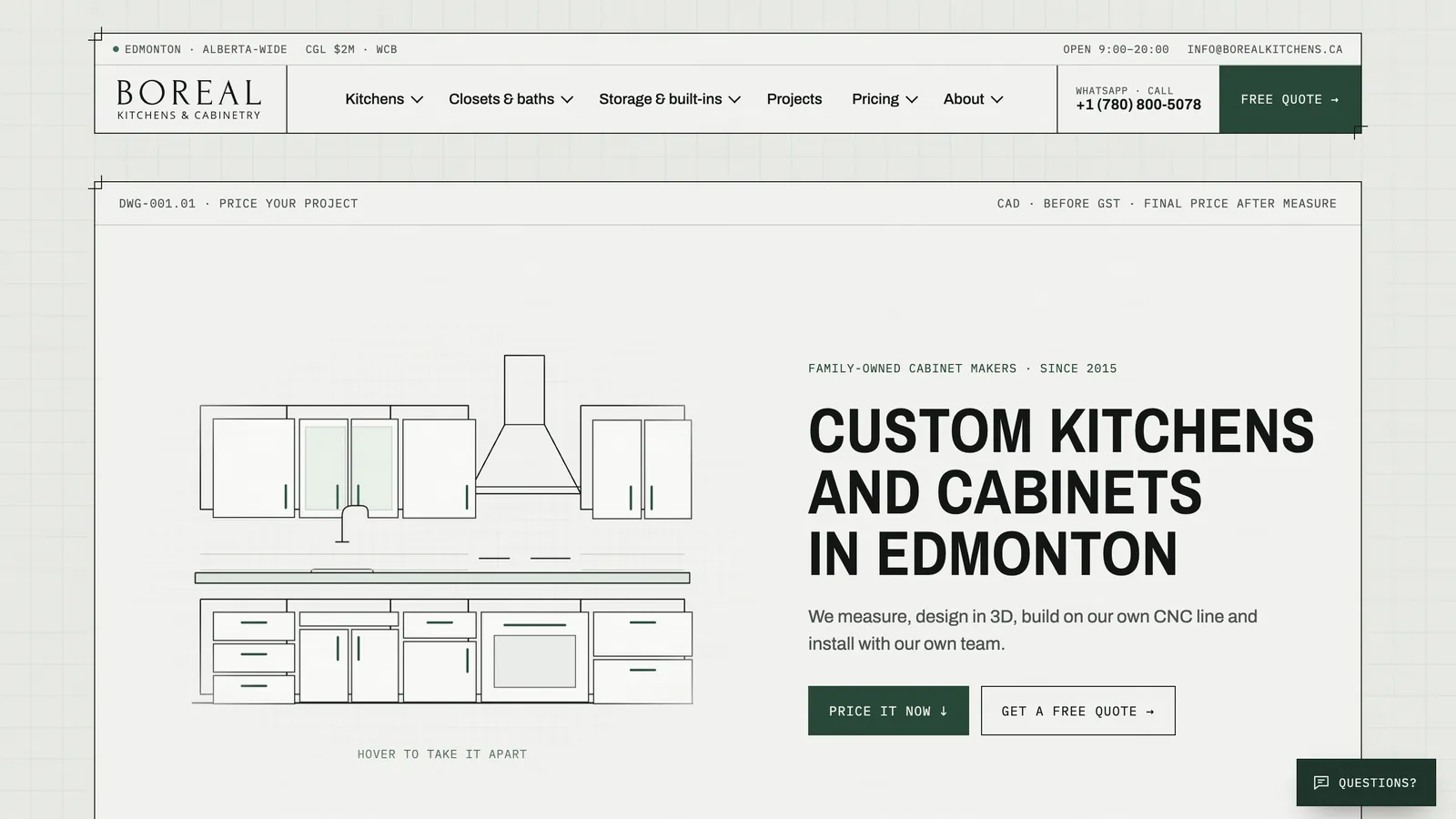 Edmonton, Canada
200 keywords on page one of Google
Boreal Kitchens
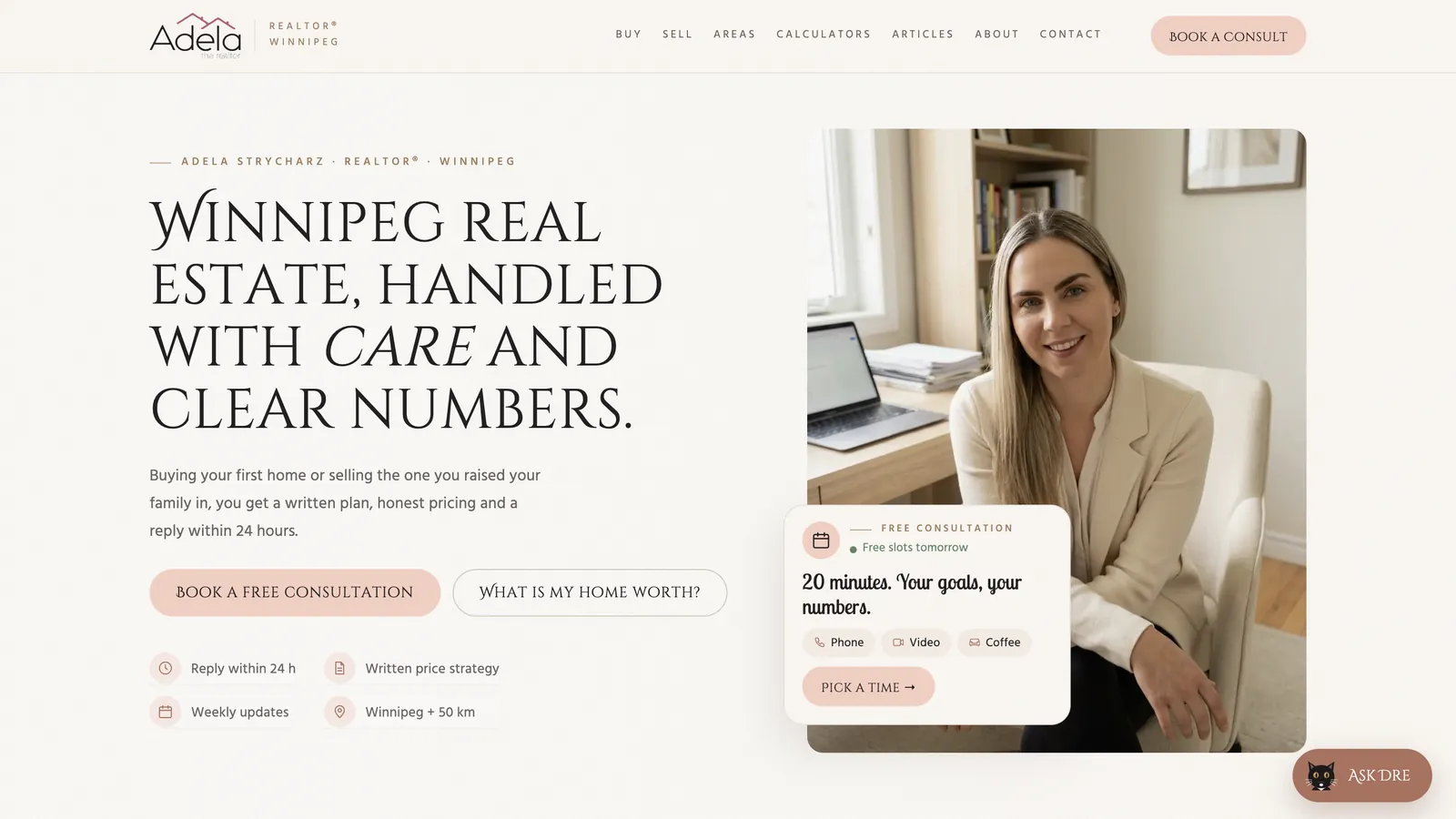 Winnipeg, Canada
up to 5 enquiries/mo from Google without ads
Adela Realtor
 Żywiec, Poland
from 3 to 9 locations in two years
Gładko Tnący Barber
 Żywiec, Poland
PLN 15 000 +/mo in delivery orders
Da Diego
Google App campaigns promote your app across Search, Google Play, YouTube, Discover and the Display Network from one setup. They're worth it when the app earns money after the install: orders, bookings, subscriptions. I build them around those actions, so you pay for customers rather than for downloads nobody opens.
Free: a 30-minute call, an action plan and a price range in writing.

Google is very good at finding cheap installs. Many of those people open the app once and forget it.
Without events like “first order” or “booking made” sent back to Google Ads, bidding has nothing better to aim for.
Screenshots, ratings and the first lines of the description decide whether a click becomes an install.
For many small businesses, a fast mobile website does the job. An app makes sense when customers order or book often.
Every week I review what people actually searched for and exclude terms that don’t bring customers.
Installs for growth, engagement for existing users, or pre-registration before an Android launch.
Events from Firebase or your measurement partner: sign-up, first order, purchase value, booking.
Up to several headlines and descriptions, images, and portrait and landscape video for YouTube placements.
Target cost per install at first, then cost per action or return on ad spend once events flow in.
Screenshots, icon, title and description in Google Play and the App Store, in English.
Engagement ads open the right screen in the app, not the home screen.
Firebase or your mobile measurement partner linked to Google Ads, with key events marked as conversions.
Store page reviewed with a simple list of changes that usually lift install rates.
Text, images and short videos prepared in the right sizes for each placement.
Budget set high enough for the learning phase, without major changes for the first couple of weeks.
Bidding moved from installs to in-app actions once the data is there.
My fee in Canadian dollars. Ad spend is billed to you by Google.
Linking, events, assets and launch.
Monthly, cancel with one month's notice.
Google App campaigns are fully automated campaigns for one purpose: getting people to install or use your mobile app. You don't choose keywords or placements. Instead, you supply text, images and videos, set a budget and a target, and Google shows ads across Search, Google Play, YouTube, Discover and thousands of partner apps and sites. The system learns which combinations lead to the result you asked for.
That last part is the important one. If you ask for installs, you'll get installs, and many of them from people who never open the app again. If you ask for in-app actions such as a first order, a booking or a subscription, Google looks for people who are more likely to do that. It costs more per install and much less per customer.
Most small businesses in Canada don't need an app. A fast mobile website with online booking or ordering does the same job without forcing anyone to download anything. App campaigns make sense for:
If your app gets opened twice a year, money is usually better spent on Search campaigns pointing to your website.
App campaigns depend on in-app events coming back to Google Ads. For Android, that usually means Firebase linked to your Google Ads account. Many apps use a mobile measurement partner instead, which also covers iOS. Either way, I make sure key events are named clearly, fire once, and carry values where it makes sense. Without this, bidding can only aim at installs.
iOS adds a layer of difficulty, because Apple's privacy framework limits user-level tracking. Results on iPhone are often modelled or aggregated. I explain these limits in reports rather than pretending the numbers are exact.
Google mixes your assets into ads for each placement, so variety matters: several headlines, descriptions, landscape and portrait images, and short videos. Video is especially important because YouTube and in-app video placements carry a lot of the volume. Then there's the store listing itself. If the screenshots are outdated or reviews mention bugs nobody fixed, ads will bring visitors who don't install. I review the listing before launch and give you a short list of fixes.
For apps used in Quebec, store listings and ad text are expected in French. I run app campaigns in English only, so French listings and French-language campaigns would be handled by your own team.
App campaigns need data to learn. Google generally recommends a daily budget that allows a reasonable number of installs or events per day, and that adds up quickly for action-based bidding. During the first couple of weeks I avoid big changes, because each one restarts learning. After that, I shift bidding toward value once enough in-app events come through.
Installs are the vanity number of app marketing. I track how many installers open the app again after a week, how many make a first order or booking, and what those users spend over the following months. If a cheaper source of installs brings users who never come back, it gets less budget even though its cost per install looks great. These numbers also feed back into your product decisions, because a weak onboarding screen shows up in the data long before it shows up in reviews.
Access to Google Ads, the app's analytics (Firebase or your partner), the store listings, and a developer who can add or fix events if needed. I handle the campaign side, setup at $650 and management from $750 a month. For a broader view of which campaign types fit your business, start from the Google Ads services page, or check end-to-end analytics if you want to connect app data with sales.
Yes, they can promote apps from the App Store as well as Google Play, though measurement on iOS is more limited because of Apple's privacy rules. Reporting relies on aggregated or modelled data more often. I set expectations accordingly and focus on in-app events that can still be measured.
It varies widely by category, country and how good the store listing is, so I won't quote an average. What matters more is the cost of a user who orders, books or subscribes. I set up tracking for those events first, then report both numbers so you see the real price of a customer.
Only partly. App campaigns are automated: you provide assets, a budget and goals, and Google places ads across its networks. You can't pick individual keywords or placements. Control comes from the conversion events you choose, the bidding target and the quality of the assets.
Often yes, if the app is published under your developer account and you can access its analytics. If it's a shared platform app, you may not be able to track events or even run campaigns for it. In that case, ads pointing to a fast mobile ordering page are usually a better option.
Yes, App engagement campaigns target people who already installed the app and invite them back with a deep link to a specific screen, such as a new menu or a reorder button. They need a larger user base to work, so I usually start them after install campaigns have built one.
Tell me what the app does and what you track today. On a free 30-minute call I'll say whether App campaigns or a mobile site will pay off faster.