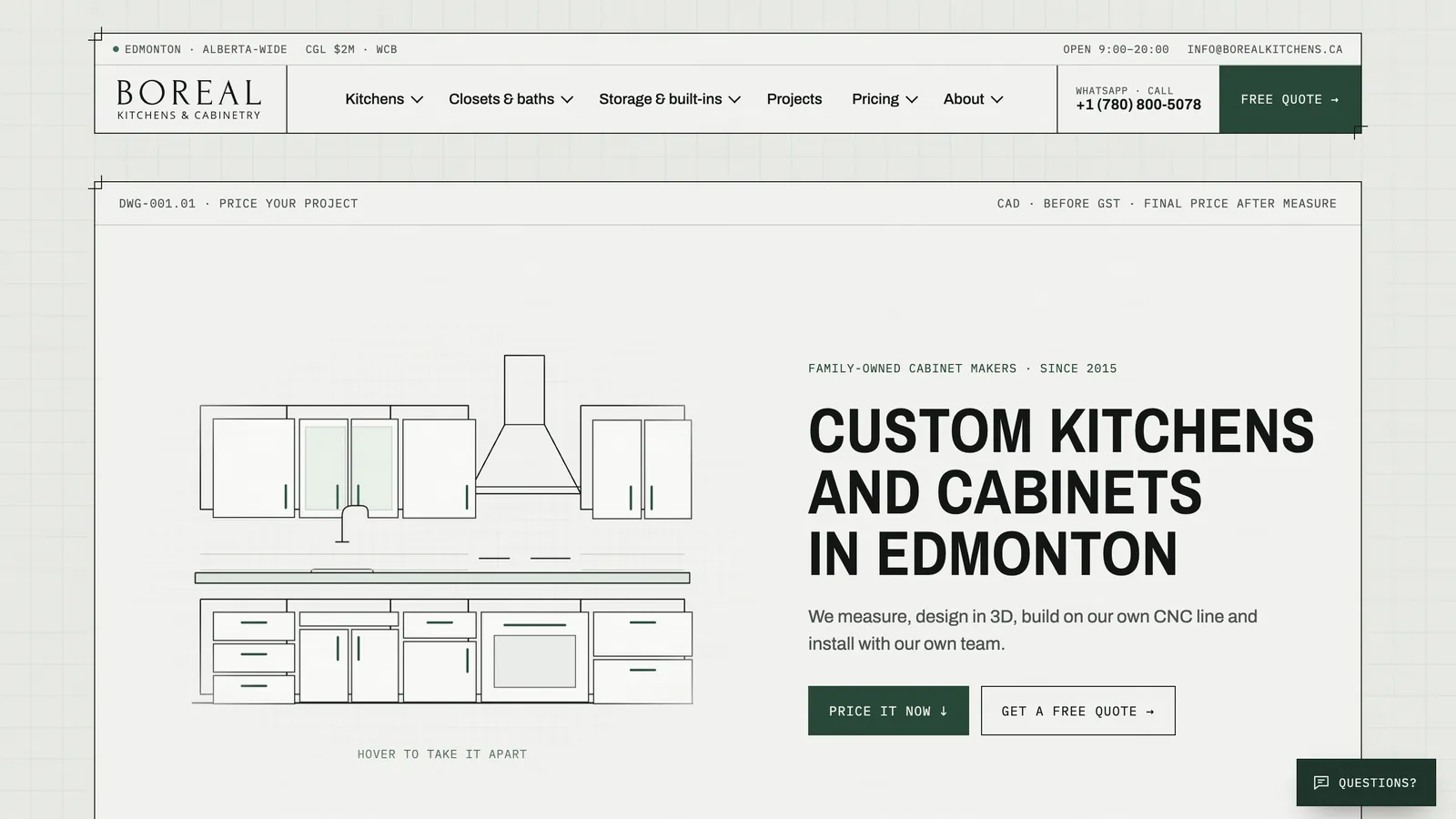
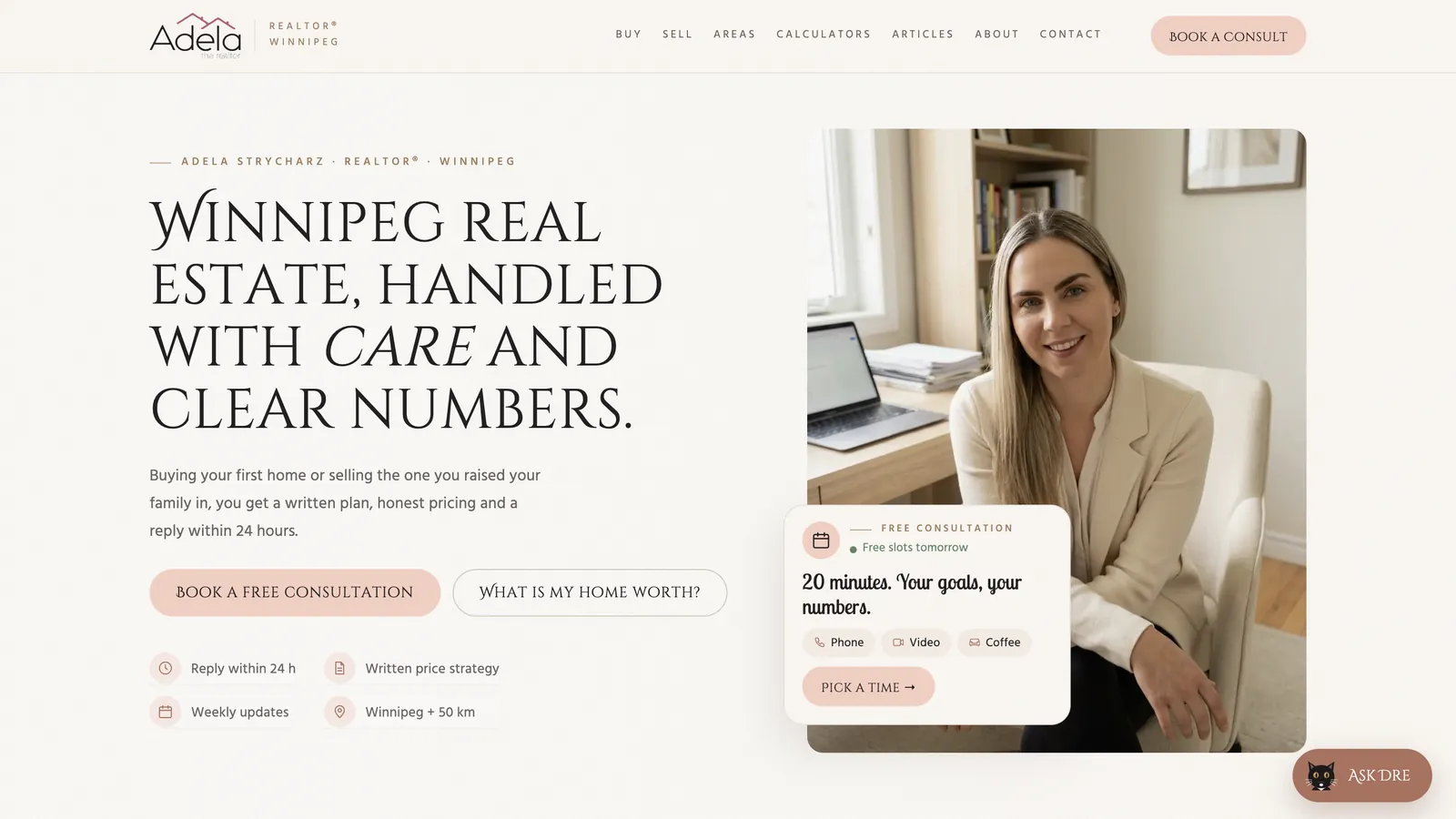


Landing pages for Google Ads
Landing pages for Google Ads decide whether a paid click becomes a call. Here is what to put on the first screen, what to cut, and a simple outline you can follow.
Landing pages for Google Ads convert when they continue the conversation the ad started. The person searched for something specific, your ad promised it, and the page must confirm in the first few seconds that they are in the right place, show why to choose you, and make contacting you effortless. Most pages that fail break one of those three links: they talk about something else, they bury the proof, or they hide the phone number.
The page also affects what you pay. Google rates the landing page experience as part of your ad quality, so a better page can lower your cost per click as well as raise the share of visitors who enquire. Below is what I put on ad landing pages for small businesses, and what I deliberately leave out.
Message match: the first rule
If the ad says "Same-week furnace repair in Saskatoon", the page headline should say almost exactly that. Not a generic welcome line with the business name and not "Heating, cooling and plumbing solutions". Visitors scan a page for the words they just read; when they find them, they stay.
This is why one page per advertised service usually beats a single page for everything. Each ad group points to the page that matches its keywords. If your ads run in English and French, each language gets its own page, written by someone fluent, not run through a translator.
What goes on the first screen
On a phone, the first screen is small. It should hold:
- A headline that mirrors the ad, including the service and area.
- One line on the main benefit, in customer terms: response time, price range, warranty, licensed and insured.
- A clear action: a tap-to-call button and a short form or a booking button.
- One proof point: a rating, the number of years in business, or a recognizable project photo.
Everything else can live below. If a visitor has to scroll to find out how to contact you, you lose the people in a hurry, and in services those are often the best customers.
A nine-part outline that works
- Headline and benefit, matching the ad.
- Call button and a short form.
- Three to five reasons to choose you, specific rather than generic.
- Photos of real work, your team or your premises.
- How it works: three or four steps from enquiry to finished job.
- Price guidance: a range, a starting price or what affects the price.
- Reviews or examples of work, real and attributable.
- Short FAQ answering the common objections.
- A final call to action, repeating the contact options.
Not every page needs all nine, but this order follows the questions a buyer asks: am I in the right place, can they do it, can I trust them, what will it cost, how do I start.
Forms and calls
Every extra field costs you enquiries. For a first contact, name, phone or email and a short message are usually enough. Ask for details later, on the phone. If you need a postal code to check the service area, ask for that and nothing else extra.
Make calling easy: a visible number that dials on tap, opening hours next to it, and a promise you can keep about when you will call back. If enquiries arrive after hours, consider a booking calendar or an automatic text reply, so the lead does not go cold before morning.
Trust without exaggeration
Trust signals help, but they must be real. Show genuine reviews, your licence or association memberships if you have them, and photos of your own work. Canada's Competition Act treats fake or misleading reviews and hidden fees seriously; I summarized the basics in reviews and advertised prices under the Competition Act. An honest "from" price builds more trust than a vague "call for a quote".
Speed and phones
Most ad clicks on local services come from phones. A page that takes several seconds to show anything loses visitors before they read a word. Keep images compressed, avoid heavy sliders and pop-ups, and test the page on a mid-range phone over mobile data, not only on your office Wi-Fi. If your current site is slow, why your website should be designed for phones first explains what usually causes it.
Price, the question everyone has
People clicking an ad are comparing. If they cannot find any idea of cost, many will go back to the results and click the next ad that shows one. You do not need a full price list. A starting price, a typical range, or a short explanation of what moves the price up or down is enough to keep them reading. It also filters out people whose budget is far from yours, which saves your time on the phone. If prices genuinely vary too much to publish, say what the quote depends on and how fast you send it.
What to leave out
- The main menu. On a dedicated ad page, a full navigation invites people to wander off. A logo and a phone number are enough at the top.
- Several competing offers. One page, one action.
- Stock photos of smiling strangers. They signal "template" and add nothing.
- Pop-ups on phones. They annoy visitors and can hurt how Google rates the page.
Testing on a small budget
A/B testing needs traffic. With a few hundred visitors a month, a formal split test may take a long time to show a clear winner. Instead, make bigger, bolder changes one at a time, such as a new headline or a shorter form, and compare cost per enquiry over four weeks. Watch session recordings to see where people stop. For more ideas that apply to any page, see 12 ways to get more enquiries from the same traffic.
Building it
If you are deciding between a single page and a full site, my comparison of a landing page vs a full website may help. When I build landing pages, they are hand-coded or on a small custom CMS, connected to tracking from day one, and owned by you. Prices start from $1,300, and the Start package (landing page plus analytics) from $1,950. For the full breakdown, see how much a landing page costs.
Check whether Google Ads
will pay off
Enter your budget, cost per click and customer value. The calculator shows how many enquiries and how much profit every dollar brings.

12+ years in online marketing, 100+ clients. I build websites, Google Ads and Meta ads campaigns, CRMs and automations for small and mid-sized businesses. About me →
Ad landing pages:
questions
Can I send Google Ads traffic to my homepage?
You can, and for a business with one service it may be fine. For several services, a homepage usually converts worse, because the visitor has to find the right section. A page that repeats the ad's promise and shows one clear next step tends to bring more enquiries from the same clicks.
How many landing pages do I need?
Usually one per main service you advertise, and sometimes one per language. A roofing company running ads for repairs and for full replacements is better off with two pages, because the customers, worries and prices differ. Start with the service that gets most of your budget.
Should the landing page be hidden from Google search?
Not necessarily. A page written for one service and area can also rank organically. Some advertisers hide test variants or pages with ad-only offers to avoid duplicate content. Decide case by case; it is not a rule.
How long does it take to build a landing page?
With me, a landing page takes from 10 days, depending on how quickly copy and photos are approved. You get three rounds of revisions, and the code and content belong to you. The price starts from $1,300.
Need a landing page
that pulls its weight?
Send me your ad, your service and the area you cover. I'll reply within one business day with a page outline and a quote.